
- Home
- »
- Beauty & Personal Care
- »
-
U.S. Hair Serum Market Size & Share, Industry Report, 2033GVR Report cover
![U.S. Hair Serum Market Size, Share & Trends Report]()
U.S. Hair Serum Market (2025 - 2033) Size, Share & Trends Analysis Report By Product Type (Hair Treatment Serum, Hair Styling Serum), By Category (Natural/Organic, Synthetic), By Distribution Channel (Supermarkets & Hypermarkets, Pharmacy & Drugstore), And Segment Forecasts
- Report ID: GVR-4-68040-630-4
- Number of Report Pages: 90
- Format: PDF
- Historical Range: 2021 - 2024
- Forecast Period: 2025 - 2033
- Industry: Consumer Goods
- Report Summary
- Table of Contents
- Segmentation
- Methodology
- Download FREE Sample
-
 Download Sample Report
U.S. Hair Serum Market Size & Trends
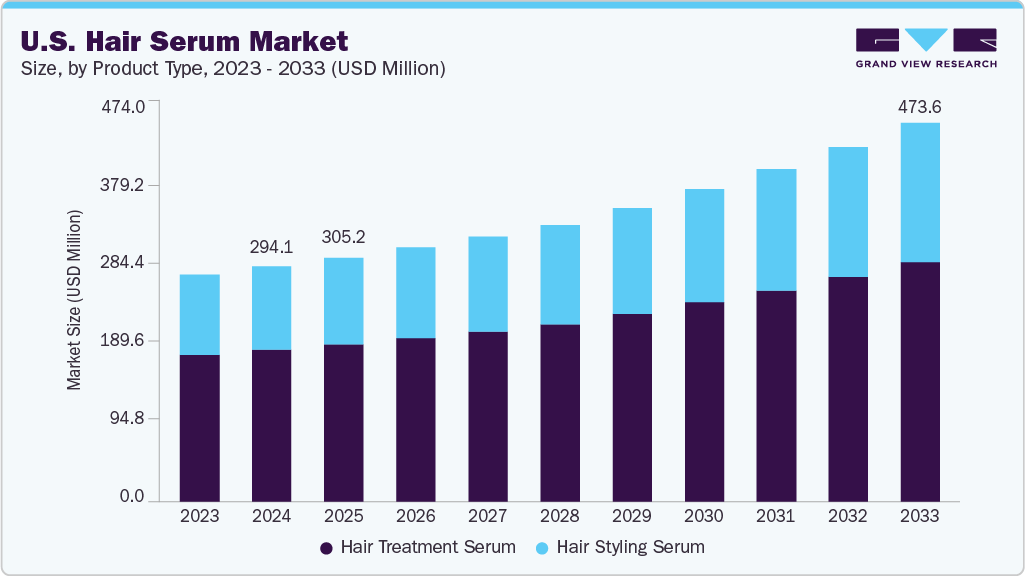
The U.S. hair serum market size was estimated at USD 294.1 million in 2024 and is expected to grow at a CAGR of 5.6% from 2025 to 2033. Growing concerns over hair fall, thinning, and scalp issues are driving demand for targeted hair serum solutions. Consumers increasingly seek clean, natural, and multi-benefit formulations, which are fueling the expansion of this category. Influencer marketing and social media buzz play pivotal roles in accelerating product discovery and enhancing brand engagement within the hair care industry.
In the U.S., up to 70 % of all men and 40 % of all women are affected by androgenetic alopecia, also known as male or female pattern baldness. The psychological impact of hair thinning, including diminished self-esteem and confidence, has driven many individuals to seek effective treatment options. While clinical treatments like minoxidil or finasteride exist, they can be associated with side effects or require prescriptions, prompting consumers to look for non-invasive, convenient alternatives. This shift has significantly increased the demand for topical hair serums, which are easy to apply, often formulated with natural or clinically backed ingredients, and marketed for daily use.
The hair care industry is rapidly evolving, with brands increasingly using AI, online quizzes, and mobile apps to provide personalized product recommendations based on each individual’s hair type and concerns. Hair serums have emerged as a key component of this customization trend, featuring targeted formulations that address specific needs such as scalp care, frizz management, and volume boosting. Innovative companies like Myavana, a U.S.-based brand, leverage AI to personalize hair care for textured hair. Their MyHairID app and optional lab kit analyze hair type, condition, and goals to recommend customized products, including hair serums. By combining AI with expert input, Myavana delivers tailored solutions that resonate with Gen Z and millennial consumers seeking tech-driven, personalized beauty routines.
Consumers in the U.S. are showing a marked preference for hair care products enriched with plant-based, organic, and eco-conscious ingredients such as argan oil, green tea, and rosemary, and they expect brands to extend these values through sustainable, “clean” packaging. Similarly, A survey conducted by CleanHub study found that 81% of beauty consumers want brands to reduce plastic packaging, and nearly half (47%) prefer recyclable materials, with 40% opting for refillable containers.
President Trump's recent tariff hikes have substantially affected the U.S. hair serum industry, driving up costs, disrupting supply chains, and prompting strategic adjustments among manufacturers and retailers. Tariffs as high as 54% on imports from China and 20% on goods from the European Union have triggered significant price increases across the beauty sector. Hair care products, which often depend on imported ingredients and packaging, have seen price surges of around 20%.
Consumer Insights & Surveys
In the hair care industry, consumers now seek science-backed, personalized, and holistic approaches to achieve long-term hair wellness. According to the article by Clinically in 2023, several key trends are shaping the future of the haircare industry in 2025.
- Personalized care is on the Rise
Consumers are now seeking haircare routines tailored to their unique scalp and hair needs. Products that consider factors like hair type, environment, and lifestyle are becoming increasingly popular. Brands like Prose utilize online quizzes to create custom shampoos, conditioners, and serums based on a user's hair texture and goals.
- Focus on Scalp Health
Scalp wellness is now recognized as essential for healthy hair growth. Products targeting dandruff, oiliness, and irritation are trending. The Ordinary Multi-Peptide Serum for Hair Density is a lightweight, leave-in scalp serum that supports scalp health and promotes fuller, denser-looking hair using peptides, caffeine, and plant extracts.
- Science-Backed & Dermatologist-Recommended Products
Consumers lean towards clinically tested, expert-approved products with proven ingredients like peptides, minoxidil, or biotin. Rogaine (minoxidil-based topical) remains a trusted choice recommended by dermatologists for androgenetic alopecia treatment.
- Minimalist, Clean, and Sustainable Formulations
Clean beauty has made its way into haircare-users choose fewer ingredients, and look for sulfate-free, silicone-free, and eco-conscious packaging. Juice Beauty Phyto-Pigments Invisible Lip & Cheek Serum and Innersense Organic Beauty's Hair Love Prep Serum are both made with organic ingredients, free from harsh chemicals, and packaged sustainably.
- Tech Integration in Haircare
AI and smart tools enhance personalized diagnostics and product recommendations for hair and scalp care. Myavana employs AI analysis of hair strands to provide tailored product suggestions through an app.
- Targeted Treatments for Hair Loss and Thinning
With increasing concerns about hair loss, targeted solutions like serums, laser caps, and growth boosters are becoming more popular. Clinically, 5% Minoxidil Topical Solution treats pattern hair loss in both men and women.
- Protective Styling and Heat Damage Prevention
Many people are adopting heat-protectant serums and protective hairstyles to prevent breakage and maintain length. Livon Damage Protect Serum shields hair from heat up to 250°C and reduces frizz caused by frequent styling.
Product Type Insights
The demand for hair treatment serum accounted for a share of about 64.64% of the U.S. hair serum market in 2024 due to its ability to provide instant, visible results like smoothness, shine, and frizz control, aligning with the fast-paced lifestyles and a desire for quick beauty solutions. These serums deliver multiple benefits in one product, including hydration, detangling, split-end repair, and heat protection, making them ideal for users who frequently style their hair with heat tools. The diverse climate across the U.S., characterized by humidity, dryness, and cold winters, also boosts the demand, as serums effectively manage frizz, dryness, and static. Moreover, a strong cultural emphasis on appearance and well-groomed hair in both professional and social settings is supported by giving a polished, finished look.
Treatment serums are typically formulated with clinically proven active ingredients that address the underlying causes of hair concerns rather than just offering temporary or surface-level benefits. For instance, Niacinamide (Vitamin B3) is a well-known active ingredient in hair treatment serums, recognized for its ability to enhance scalp health at a cellular level. It reduces inflammation, boosts the skin barrier, and increases keratin production, all of which foster a healthier environment for hair growth.
Demand for hair styling serum is projected to rise at a CAGR of 6.0% from 2025 to 2033. Consumers are increasingly aware of the damage caused by the frequent use of heat-styling tools, such as blow dryers, flat irons, and curling wands, which can lead to dryness, frizz, and hair breakage. Many styling serums now feature heat-protectant properties to safeguard hair during styling. For example, TRESemmé Keratin Smooth Heat Protect Spray, widely used in the U.S., offers protection against heat up to 450°F and is infused with keratin and marula oil to help reduce frizz, enhance shine, and prevent heat-induced damage, making it a go-to solution for daily styling protection.
Consumers are increasingly looking for hair styling products that provide effective results without leaving their hair heavy or greasy. In response to this demand, brands have launched lightweight serums that offer shine, frizz control, and heat protection in a non-greasy, easy-to-use format. For instance, L’Oréal’s Elvive Hyaluron Plump Hair Serum, which gained widespread popularity for its volumizing and frizz-taming effects, is an affordable serum that delivers salon-quality performance while keeping a weightless feel, making it perfect for daily use.
Category Insights
Synthetic hair serum accounted for a share of about 66.94% of the U.S. hair serum industry in 2024. Consumers in the U.S. widely use synthetic hair serums due to their affordability, effectiveness, and convenience. These serums, often formulated with silicones such as dimethicone, deliver instant shine, frizz control, and smoothness-qualities that align with fast-paced American lifestyles. For example, "Garnier Fructis Sleek & Shine Anti-Frizz Serum" contains silicones like dimethicone and is enriched with argan oil, providing long-lasting frizz control, smoothness, and shine, even in humid conditions.
The demand for organic hair serum is expected to grow at a CAGR of 7.6% from 2025 to 2033. Consumers are increasingly choosing organic hair serums due to their numerous benefits over conventional products. These organic alternatives are formulated with natural ingredients like aloe vera, coconut oil, and shea butter, which are rich in vitamins, minerals, and antioxidants that nourish and hydrate the hair and scalp. For instance, SheaMoisture 100% Virgin Coconut Oil Daily Hydration Finishing Oil Serum, made with natural ingredients like coconut oil, shea butter, and coconut milk, deeply moisturizes and softens hair while enhancing shine and manageability. It’s free from parabens, sulfates, phthalates, and mineral oil, making it a gentle, chemical-free option for those seeking natural hair care.
Distribution Channel Insights
The sale of hair serum through pharmacies and drugstores accounted for approximately 39.01% of the U.S. hair serum market in 2024. Consumers often prefer to purchase hair serums from pharmacies and drugstores because these locations offer trusted, as well as professional guidance from pharmacists, who can recommend suitable options for individual hair needs. Their convenient locations and competitive pricing make quality hair care more accessible and budget-friendly. Furthermore, the strict safety and quality standards maintained by pharmacies enhance consumers' confidence in the authenticity and effectiveness of the products they buy. A Harris Poll found that 91% of U.S. consumers prefer to shop in person for hair styling products. The survey revealed that shoppers appreciate the opportunity to see, touch, and sometimes sample products before buying-an experience more easily accessed through physical retail locations such as pharmacies and drugstores.
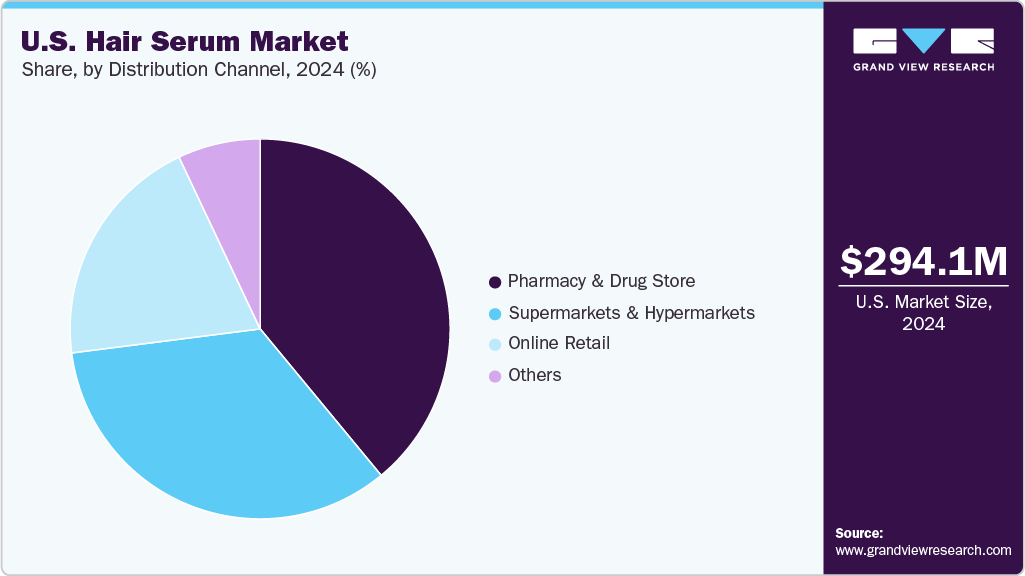
The sale of hair serum through online retail is anticipated to register a CAGR of 7.9% from 2025 to 2033. Online shopping offers the convenience of purchasing anytime and anywhere, along with access to a wider range of brands and product options. Consumers benefit from detailed reviews and ratings that help them make informed choices. E-commerce platforms often provide better pricing, frequent discounts, and the convenience of home delivery, eliminating the need to visit physical stores. Moreover, personalized recommendations and subscription services enhance the experience by helping users discover products tailored to their hair care needs.
Key U.S. Hair Serum Company Insights
The dominance of major U.S. hair serum companies such as Procter & Gamble (P&G), Unilever, L'Oréal, and Moroccanoil Israel Ltd. continues to define the upper tier of the competitive spectrum.
-
L'Oréal S.A. is a French multinational company and the world’s largest cosmetics and beauty brand. Founded in 1909 and headquartered in Clichy, France, L'Oréal specializes in a wide range of beauty and personal care products, including skincare, haircare, makeup, and fragrances. The company operates in over 150 countries and owns numerous globally recognized brands such as L'Oréal Paris, Garnier, Maybelline, Lancôme, and Kérastase.
-
Olaplex Holdings, Inc. is a U.S.-based haircare company known for its patented bond-building technology that repairs damaged hair. Founded in 2014, it quickly gained popularity among professionals and consumers for its science-backed formulas. The company operates across professional salons, retail, and direct-to-consumer channels.
Key U.S. Hair Serum Companies:
- Procter & Gamble (P&G) Company
- Unilever PLC
- L’Oréal S.A.
- Moroccanoil Israel Ltd.
- Olaplex Holdings Inc.
- Henkel AG & Co. KGaA
- The Estée Lauder Companies Inc.
- Vogue International LLC
- John Paul Mitchell Systems
- Briogeo
Recent Developments
-
In April 2025, Prose, the U.S.-based personalized beauty-tech brand, launched its Custom Scalp Serum, formulated based on over 85 individual factors, including scalp type, environment, lifestyle, and sensitivity, to optimize scalp health and strengthen hair. The lightweight, leave-in formula is made with 99% natural ingredients and is certified microbiome‑friendly, aiming to balance the scalp without causing dryness, oiliness, irritation, or flakiness. Enriched with prebiotics like kombucha and tea extracts, it complements Prose’s supplements and Custom Scalp Mask for a holistic care approach. Packaged in 100% recyclable glass, the serum reflects Prose’s sustainability ethos.
-
In February 2025, L’Oréal Paris launched the Elvive Growth Booster Scalp Serum, a $38 product targeting hair thinning concerns. The serum is formulated with an aminexil-based Growth & Strength Complex, niacinamide, and ginger extract to strengthen roots and minimize hair fall. Designed for wet and dry hair, it absorbs quickly without leaving a greasy residue. In clinical tests, 78% of users reported reduced hair loss within six weeks when used with the matching shampoo and conditioner.
-
In March 2025, Olaplex unveiled the No.0.5 Hydrating & Strengthening Scalp Serum as part of its scalp-care pivot. This lightweight gel serum, enriched with ceramides, hyaluronic acid, rice bran oil, and Olaplex’s signature bond‑building technology, aims to hydrate, soothe, and fortify the scalp barrier. Independent testing showed it significantly reduced dandruff and itchiness within two weeks while remaining gentle and non-greasy.
-
In July 2024, Holistic hair-care brand Vegamour introduced its GRO+ Advanced System, a four-step approach featuring balancing shampoo, conditioner, a dermatologist‑designed derma roller, and hair serum specifically created to address severe hair shedding and loss. Developed in collaboration with board-certified dermatologists Dr. Neera Nathan and Dr. Afton Cobb and powered by a patented GROActive+ Complex derived via AI screening of plant actives, the system underwent a 120-day clinical trial.
U.S. Hair Serum Market Report Scope
Report Attribute
Details
Market size value in 2025
USD 305.2 million
Revenue forecast in 2033
USD 473.6 million
Growth rate
CAGR of 5.6% from 2025 to 2033
Actual data
2021- 2024
Forecast period
2025 - 2033
Quantitative units
Revenue in USD million/billion and CAGR from 2025 to 2033
Report coverage
Revenue forecast, company ranking, competitive landscape, growth factors, and trends
Segments covered
Product type, category, distribution channel
Country scope
U.S.
Key companies profiled
Procter & Gamble (P&G) Company; Unilever PLC; L’Oréal S.A.; Moroccanoil Israel Ltd.; Olaplex Holdings Inc.; Henkel AG & Co. KGaA; The Estée Lauder Companies Inc.; Vogue International LLC; John Paul Mitchell Systems; Briogeo
Customization
Free report customization (equivalent up to 8 analysts working days) with purchase. Addition or alteration to country, regional & segment scope.
Pricing and purchase options
Avail customized purchase options to meet your exact research needs. Explore purchase options
U.S. Hair Serum Market Report Segmentation
This report forecasts revenue growth at the country level and provides an analysis of the latest industry trends and opportunities in each of the sub-segments from 2021 to 2033. For the purpose of this study, Grand View Research has segmented the U.S. hair serum market report by product type, category, and distributional channel.
-
Product Type Outlook (Revenue, USD Million, 2021 - 2033)
-
Hair Treatment Serum
-
Hair Fall Control
-
Hair Growth
-
Dandruff Control
-
Scalp Repair
-
Others
-
-
Hair Styling Serum
-
Frizz Control
-
Smoothing and Straightening
-
Heat Protection
-
Others
-
-
-
Category Outlook (Revenue, USD Million, 2021 - 2033)
-
Natural/ Organic
-
Synthetic
-
-
Distribution Channel Outlook (Revenue, USD Million, 2021 - 2033)
-
Supermarkets & Hypermarkets
-
Pharmacy & Drug Store
-
Online Retail
-
Others
-
Frequently Asked Questions About This Report
b. The U.S. hair serum market was estimated at USD 294.1 million in 2024 and is expected to reach USD 305.2 million in 2025.
b. The U.S. hair serum market is expected to grow at a compound annual growth rate of 5.6% from 2025 to 2033 to reach USD 473.6 million by 2033.
b. The hair treatment serum segment accounted for a share of about 64.64% of the U.S. hair serum market in 2024 due to their ability to deliver instant, visible results like smoothness, shine, and frizz control, which aligns with the fast-paced lifestyle and desire for quick beauty solutions.
b. Some of the key players in the U.S. hair serum market is Procter & Gamble (P&G) Company; Unilever PLC; L’Oréal S.A.; Moroccanoil Israel Ltd.; Olaplex Holdings Inc.; Henkel AG & Co. KGaA; The Estée Lauder Companies Inc.; Vogue International LLC; John Paul Mitchell Systems; Briogeo
b. Rising concerns over hair fall, thinning, and scalp issues drive demand for targeted hair serum solutions. Consumers are increasingly seeking clean, natural, and multi-benefit formulations, fueling this category's expansion. Influencer marketing and social media buzz are also pivotal in accelerating product discovery and enhancing brand engagement in the hair care industry.


Share this report with your colleague or friend.
Need a Tailored Report?
Customize this report to your needs — add regions, segments, or data points, with 20% free customization.


ISO 9001:2015 & 27001:2022 Certified
We are GDPR and CCPA compliant! Your transaction & personal information is safe and secure. For more details, please read our privacy policy.
Trusted market insights - try a free sample
See how our reports are structured and why industry leaders rely on Grand View Research. Get a free sample or ask us to tailor this report to your needs.












