
- Home
- »
- Consumer F&B
- »
-
Stout Market Size, Share & Trends, Industry Report, 2033GVR Report cover
![Stout Market Size, Share & Trends Report]()
Stout Market (2026 - 2033) Size, Share & Trends Analysis Report By Source (Barley-based, Wheat-based), By Packaging (Bottles, Cans), By Distribution Channel (Off-Trade, On-Trade), By Region, And Segment Forecasts
- Report ID: GVR-4-68039-073-5
- Number of Report Pages: 100
- Format: PDF
- Historical Range: 2021 - 2024
- Forecast Period: 2026 - 2033
- Industry: Consumer Goods
- Report Summary
- Table of Contents
- Segmentation
- Methodology
- Download FREE Sample
-
 Download Sample Report
Stout Market Summary
The global stout market size was estimated at USD 13.63 billion in 2025 and is projected to reach USD 20.02 billion by 2033, growing at a CAGR of 4.9% from 2026 to 2033. Demand for dark beers has expanded as drinkers increasingly seek richer flavor profiles chocolate, coffee, roasted malt, and caramel notes, compared to lighter lagers.
Key Market Trends & Insights
- Europe dominated the global stout market with the largest revenue share of 38.3% in 2025.
- The stout market in the U.K. is growing due to a combination of shifting consumer preferences, cultural factors, and product innovation.
- By source, the barley-based segment led the market with the largest revenue share of 81.3% in 2025.
- By packaging, the canned stouts segment led the market with the largest revenue share of 41.0% in 2025.
- By distribution channel, the off-trade segment led the market with the largest revenue share of 64.0% in 2025.
Market Size & Forecast
- 2025 Market Size: USD 13.63 Billion
- 2033 Projected Market Size: USD 20.02 Billion
- CAGR (2026-2033): 4.9%
- Europe: Largest market in 2025
- North America: Fastest growing market
This premiumization trend aligns with broader global shifts toward craft-inspired, taste-led alcohol categories, especially among millennials and flavor-focused audiences. Major brands such as Guinness and local craft breweries have benefited from this behavioral shift, as stout is perceived as a more indulgent, high-sensory experience.A surge in texture-driven product innovation, particularly “nitro stouts” infused with nitrogen for a smoother, creamier mouthfeel, has accelerated category adoption. Breweries are launching nitrogen-ported SKUs, packaging innovations, and taproom collaborations that mirror the sensory appeal popularized in coffee and dessert cuisines. Players in the craft movement, including regional breweries across Europe, North America, and the Asia Pacific, are expanding stout portfolios beyond traditional Irish or British styles.
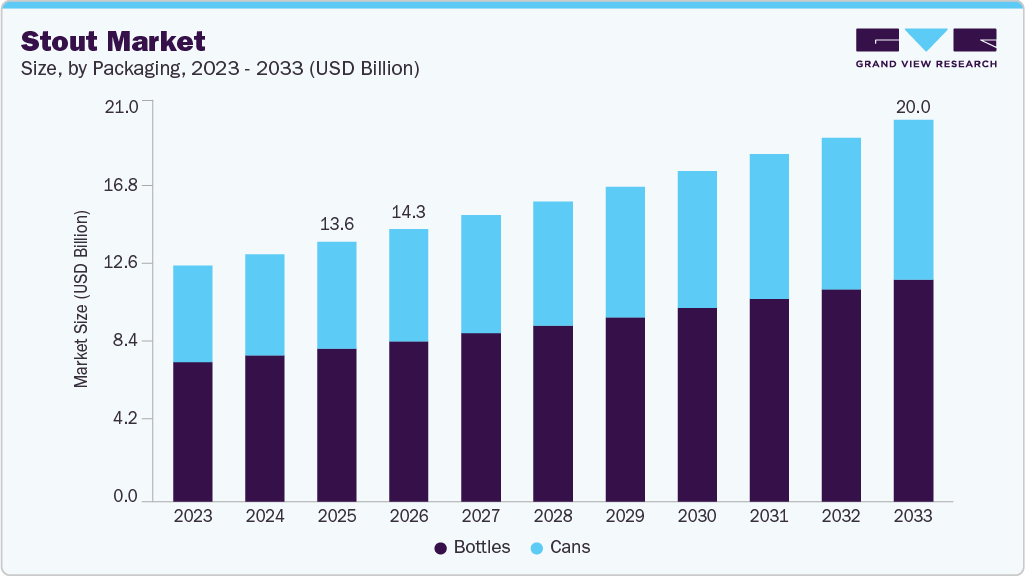
Stout performs strongly during colder seasons and celebrations, especially events tied to holiday food pairings. Festivals, pub crawls, and community-led sampling occasions aligned to beer heritage, such as St. Patrick’s Day and winter beer festivals across Europe, drive consumption spikes and sustained awareness growth.
While stout historically scaled through pubs and on-trade bars, adoption via retail chains and online alcohol marketplaces has meaningfully expanded. Beer bundles, seasonal stout packs, influencer sampling, and recipe-driven social commerce (e.g., dessert pairings) are increasing baseline purchase frequency. E-commerce platforms such as Amazon and modern alcohol delivery startups are enabling category discovery at scale, supporting the incrementally shorter trial-to-adoption cycle.
Premiumization has also played a major role in driving demand. As craft and specialty alcohol segments grow globally and household discretionary incomes rise, consumers are paying more for perceived quality, packaging, and novelty.
Consumer Demographic Insights
Beer drinkers globally are progressively shifting from mass-produced standard lagers toward premium, craft, and specialty brews. A stronger appreciation for complexity in flavor, texture, and product story largely influences this transition. Dark beers, including stouts, porters, and black ales, provide richer sensory profiles defined by roasted malts, deeper aromatics, and layered tasting notes such as coffee, cocoa, caramel, and barrel-driven smokiness. These attributes position stout beer as an experiential and indulgent choice rather than a routine beverage, aligning with the modern trend of premiumization in alcohol consumption. Breweries, particularly microbreweries and independent craft producers, have amplified this demand through sustained product innovation in flavored stouts, oatmeal stouts, imperial stouts, and nitrogen-infused variants that deliver a smoother, creamier mouthfeel. The increase in localized and creative stout offerings has strengthened consumer adoption globally by diversifying choices, reducing trial barriers, and expanding taste appeal beyond conventional beer drinkers.
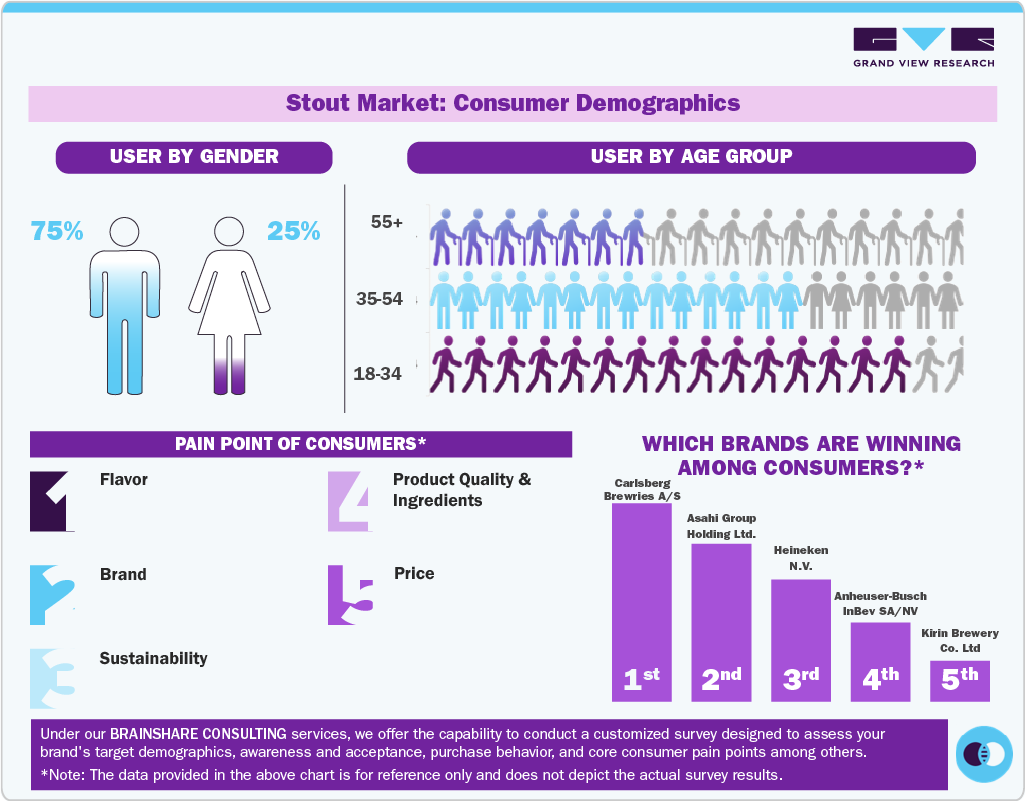
Demand for black beers is also expanding due to broader lifestyle and structural market drivers. Rising disposable incomes, growing urban populations, and more socially oriented drinking habits have enabled consumers to explore higher-priced and distinctive beverages. In both developed and emerging regions, customers are increasingly prioritizing product differentiation, craftsmanship, origin narrative, and flavor experimentation. Increasing digital exposure driven by beer festivals, tasting events, brewpub proliferation, and social-media-led discovery has further educated consumers about beer styles, improving familiarity and willingness to experiment with dark beer profiles.
While flavor preference and premium product willingness continue to support stout demand, the broader beverage market is balancing against health consciousness, increased competition from low-alcohol beer categories, and diversification into alternative alcohol formats.
Source Insights
The barley-based stout segment led the market with the largest revenue share of 81.3% in 2025. The rising demand for barley-based stout is driven by global premiumization and authenticity trends, where consumers increasingly favor traditional grain bills over adjunct-heavy formulations. Barley Malt remains central to stout production due to its ability to deliver unfermentable dextrins, which contribute to the signature full body and creamy mouthfeel that define the classic stout drinking experience. Unlike substitutes, barley contributes naturally higher levels of β-glucans and husk-derived proteins, improving foam stability without artificial enhancers, making it the preferred grain for visual and textural appeal. The surge is also supported by the cultural resurgence of craft beer, where storytelling about ingredient purity, slow brewing, and heritage styles directly translates into a higher willingness to pay.
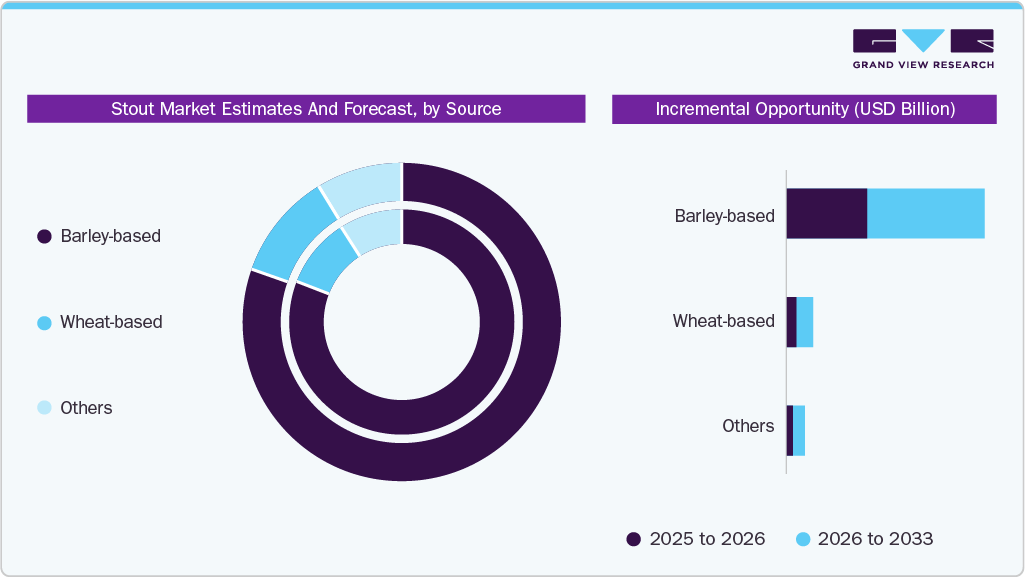
The wheat-based stout is projected to grow at the fastest CAGR of 5.8% from 2026 to 2033. Wheat-based stouts are seeing a surge in popularity, combining the rich, robust flavors of traditional dark beer with a smoother, lighter body and a fuller head, offering a palatable entry point for drinkers who find standard stouts too heavy or bitter. The growing consumer interest in craft-style beers and experimentation has also driven demand: wheat stouts often allow brewers more flexibility in flavoring (with spices, citrus, or lighter malt profiles) while retaining stout complexity.
Packaging Insights
The canned stouts segment led the market with the largest revenue share of 41.0% in 2025. The market for canned stout is rising as consumer preferences shift toward convenience, portability, and premium aesthetics. Dark beer styles such as stout are increasingly positioned as “accessible indulgence” products, benefiting from the rapid growth of the ready-to-drink (RTD) alcohol culture and social drinking occasions outside traditional bars. The packaging format has gained strong momentum as breweries experiment with nitrogen-infusion technology to achieve a creamier texture and longer flavor stability in cans.
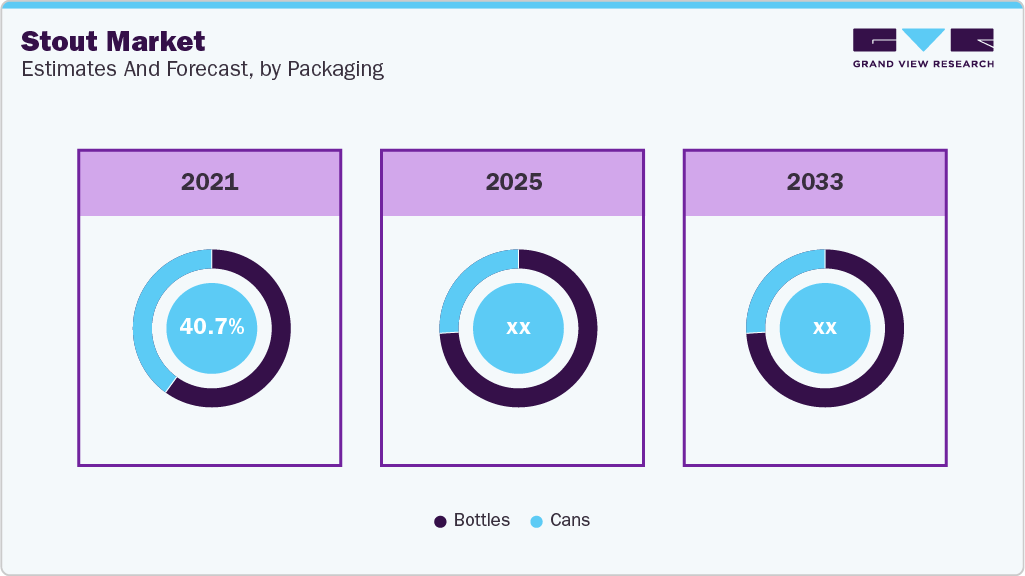
The bottled segment is projected to grow at the fastest CAGR of 4.8% from 2026 to 2033. The demand for bottled stout is rising due to a convergence of lifestyle, convenience, and premiumization trends in the alcohol market. Younger consumers increasingly associate dark beers with craft credibility and indulgent flavor profiles, notes such as roasted malt, caramel, and chocolate, making them popular for experiential drinking beyond mainstream lagers. Bottled formats expand accessibility through retail shelves and home consumption occasions, aligning with the growth of online alcohol sales platforms like Drizly in North America and Vivino, aiding discovery and flavor-led purchase decisions.
Distribution Channel Insights
The off-trade segment led the market with the largest revenue share of 64.0% in 2025. The market for stout is rising through off-trade (retail/off-premise) channels as consumers increasingly seek affordable premiumisation and at-home experiential drinking. Category leaders in packaging and distribution, such as Carlsberg Group, and retail sales engines, including Tesco PLC, have benefited from shoppers trading up to darker, craft-style beers that feel indulgent yet economical per unit price. Retail availability of long-shelf-life formats (cans, bottles) and seasonal sales spikes during key retail periods further support the off-trade as the largest and fastest-growing channel for volume in the stout category.
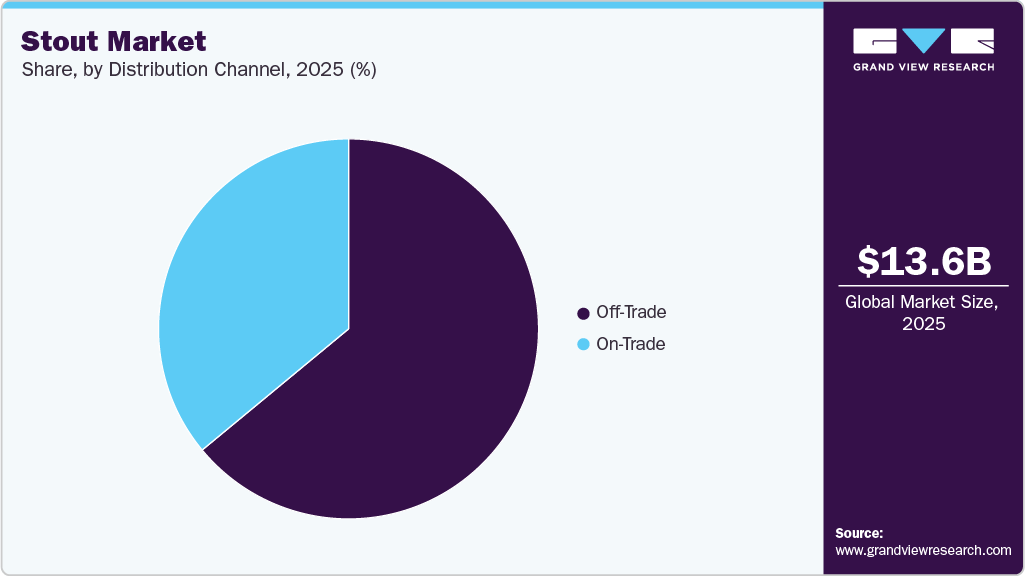
The on-trade segment is anticipated to grow at the fastest CAGR of 5.2% from 2026 to 2033. The global market for stout is growing strongly through on-trade channels (bars, pubs, and restaurants) due to premiumisation, an experiential drinking culture, and a broader distribution focus by major brands. Stout performs particularly well in on-trade, as the segment amplifies its core value: draft freshness. Nitro-pour theatre and sensory texture are best delivered through tap systems and professional serve rituals, which retail cannot fully replicate. Large brewing groups such as Guinness and portfolio owners like Diageo are investing in channel-specific placements, tap expansion, and on-site activation programmes, increasing visibility and availability in pubs.
Regional Insights
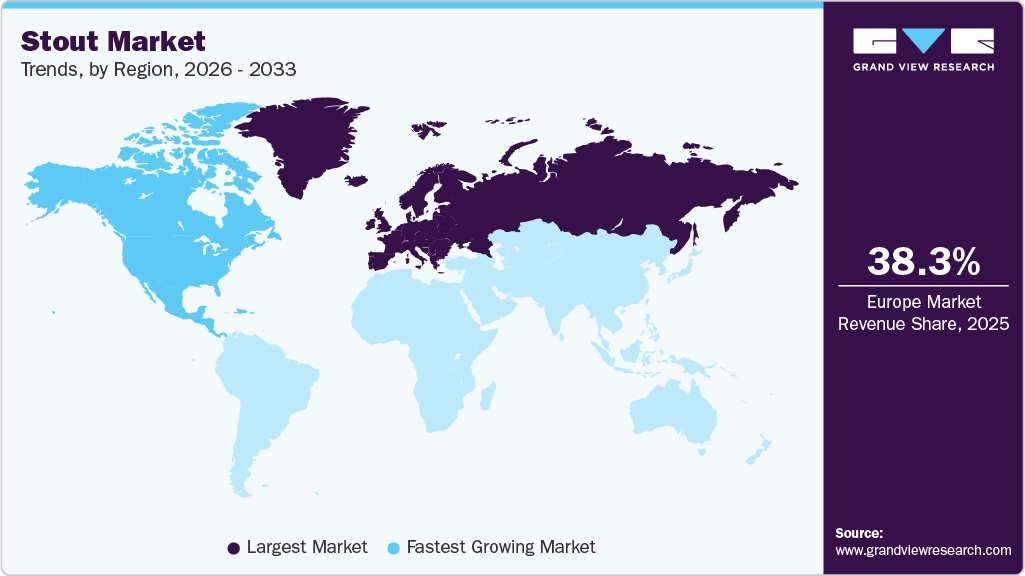
Europe dominated the global stout market with the largest revenue share of 38.3% in 2025. The market for stouts in Europe is growing as consumers are increasingly shifting toward craft, specialty, and premium beers rather than standard lagers or mass-produced brews. As craft-beer culture expands, people are more open to richer, darker, and more complex beer styles like stout that offer unique flavours and a more “authentic” drinking experience. Moreover, innovations from breweries, such as new stout variants, barrel-aging, flavor infusions (coffee, chocolate, etc.), and artisanal brewing methods, have broadened stout’s appeal beyond traditional beer drinkers to younger adults and craft-beer enthusiasts in Europe.
UK Stout Market Trends
UK stout market is growing due to a combination of shifting consumer preferences, cultural factors, and product innovation. Consumers are increasingly drawn to stout for its rich flavor profile, smooth mouthfeel, and perceived authenticity, which align well with the broader trend toward premium and craft beer consumption. The resurgence of traditional beer styles, supported by strong brand heritage and pub culture, has reinforced stout’s appeal among both older drinkers and younger consumers seeking distinctive, character-led beverages. In addition, innovation in stout varieties including nitro stouts, flavored stouts, and seasonal limited editions has expanded the category’s relevance and attracted new consumers. The rising interest in lower-carbonation, smoother beers and the association of stout with sociable, on-trade consumption further support its growing popularity in the UK market.
North America Stout Market Trends
The stout market in North America is projected to grow at the fastest CAGR of 5.4% from 2026 to 2033. The market for stout beer is rising in North America, particularly across the U.S. and Canada, driven by a clear shift toward flavor-led premiumization rather than mainstream light-beer consumption. Consumers are increasingly gravitating toward fuller, roasted, malt-forward profiles, which are emerging as a counter-trend to high-carbonation lagers, amplified by craft-brew discovery through local brewpub ecosystems and retail channels. In addition, alcohol buyers influenced by “dark beverage rituals” overlapping coffee, cocoa, and porter drinker cohorts are migrating into stout as an adjacent taste archetype.
U.S. stout market accounted for the largest market revenue share in North America in 2025. The expansion of craft breweries has been a major driver, with hundreds more small and independent brewers operating today. There is a much wider variety of stout styles, flavors (e.g., coffee, chocolate, barrel-aged), and innovations that attract adventurous drinkers. Also, stouts are increasingly seen as a “premium” or “experience” drink appealing to consumers looking for sophistication and uniqueness rather than just a cheap everyday beer.
Asia Pacific Stout Market Trends
The stout market in the Asia Pacific is projected to grow at a significant CAGR of 5.2% from 2026 to 2033. The market for stout beer is expanding in the Asia Pacific due to a clear shift toward premium, flavor-driven, and experience-led alcohol consumption. Rapid urbanization in markets such as China, India, Japan, South Korea, and Southeast Asia has created a young, high-spending consumer cohort that increasingly values imported and craft beer styles over mass-lager dominance. Stouts benefit from this trend as consumers seek deeper flavor profiles, notes of coffee, cocoa, caramel, and roasted malt, which complement the region’s strong café culture, dessert-pairing occasions, and emerging bar social scenes. Growth is further reinforced by the rise of microbreweries, brewpub experimentation, and beer-sampling events that highlight stout varieties as signature products for winter, nightlife, and food-pairing menus.
Key Stout Company Insights
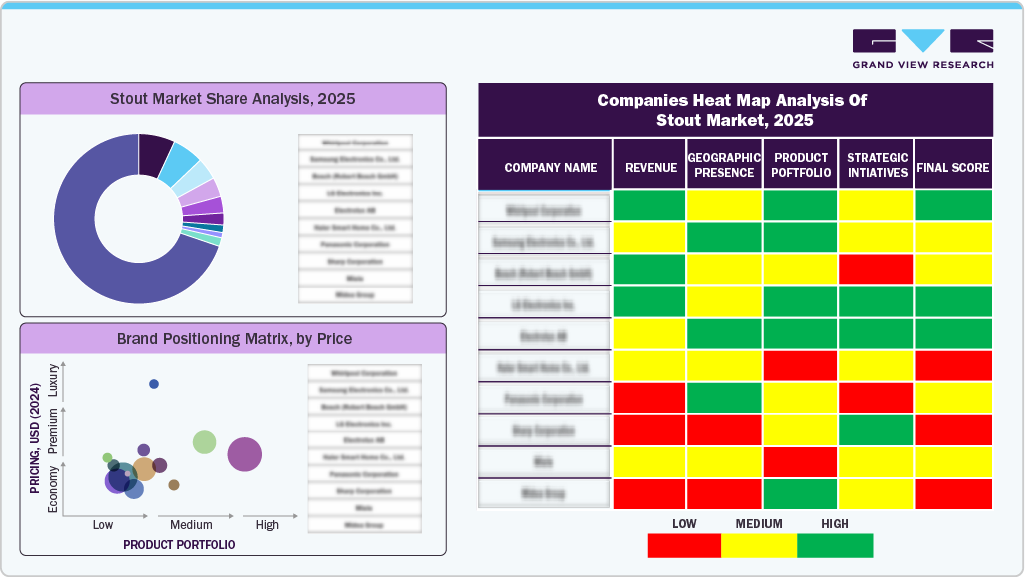
Established and emerging players in the global stout industry operate within a highly competitive landscape, driven by evolving consumer preferences and continuous product innovation. Breweries are increasingly introducing new flavour profiles, nitro infusions, low-alcohol variants, and seasonal limited editions to meet demand from modern beer drinkers who seek premium taste, texture, and brand differentiation. Market participants are also advancing sustainability initiatives, including recyclable packaging, carbon-optimized brewing, and clean-label formulations, aligning with global expectations for responsible production.
Key Stout Companies:
The following key companies have been profiled for this study on the stout market.
- Carlsberg Breweries A/S
- Asahi Group Holdings Ltd.
- Heineken N.V.
- Anheuser-Busch InBev SA/NV
- Kirin Brewery Co. Ltd.
- Diageo plc
- Molson Coors Beverage Co.
- The Boston Beer Co. Inc.
- Stone Brewing Co.
- Port Brewing Co.
Recent Developments
-
In July 2025, Goose Island’s announced the launch of its Bourbon County Stout lineup, which features the core Bourbon County Brand Original Stout now in 4-packs of 10 oz bottles plus five variants: Cherries Jubilee, Chocolate Praline, Proprietor’s (Chicago-only), Double Barrel Heaven Hill Bottled-in-Bond, and Reserve aged in Parker’s Heritage rye barrels, each highlighting different dessert-like, fruit, nut, or whiskey-driven flavor profiles.
-
In November 2024, Guinness Fonio Stout is a new limited-edition release announced by Guinness in partnership with Brooklyn Brewery, introduced in support of the Brewing for Impact campaign. The beer draws inspiration from Brewmaster Garrett Oliver’s extensive body of work with fonio, an ancient West African grain recognised for its cultural and agricultural significance. The launch marks a meaningful fusion of Guinness’s Irish brewing lineage with West African heritage, celebrating beer as a medium of cultural exchange, inclusion, and shared tradition.
Stout Market Report Scope
Report Attribute
Details
Market size value in 2026
USD 14.31 billion
Revenue forecast in 2033
USD 20.02 billion
Growth rate
CAGR of 4.9% from 2026 to 2033
Base year for estimation
2025
Historical data
2021 - 2024
Forecast period
2026 - 2033
Quantitative units
Revenue in USD million/billion, and CAGR from 2026 to 2033
Report coverage
Revenue forecast, company ranking, competitive landscape, growth factors, and trends
Segments covered
Source, packaging, distribution channel, region
Regional scope
North America; Europe; Asia Pacific; Central & South America; Middle East & Africa
Country scope
U.S.; Canada; Mexico; Germany; UK; France; Italy; Spain; China; India; Japan; South Korea; South Africa; Brazil
Key companies profiled
Carlsberg Breweries A/S; Asahi Group Holdings Ltd.; Heineken N.V.; Anheuser-Busch InBev SA/NV; Kirin Brewery Co. Ltd.; Diageo plc; Molson Coors Beverage Co.; The Boston Beer Co. Inc.; Stone Brewing Co.; and Port Brewing Co.
Customization scope
Free report customization (equivalent up to 8 analysts working days) with purchase. Addition or alteration to country, regional & segment scope.
Pricing and purchase options
Avail customized purchase options to meet your exact research needs. Explore purchase options
Global Stout Market Report Segmentation
This report forecasts revenue growth at the global, regional, and country levels and provides an analysis of the latest industry trends and opportunities in each of the sub-segments from 2021 to 2033. For this study, Grand View Research has segmented the global stout market report based on the source, packaging, distribution channel, and region.
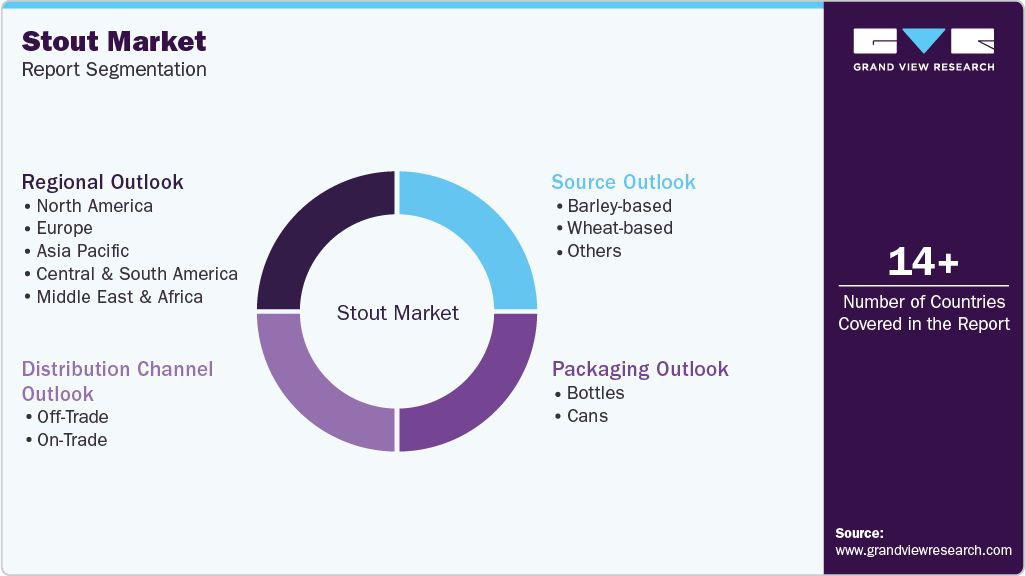
-
Source Outlook (Revenue, USD Million, 2021 - 2033)
-
Barley-based
-
Wheat-based
-
Others
-
-
Packaging Outlook (Revenue, USD Million, 2021 - 2033)
-
Bottles
-
Cans
-
-
Distribution Channel Outlook (Revenue, USD Million, 2021 - 2033)
-
Off-Trade
-
On-Trade
-
-
Regional Outlook (Revenue, USD Million, 2021 - 2033)
-
North America
-
U.S.
-
Canada
-
Mexico
-
-
Europe
-
Germany
-
UK
-
France
-
Italy
-
Spain
-
-
Asia Pacific
-
China
-
India
-
Japan
-
South Korea
-
-
Central & South America
-
Brazil
-
-
Middle East & Africa
-
South Africa
-
-
Frequently Asked Questions About This Report
b. The global stout market size was estimated at USD 13.63 billion in 2025 and is expected to reach USD 14.31 billion in 2026.
b. The global stout market is expected to grow at a compound annual growth rate of 4.9% from 2026 to 2033 to reach USD 20.02 billion by 2033.
b. Some key players operating in the stout market include Carlsberg Breweries A/S, Asahi Group Holdings Ltd., Heineken N.V., Anheuser-Busch InBev SA/NV, Kirin Brewery Co. Ltd., Diageo plc, Molson Coors Beverage Co., The Boston Beer Co. Inc., Stone Brewing Co., Port Brewing Co.
b. Key factors that are driving the stout market growth include rising demand for premium alcoholic drinks with rich taste and texture among the consumers and new product launches.
b. Canned stouts for canned use accounted for a share of 58.2% of the global revenues in 2025. The market for canned stout is rising as consumer preferences shift toward convenience, portability, and premium aesthetics. Dark beer styles such as stout are increasingly positioned as “accessible indulgence” products, benefiting from the rapid growth of the ready-to-drink (RTD) alcohol culture and social drinking occasions outside traditional bars.


Share this report with your colleague or friend.
Need a Tailored Report?
Customize this report to your needs — add regions, segments, or data points, with 20% free customization.


ISO 9001:2015 & 27001:2022 Certified
We are GDPR and CCPA compliant! Your transaction & personal information is safe and secure. For more details, please read our privacy policy.
Trusted market insights - try a free sample
See how our reports are structured and why industry leaders rely on Grand View Research. Get a free sample or ask us to tailor this report to your needs.












