
- Home
- »
- Animal Health
- »
-
Spay And Neuter Market Size & Share, Industry Report, 2033GVR Report cover
![Spay And Neuter Market Size, Share & Trends Report]()
Spay And Neuter Market (2026 - 2033) Size, Share & Trends Analysis Report By Animal (Dogs, Cats), By Provider (Veterinary Clinics & Hospitals), By End Use (Animal Welfare Groups, Pet Owners), By Region, And Segment Forecasts
- Report ID: GVR-4-68040-033-3
- Number of Report Pages: 150
- Format: PDF
- Historical Range: 2021 - 2025
- Forecast Period: 2026 - 2033
- Industry: Healthcare
- Report Summary
- Table of Contents
- Segmentation
- Methodology
- Download FREE Sample
-
 Download Sample Report
Spay And Neuter Market Summary
The global spay and neuter market size was estimated at USD 2.84 billion in 2025 and is anticipated to reach USD 4.39 billion by 2033, growing at a CAGR of 5.65% from 2026 to 2033. The market is primarily driven by the increasing government regulations and mandatory sterilization policies, increasing awareness and education efforts, and the rising activity of animal welfare NGOs and global funding support.
Key Market Trends & Insights
- North America spay and neuter market held the largest revenue share of 37.23% in 2025.
- U.S. dominated the North America region with the largest revenue share in 2025.
- By animal, dogs held the largest share of 53.14% of the market in 2025.
- By provider, veterinary clinics & hospitals held the largest market share in 2025.
- Based on end use, the animal welfare groups segment held the largest market share in 2025.
Market Size & Forecast
- 2025 Market Size: USD 2.84 Billion
- 2033 Projected Market Size: USD 4.39 Biillion
- CAGR (2026-2033): 5.65%
- North America region: Largest market in 2025
- Asia Pacific region: Fastest growing market
The expansion of affordable spay and neuter infrastructure, particularly through mobile surgical units, further contributes to the market growth. For instance, in December 2024, Mendocino County launched a Mobile Spay & Neuter Van, aimed at delivering essential sterilization services to communities throughout the country.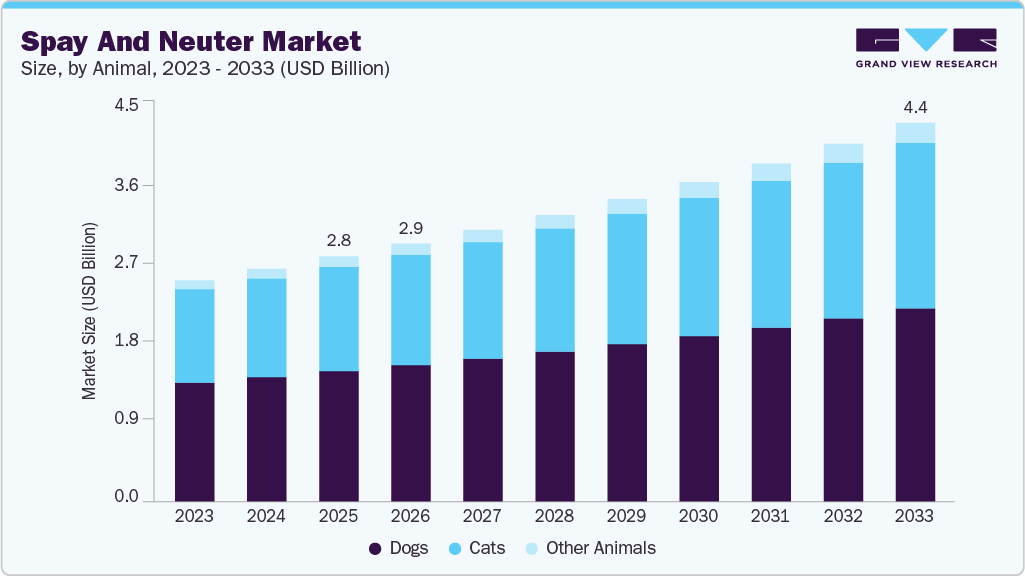
The expansion of affordable spay and neuter infrastructure, particularly through mobile surgical units, is a crucial factor driving the market growth, as it improves service reach, reduces cost barriers, and increases procedure volumes in underserved regions. For instance, in March 2025, Santa Barbara Humane launched its new Mobile Spay/Neuter Clinic, a targeted outreach initiative aimed at expanding access to critical veterinary services in underserved communities such as Guadalupe, Lompoc, Nipomo, and Casmalia. By offering free spay and neuter surgeries for a limited period, the program addresses financial and geographic barriers that often prevent pet owners from accessing sterilization services. Beyond improving access to preventive veterinary care, the initiative is expected to help reduce pet overpopulation and shelter overcrowding, lower euthanasia rates, and enhance adoption outcomes across the region by promoting healthier, more manageable companion animal populations.
Moreover, in December 2025, PetSet launched a newly custom-built mobile spay-and-neuter clinic, significantly enhancing the nonprofit’s capacity to deliver preventive veterinary care directly to underserved neighborhoods across Houston, according to a news release. The advanced mobile unit is designed to improve operational efficiency and surgical throughput, enabling PetSet to perform a higher number of procedures each day and accommodate larger and older animals. Officials noted that the clinic is expected to facilitate up to 1,200 additional surgeries annually and is optimized for high-volume surgical operations. To support this increased capacity, the mobile clinic features an expanded kennel area and a second surgical table, allowing multiple procedures to be conducted simultaneously.
In addition, growing awareness and education initiatives are driving market expansion. For instance, the Otavalo Emergency Surgery Course and Neuter Campaign conducted in September 2025 significantly contributed to raising awareness about animal welfare and responsible pet ownership. By combining hands-on veterinary training with community-focused spay/neuter services, these programs educate both veterinary professionals and the general public on the importance of sterilization, preventive care, and humane treatment of street and low-income pets. Such campaigns increase the skill level of veterinarians in high-volume neutering and emergency surgery and sensitize communities to the consequences of uncontrolled pet populations, as more people understand the benefits of spay/neuter programs and animal health interventions, demand for veterinary services, educational courses, and community-driven campaigns grows, thereby driving expansion in the veterinary care and animal health market.
Key Country-wise Spay & Neuter Surgery Estimated Cost Overview, 2025
Sr. No.
Country
Spay Surgery ASP (USD)
Neuter Surgery ASP (USD)
Dogs
Cats
Dogs
Cats
1
U.S.
USD 350-600
USD 180-320
USD 320-520
USD 180-320
2
Canada
USD 280-480
USD 120-260
USD 240-420
USD 80-200
3
Germany
USD 450-900
USD 150-320
USD 220-520
USD 70-200
4
UK
USD 350-650
USD 140-300
USD 220-520
USD 100-260
5
Denmark
USD 650-1,050
USD 200-380
USD 380-720
USD 120-280
6
Sweden
USD 280-550
USD 150-320
USD 240-480
USD 100-240
7
Norway
USD 550-950
USD 80-220
USD 200-480
USD 40-140
8
India
USD 25-120
USD 20-90
USD 25-110
USD 20-80
9
Australia
USD 150-380
USD 80-220
USD 120-320
USD 70-210
Market Concentration & Characteristics
Industry concentration in the global spay and neuter industry is expected to stay low. Local veterinary hospitals and small private clinics handle most surgeries in each country. Animal welfare groups and mobile units add steady capacity and keep the field wide. Larger providers such as TACO, humane societies, and municipal programs support high volumes but do not shape the global industry. Many domestic providers are entering the field, so no single chain gains control. The market is expected to keep expanding through this mix of structured service provider groups and many independent operators.
Degree of innovation in the spay and neuter sector is currently moderate and is growing at a steady pace. New clinical methods are improving recovery time and are helping clinics handle higher daily volume. Data tools are guiding outreach and are helping programs reach areas with heavy need. Telemedicine and simple scheduling systems are making intake smoother and easing pre-op work. Mobile units and training programs are raising capacity and are shaping common standards across regions. Ongoing research on health and longevity is influencing how veterinarians are guiding owners and is shaping public messaging.
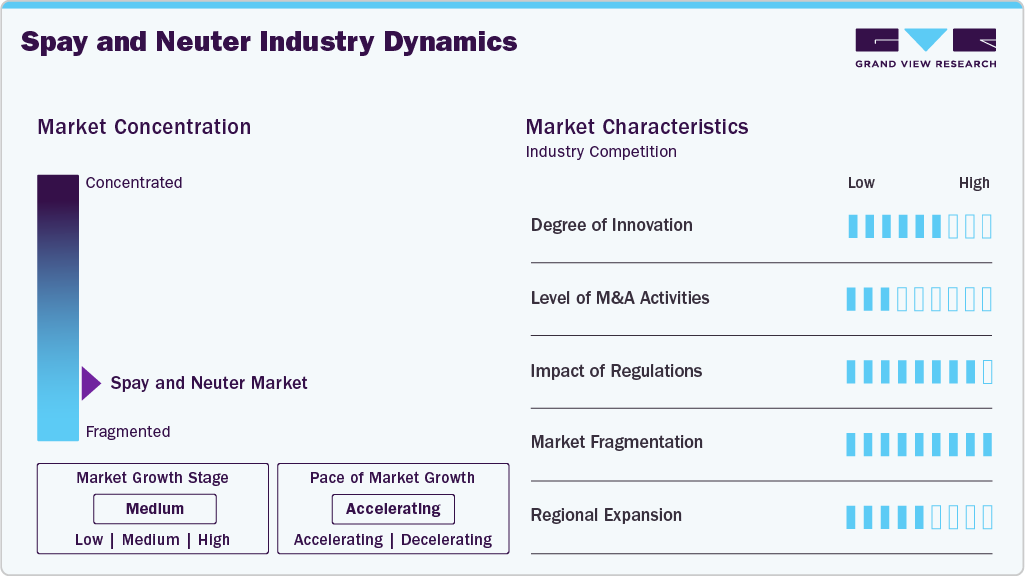
Level of M&A activity in the spay and neuter industry is comparatively low. Most providers are small clinics, animal groups, and municipal units, and they are running local programs with stable demand. Larger veterinary chains are expanding general care sites, but they are not acquiring high-volume sterilization programs at scale. Humane groups and mobile units are growing through grants and partnerships rather than buying clinics. The field is expected to keep expanding through new entrants rather than consolidation, so ownership remains spread across many operators.
Regulations are shaping the spay and neuter industry in important ways. Updated veterinary guidelines from major associations are influencing when and how neutering procedures are offered. Some regions are launching redesigned municipal spay/neuter programs to boost access and control pet populations. Rules and public policy push clinics toward early-age or younger-pet neutering in many regions. Regulatory support for low-cost and subsidized clinics is helping expand service to underserved communities. As a result, regulations are helping increase demand and are supporting broader adoption of spay and neuter services.
Market fragmentation in the spay and neuter field is growing. Local veterinary hospitals and small clinics are handling most daily surgeries and are adding steady capacity in each region. Animal welfare groups and mobile units are expanding their reach and are keeping the market open to many operators. Larger names are supporting high volumes but are not shaping pricing or supply. New domestic providers are entering the field and are widening the base of service points. The market is expected to keep growing through this broad mix of structured groups and many independent clinics.
The spay and neuter industry is experiencing steady regional expansion driven by rising awareness of pet population control and government-supported programs. Urban areas in North America and Europe are seeing increased adoption due to municipal initiatives promoting low-cost or subsidized surgeries. In the Asia-Pacific, countries like India, China, and Japan are showing growing interest, fueled by rising pet ownership and the establishment of veterinary clinics offering spay/neuter services. Latin America and the Middle East are gradually adopting these procedures as part of animal welfare campaigns, with NGOs and local authorities supporting mobile clinics and outreach programs. This geographic expansion is enabling service providers to reach underserved regions while creating standardized protocols and education programs for pet owners.
Animal Insights
Based on animal, the dogs segment held the largest revenue share of 53.14% in 2025. Increasing awareness of animal welfare, coupled with community-driven sterilization initiatives, is playing a critical role in expanding access to spay and neuter services and strengthening preventive pet care. For instance, Fundashon Stimami Sterilisami announced that, effective August 20, 2025, all spay and neuter procedures for dogs and cats will be provided free of charge at participating veterinary clinics under its national program. This milestone has been made possible through enhanced financial support from the Tourism Product Enhancement Fund (TPEF), the Aruba Tourism Authority (ATA), Bucuti & Tara Beach Resort, and other dedicated donors.
The other animals segment is the fastest-growing segment over the forecast period. This segment includes rabbits, sheep, goats, and pigs. Growing awareness of the health, behavioral, and population-control benefits of spaying is expected to significantly drive market growth, particularly for companion animals such as rabbits. For instance, according to an article published by VCA Animal Hospitals, the extreme reproductive capacity of unspayed females emphasizes the increasing adoption of spaying and neutering procedures. For instance, a single female rabbit can produce up to 14 baby rabbits in one litter and may have a litter every month, resulting in as many as 168 offspring in a single year. Such rapid population growth increases the risk of overcrowding and abandonment, making spaying a critical preventive measure for responsible pet ownership.
Provider Insights
On the basis of provider, veterinary clinics & hospitals account for a dominant share in 2025. The growing emphasis on animal population control and preventive pet healthcare by local governments and welfare organizations is a key driver supporting the expansion of the veterinary hospitals and clinics segment in the market. For instance, according to an article published by Las Vegas Optic, January 2025, the City of Las Vegas hosted its first low-cost spay and neuter clinic in collaboration with Helping Paws Across Borders. Such initiatives bring a large number of pets into regulated veterinary facilities, directly boosting the volume of spay and neuter procedures carried out by clinics and hospitals.
The others segment, consisting of institutions such as shelters, humane societies, and other welfare organizations, is the fastest growing over the forecast period. Rising concerns over stray animal populations, abandonment driven by unaffordable veterinary care, and the growing focus on humane animal welfare management are key drivers accelerating the market globally. For instance, the Naturewatch Foundation’s long-term sterilization initiatives across Eastern Europe illustrate how sustained, large-scale programs translate into consistent demand for spay and neuter services. Beginning with free sterilization for dogs from low-income households in Ukraine and later expanding to homeless, rescued, and fostered animals, the program strengthened collaboration with local veterinarians and volunteers, embedding sterilization as a core population-control strategy. These efforts increased the volume of procedures performed and normalized spay and neuter practices within communities, emphasizing their role as an essential component of preventive animal healthcare.
End Use Insights
Based on end use, the animal welfare groups segment dominated the market with the largest revenue share in 2025, by actively implementing sterilization programs and supporting veterinary service delivery for both owned and stray animals. With an estimated 400 million stray animals worldwide, spaying and neutering remain one of the most effective tools to reduce shelter overcrowding, street populations, and the burden on animal welfare groups, while also lowering the risk of inhumane treatment and euthanasia. Through funding support, shelter infrastructure development, veterinary care, education, and large-scale sterilization initiatives, these organizations directly increase the volume of spay and neuter procedures, particularly in high-need regions. Their sustained involvement strengthens collaboration with veterinarians and shelters, positioning animal welfare groups as key enablers of procedural demand and long-term market growth.
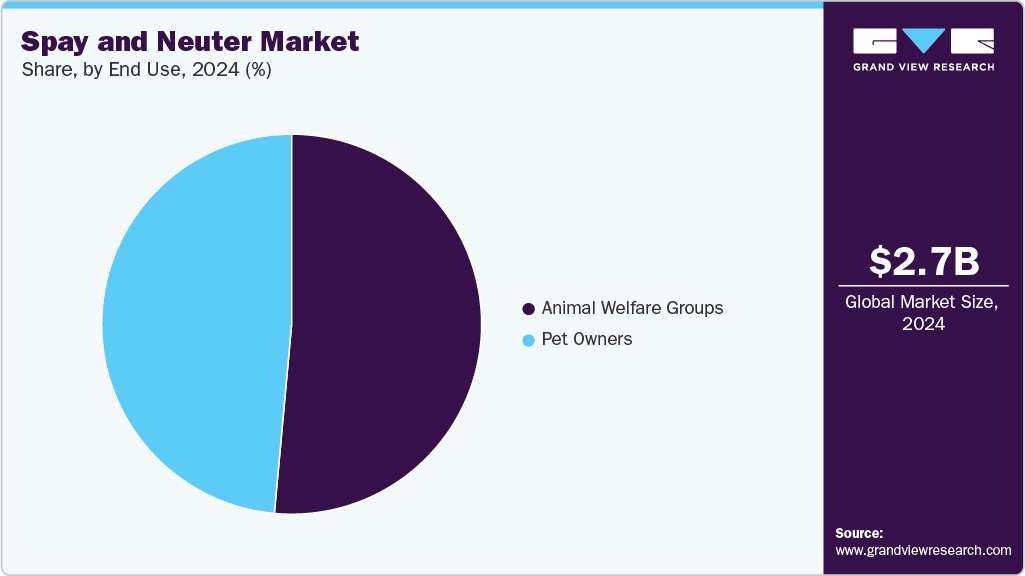
The pet owners segment is the fastest-growing channel over the forecast period, due to rising awareness and proactive involvement of owners in pet health. Pet owners are increasingly seeking spay and neuter services to ensure longevity, reduce health risks, and control unwanted litters. Growing disposable incomes and willingness to invest in preventive care are driving direct engagement with veterinary services. Social media and educational campaigns are motivating owners to take initiative rather than relying solely on organizations. This hands-on approach is expanding the segment rapidly, making pet parents a key driver of market growth despite other established channels.
Regional Insights
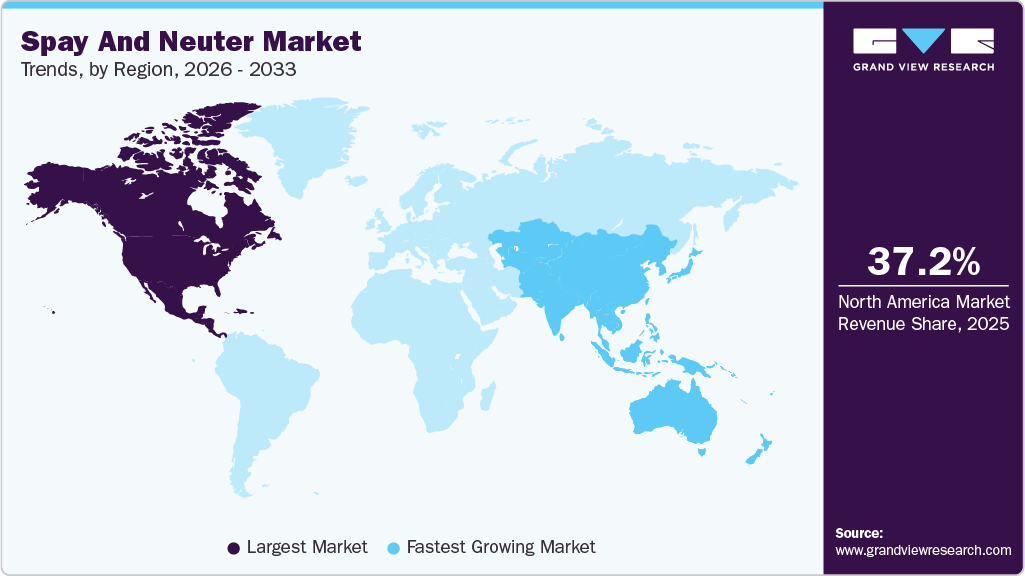
North America dominated the market with the largest revenue share of 37.23% in 2025. This strong market position is largely attributed to the extensive implementation of spay and neuter initiatives and well-established recognition of pet overpopulation concerns. Veterinary clinics, animal welfare organizations, and local authorities are actively conducting free or subsidized sterilization programs, ensuring wide accessibility across diverse population groups. Moreover, large-scale spay and neuter drives and dedicated resource centers are enhancing pet owner participation by delivering convenient, locally accessible, and community-focused service models.
U.S. Spay and Neuter Market Trends
The spay and neuter market in the U.S. accounted for the largest market share in North America. Collaborative efforts that expand access to sterilization services play a major role in driving the U.S. market growth, as they increase the number of procedures performed and strengthen the importance of veterinary involvement in population control. For instance, according to an article presented by Tomlinson Insurance, in January 2026, the 2025 program led by Chillicothe-based Petland in collaboration with its veterinary partners which provided spay and neuter surgeries for 1,291 feral and rescue cats throughout Chillicothe and the surrounding south-central Ohio region.
Mexico spay and neuter market is expected to grow at a significant CAGR during the forecast period, propelled by expanding access to high-volume sterilization services through collaborative animal welfare efforts. For instance, in March 2025, Bend-based Street Dog Hero announced the successful completion of a record-setting spay and neuter clinic in Chetumal, Mexico, during which 948 dogs and cats underwent sterilization procedures. Such large-scale initiatives significantly reduce stray animal populations while strengthening partnerships between international nonprofits, local veterinary teams, and community supporters.
Europe Spay and Neuter Market Trends
The spay and neuter market in Europe is evolving within a uniquely regulated and welfare-driven framework, shaped by rising awareness among pet owners and increasing pet expenditures. In several countries, including Spain, newly implemented laws mandate sterilization under specific circumstances, directly supporting demand for veterinary sterilization services. At the same time, advancements in veterinary medicine, such as minimally invasive laparoscopic neutering, are improving surgical safety, reducing recovery times, and increasing acceptance among pet owners. Moreover, public education campaigns and recurring spay and neuter events are further encouraging earlier and more proactive sterilization decisions.
The UK spay and neuter marketholds a dominant share in Europe. A sizeable unneutered cat population and shifting ownership dynamics are creating a clear demand for sterilization services. For instance, according to an article published by Cats Protection, in 2025, despite a slight decline in overall cat ownership to around 10.2 million 2025, nearly 24% of households continue to own cats, providing a broad base for spay and neuter procedures. Significantly, about 1.5 million cats, roughly 15% of the owned population, remain unneutered, representing a significant pool of addressable demand.
The spay and neuter market in Sweden is expected to grow at a steady rate over the forecast period. Cultural attitudes and societal norms play a significant role in shaping the market in Sweden, creating a unique dynamic compared to other European countries. For instance, according to an article published by Regents of the University of Minnesota, in October 2025, with 85% of Sweden’s 1 million dogs being purebred and approximately 80% covered by private health insurance, owners tend to prioritize breeding potential and genetic lines over routine sterilization. Strong cultural and ethical opposition to non-medical surgical sterilization states that most dogs remain reproductively intact, which limits the routine adoption of spay and neuter procedures. This creates a niche but growing demand for veterinary services that address medical or welfare-related sterilization, rather than population control.
Asia Pacific Spay and Neuter Market Trends
The spay and neuter market in the Asia Pacific is expected to grow at the fastest CAGR over the forecast period. The region's growth can be attributed to rising awareness of pet population management and increasing adoption of spay and neuter programs. Governments, nonprofits, and community initiatives in countries like China, India, and Japan are organizing large-scale sterilization and vaccination campaigns targeting both stray and pet populations. Subsidies and support programs are making procedures more accessible to pet owners, while efforts to reduce stray animal populations are driving demand for humane, controlled interventions. Increasing media coverage, advocacy, and public engagement are also encouraging participation, collectively fueling rapid market growth in the region.
Japan spay and neuter market holds a dominant share in the region, driven by rising stray animal populations, public demand to reduce euthanasia, and active participation from veterinarians and local governments. Besides this, the pandemic led to increased pet ownership, followed by abandonment, which accelerated uncontrolled breeding in urban and semi-urban areas. As a result, sterilization has become a key humane population-control measure. Moreover, government support, including municipal subsidies and national programs such as those of February 2024, Dobutsu Kikin, provided free or discounted spay and neuter tickets, further increasing demand. Besides this, high-profile initiatives, such as island-wide sterilization plans in Aoshima, raise public awareness and promote preventive sterilization as a community responsibility.
The market for spay and neuter in India emerged as the fastest in terms of CAGR, driven by a combination of rising street dog populations, public health concerns, and government-backed initiatives emphasizing humane population control. In addition, overpopulation of stray dogs has historically led to rabies outbreaks, road injuries, malnutrition, and human-animal conflicts, creating urgent demand for sterilization programs. Besides this, in February 2024, Humane Society International/India initiated large-scale interventions, including Lucknow’s Animal Birth Control program, which has sterilized and vaccinated over 73,000 street dogs, achieving a 70% coverage milestone and significantly reducing the need for inhumane culling or relocation. In addition, in February 2023, Municipal authorities in Prayagraj established dedicated spay and neuter clinics, enhancing access to surgical services and ensuring community-wide coverage.
Latin America Spay and Neuter Market Trends
The spay and neuter market in Latin America is driven by several crucial factors. NGOs and international welfare groups are expanding affordable or free sterilization clinics across rural and underserved urban areas, improving access to services. Many communities face large populations of free‑roaming dogs and cats, so sterilization plus vaccination camps help curb overpopulation and related public health risks. Rising pet adoption and growing middle‑class pet ownership are increasing demand for companion‑animal care beyond just pet sales. In addition, training more local veterinarians in high‑volume, low‑cost spay/neuter techniques makes it feasible to reach more animals, strengthening the overall capacity of the market.
Brazil spay and neuter market is gaining momentum gradually. Scientists from the country have developed a non-surgical neutering method that sterilizes male dogs without traditional surgery, reducing risk, cost, and recovery time, which makes sterilization more appealing for both pet owners and public animal-control programs. Brazil also has a large dog population and a growing veterinary infrastructure, increasing the capacity for sterilization services and overall demand.
Middle East & Africa Spay and Neuter Market Trends
The spay and neuter market in MEA is expected to show steady growth over the forecasted years. The growth is driven by increasing government and NGO initiatives promoting humane stray animal control. Programs such as Trap‑Neuter‑Vaccinate‑Return are being implemented across the region to manage stray dog populations and reduce public health risks. Investment in shelters, veterinary infrastructure, and sterilization campaigns is expanding service capacity. Rising awareness among citizens and animal welfare organizations is also encouraging the adoption of spay and neuter services for both pets and community animals, supporting consistent market growth.
South Africa spay and neuter market is the largest in the MEA region, due to well-established animal welfare programs and widespread NGO involvement. Organizations provide grants, veterinary support, and high-volume sterilization campaigns targeting both stray and community pets. Public awareness and education initiatives encourage pet owners and caregivers to participate in sterilization programs. Strong infrastructure, funding, and coordinated efforts between government and nonprofits make South Africa a regional leader in spay and neuter services.
The spay and neuter market in Saudi Arabia is driven by rising government leadership in animal welfare with Vision 2030 alignment, rising veterinary infrastructure, education and awareness programs, and growing societal acceptance of humane population control. Some of the initiatives, such as public-sector programmes, urban population management needs, and sustainability of spay and neuter services across Saudi Arabia, are driving market growth. For instance, in September 2023, the Royal Commission for AlUla launched a county-wide animal welfare programme positioning the public sector as a key market driver, establishing Saudi Arabia’s first holistic government-led model integrating Trap-Neuter-Vaccinate-Return (TNVR), veterinary treatment, and adoption through dedicated facilities such as the AlUla Animal Welfare Center and new cat and dog sanctuaries. This initiative signals regulatory support, funding commitment, and long-term infrastructure development, encouraging broader adoption of sterilization practices.
Key Spay and Neuter Company Insights
The market is highly fragmented, with each country having a large number of local providers. Veterinary hospitals and small private clinics handle most procedures, creating a dispersed service base nationwide. Animal welfare groups and mobile units add capacity, reaching underserved regions and supporting community programs. Larger municipal programs and humane societies manage high volumes but do not control pricing or market share. Continuous entry of new domestic providers keeps the operator mix broad, ensuring market share remains widely distributed across multiple small and mid-sized providers in every region.
Recent Developments
-
In December 2025, WECHS and CHC launched the Helping Paws mobile clinic, delivering free on-site care and spay/neuter referrals, expanding access for vulnerable households and strengthening community-based sterilization outreach.
-
In November 2025, Mendocino County Animal Care Services received a USD 408,000 gift from a private trust to expand county-wide spay and neuter services. This funding aims to ease pet overpopulation, relieve shelter overcrowding, and extend sterilization access to underserved areas; a sign that expansion of public- and welfare-driven sterilization can boost capacity where small clinics alone struggle
-
In November 2025, P.E.I. CARES launched a low-cost spay and neuter program on Prince Edward Island to tackle a surge in pet overpopulation and high veterinary costs. The program prices sterilization at roughly CAD 100 (USD 71.5); far below the average CAD 400-700 (USD 286 - 500), making surgery accessible to low-income pet owners who otherwise could not afford it.
Spay and Neuter Market Report Scope
Report Attribute
Details
Market size value in 2026
USD 2.99 billion
Revenue forecast in 2033
USD 4.39 billion
Growth rate
CAGR of 5.65% from 2026 to 2033
Actual data
2021 - 2025
Forecast period
2026 - 2033
Quantitative units
Revenue in USD million/billion and CAGR from 2026 to 2033
Report coverage
Revenue forecast, company ranking, competitive landscape, growth factors, and trends
Segments covered
Animal, provider, end use, region
Regional scope
North America; Europe; Asia Pacific; Latin America; MEA
Country scope
U.S.; Canada; Mexico; UK; Germany; France; Italy; Spain; Denmark; Sweden; Norway; Japan; China; India; Thailand; South Korea; Australia; Brazil; Argentina; South Africa; UAE; Saudi Arabia; Kuwait; Qatar; Oman
Customization scope
Free report customization (equivalent up to 8 analysts working days) with purchase. Addition or alteration to country, regional & segment scope.
Pricing and purchase options
Avail customized purchase options to meet your exact research needs. Explore purchase options
Global Spay and Neuter Market Report Segmentation
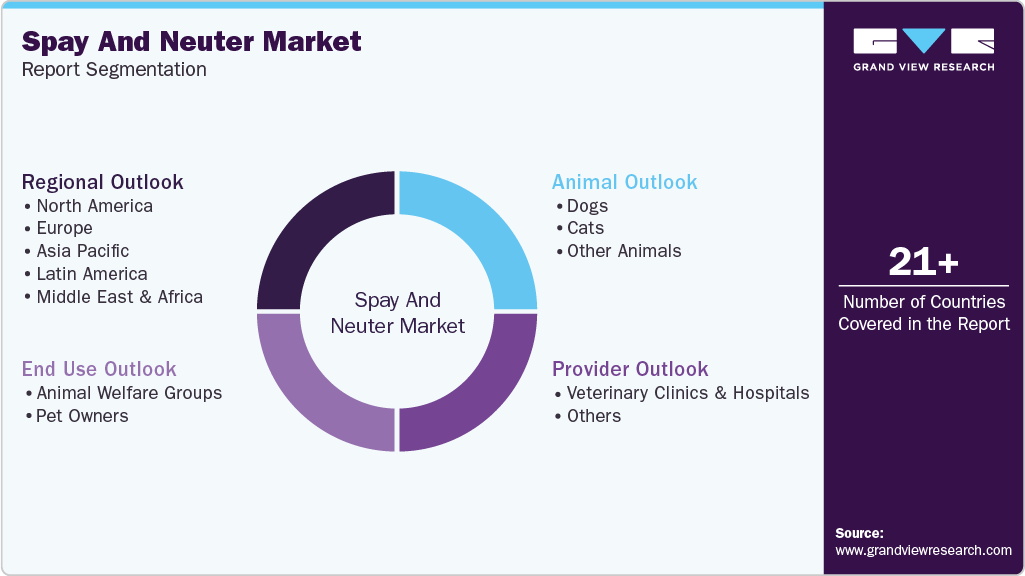
This report forecasts revenue growth at global, regional, and country levels and provides an analysis of the latest industry trends in each of the sub-segments from 2021 to 2033. For this study, Grand View Research has segmented the global spay and neuter market report based on animal, provider, end use, and region.
-
Animal Outlook (Revenue, USD Million, 2021 - 2033)
-
Dogs
-
Spaying
-
Neutering
-
-
Cats
-
Spaying
-
Neutering
-
-
Other Animals
-
-
Provider Outlook (Revenue, USD Million, 2021 - 2033)
-
Veterinary Clinics & Hospitals
-
Others
-
-
End Use Outlook (Revenue, USD Million, 2021 - 2033)
-
Animal Welfare Groups
-
Pet Owners
-
-
Region Outlook (Revenue, USD Million, 2021 - 2033)
-
North America
-
U.S.
-
Canada
-
Mexico
-
-
Europe
-
UK
-
Germany
-
France
-
Italy
-
Spain
-
Denmark
-
Sweden
-
Norway
-
-
Asia Pacific
-
Japan
-
China
-
India
-
Australia
-
Thailand
-
South Korea
-
-
Latin America
-
Brazil
-
Argentina
-
-
Middle East & Africa
-
South Africa
-
UAE
-
Saudi Arabia
-
Kuwait
-
Qatar
-
Oman
-
-
Frequently Asked Questions About This Report
b. Key factors that are driving the market growth include expansion of low-cost clinics & mobile surgical units, increasing government regulations, bylaws & mandatory sterilization policies, rising growth of animal welfare NGOs & global funding support and increasing awareness & education efforts.
b. By region, Asia Pacific is growing fast because governments and welfare groups in countries such as China, India, and Japan are running large sterilization campaigns, expanding subsidies, and raising public awareness of pet population control. Japan leads the region through strong support programs, and India is growing quickly as cities scale mass-sterilization drives and nonprofits offer low-cost services that reach both pet and stray animals.
b. The global spay and neuter market size was estimated at USD 2.84 billion in 2025 and is expected to reach USD 2.99 billion in 2026.
b. The global spay and neuter market is expected to grow at a compound annual growth rate of 5.65% from 2026 to 2033 to reach USD 4.39 billion by 2033.
b. By region, North America dominated the spay and neuter market with a share of around 37.23% in 2025. This is attributable to widespread low-cost programs, updated guidelines, and strong community outreach that raise service participation. The U.S. leads regional growth through redesigned municipal models and continuous public campaigns, while Mexico is expanding fast as high-volume community clinics remove cost barriers and deliver large sterilization counts.


Share this report with your colleague or friend.
Need a Tailored Report?
Customize this report to your needs — add regions, segments, or data points, with 20% free customization.


ISO 9001:2015 & 27001:2022 Certified
We are GDPR and CCPA compliant! Your transaction & personal information is safe and secure. For more details, please read our privacy policy.
Trusted market insights - try a free sample
See how our reports are structured and why industry leaders rely on Grand View Research. Get a free sample or ask us to tailor this report to your needs.












