South Africa Whey Protein Market Summary
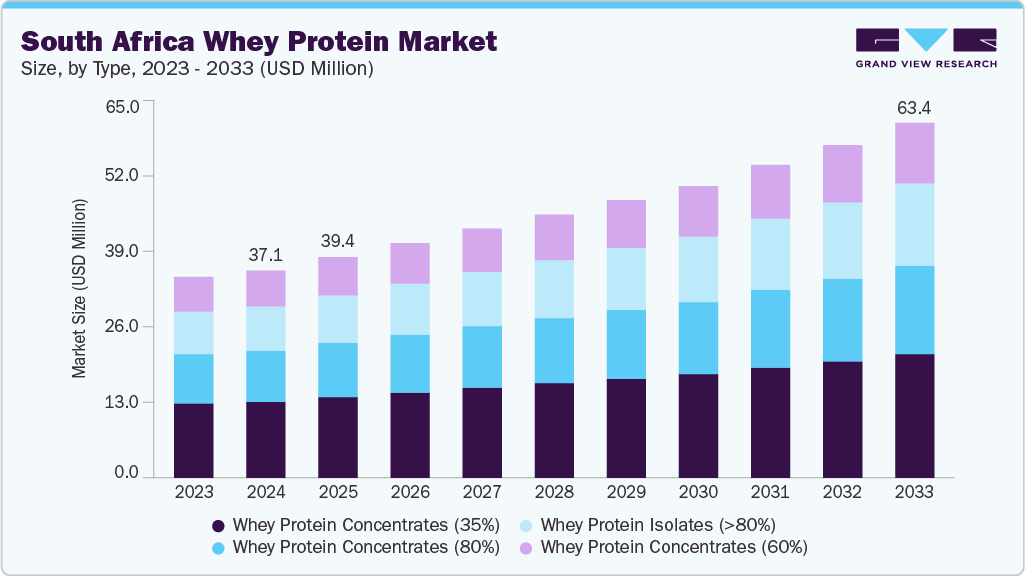
The South Africa whey protein market size was estimated at USD 37.1 million in 2024 and is projected to reach USD 63.4 million in 2033, growing at a CAGR of 6.1% from 2025 to 2033. The market is witnessing robust growth, driven by rising health awareness, increasing fitness trends, and a growing focus on protein-rich diets among consumers of all age groups.
Key Market Trends & Insights
- By type, the whey protein concentrates (35%) segment accounted for a share of 36.8% in 2024.
- By application, the sports nutrition segment dominated the market with a revenue share of 31.3% in 2024.
Market Size & Forecast
- 2024 Market Size: USD 37.1 Million
- 2033 Projected Market Size: USD 63.4 Million
- CAGR (2025-2033): 6.1%
Urban millennials and working professionals are increasingly adopting whey protein as a convenient solution for building muscle, managing weight, and promoting overall wellness. The expanding sports nutrition segment, rising prevalence of lifestyle-related health issues, and increasing consumer inclination toward functional foods and dairy products further fuel the market. Key trends include the rising demand for plant-based and clean-label protein blends, flavored and ready-to-drink whey formulations, as well as innovative product formats such as bars and snacks. Additionally, the surge in e-commerce, social media influence, and fitness communities is enhancing product awareness and adoption in South Africa, particularly in developed regions.
The consumption of protein-rich diets has significantly increased over the past few years due to rising health awareness among consumers across the world. With increasingly busy lifestyles, consumers struggle to regularly consume a nutritionally rich, complete diet, prompting them to seek nutrients from packaged food products. Therefore, packaged food manufacturers are fortifying food products with nutritious ingredients, including protein ingredients.
Rising incidences of chronic illnesses due to changing lifestyles and growing fitness trends, particularly among the millennial population, are the key factors driving the adoption of protein-rich diets. Furthermore, child malnutrition is a prevalent issue in African countries, which is primarily caused by protein deficiency. Therefore, a higher emphasis is being placed on protein-rich diets in African countries, which is expected to drive the demand for protein-rich ingredients such as soy, pea, and canola.
The sports nutrition industry encompasses the consumption of various nutrients, including vitamins, proteins, supplements, fats, carbohydrates, minerals, and organic compounds. Sports nutritional products comprise sports functional foods and beverages, sports supplements, and sports foods, which are designed to enhance the strength and endurance of athletes and bodybuilders, thereby increasing their overall performance, improving stamina, promoting muscle growth, and supporting overall health.
Consumer Insights for the South Africa Whey Protein Market:
The South Africa whey protein industry is largely shaped by health-conscious consumers who prioritize fitness, nutrition, and overall wellness. Urban millennials and working professionals are the primary adopters, drawn to whey protein for its convenience, high protein content, and benefits for muscle building, weight management, and post-exercise recovery. Younger consumers, particularly those engaged in active lifestyles, are increasingly exploring flavored whey protein powders, ready-to-drink shakes, and protein-enriched snacks. In contrast, older demographics tend to focus more on products that support general health, immunity, and bone strength. The growing awareness of functional foods and nutraceuticals has further encouraged consumers to integrate whey protein into their daily diets.
Consumer demand is also influenced by dietary trends and preferences for clean-label, natural, and plant-based alternatives. The rise of vegan and allergen-free diets has sparked interest in blended formulations that combine whey with plant-based proteins, such as pea or soy. Convenience remains a key factor, with e-commerce platforms and online subscription models enhancing accessibility and trial among consumers. Additionally, social media, fitness influencers, and online communities play a critical role in shaping consumer perceptions, driving experimentation with new flavors, formulations, and usage routines.
Another important driver is the growing influence of the sports nutrition and foodservice segments. Gyms, fitness centers, and health clubs are increasingly offering whey-based protein shakes and supplements to meet the on-the-go nutritional needs of members. Quick-service restaurants, cafes, and health-focused eateries are also incorporating protein-enriched products into menus, catering to demand for functional, performance-oriented nutrition. Overall, the whey protein market reflects a shift toward health-driven, convenience-focused, and experience-oriented consumption, with consumers seeking personalized, high-quality, and innovative protein solutions.
Type Insights
Whey protein concentrates (35%) led the South Africa whey protein market with the largest share of 36.8% in 2024, driven by their cost-effectiveness, high protein content, and versatility in various applications, such as sports nutrition, dairy products, and functional foods. Its popularity is further supported by strong consumer awareness of protein-rich diets and growing demand for muscle recovery and weight management solutions. WPC remains the preferred choice among manufacturers and consumers due to its balanced amino acid profile, ease of formulation in powders, bars, and functional food & beverages, and compatibility with flavored and ready-to-drink products. Despite the rising interest in whey protein isolate (WPI) and hydrolysates, WPC continues to dominate, particularly in emerging markets where affordability and accessibility are key purchase considerations.
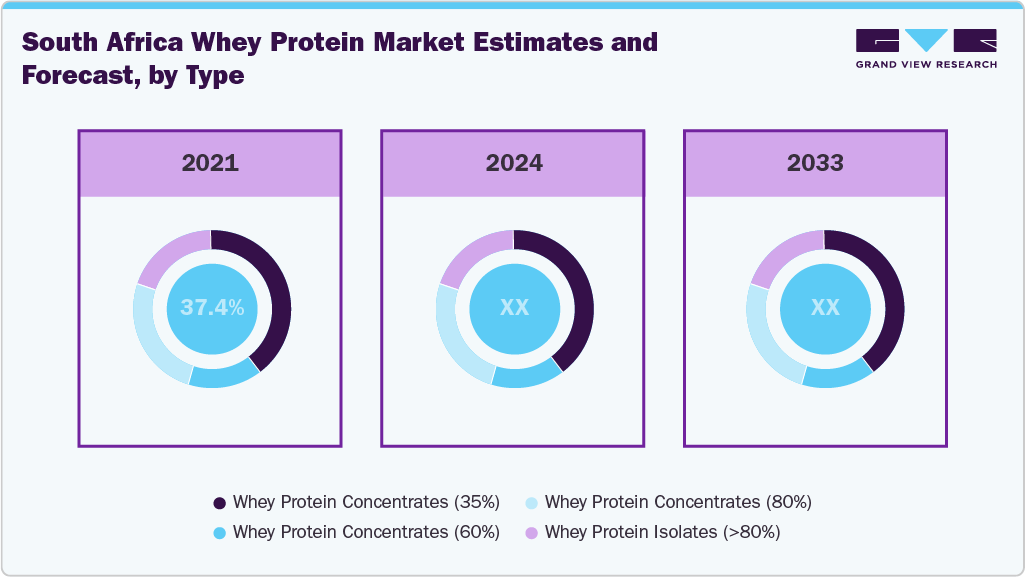
Whey protein isolates (greater than 80%) are anticipated to grow at a CAGR of 7.1% from 2025 to 2033, driven by increasing consumer demand for high-purity, low-fat, and low-lactose protein formulations. WPI is particularly favored by athletes, fitness enthusiasts, and health-conscious consumers seeking rapid muscle recovery, enhanced performance, and precise protein intake. The growth is further supported by rising adoption in premium sports nutrition products, functional food & beverages, and meal replacement solutions. Additionally, the expanding awareness of clean-label, allergen-friendly, and lactose-reduced options is encouraging manufacturers to introduce innovative WPI-based products. While whey protein concentrate remains dominant due to its affordability, WPI is emerging as a preferred segment in developed regions and among premium consumers who focus on quality and efficacy.
Application Insights
The sports nutrition & performance segment led the South Africa whey protein industry with a revenue share of 31.3% in 2024, driven by rising participation in fitness activities, increasing gym memberships, and growing awareness of protein’s role in muscle building and recovery. Athletes, bodybuilders, and active individuals are increasingly opting for whey protein powders, ready-to-drink shakes, and protein bars to meet their performance and nutritional goals. The segment is further supported by product innovations, such as flavored and fortified formulations, that enhance taste, convenience, and functionality. Additionally, the influence of fitness influencers, social media communities, and online retail channels has expanded consumer awareness and adoption of sports nutrition-oriented whey protein products in South Africa.
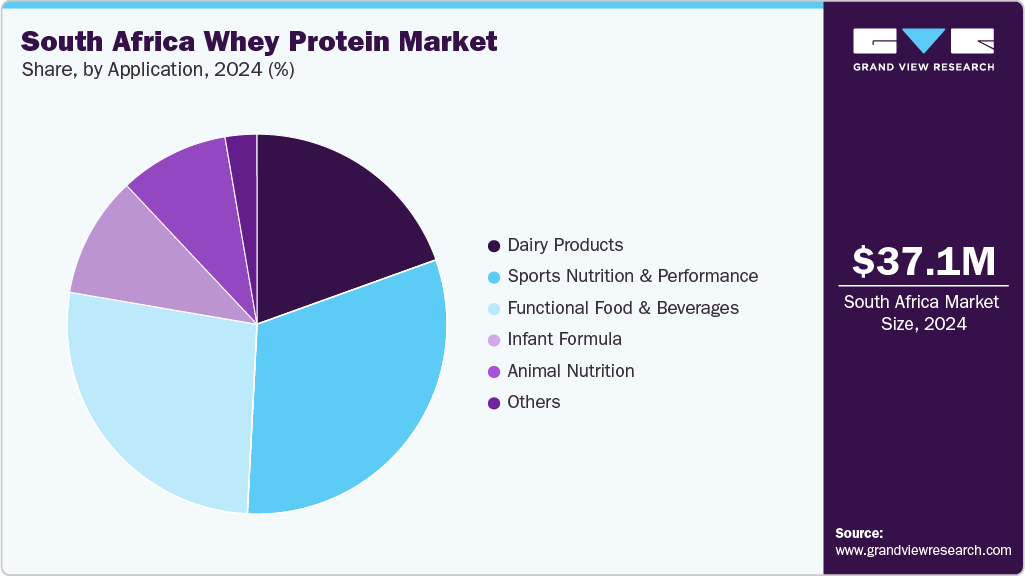
The infant formula applications are anticipated to grow at a CAGR of 6.5% from 2025 to 2033, driven by rising awareness of infant nutrition, growing demand for high-quality protein sources, and increasing preference for premium baby food products. The use of whey protein in formula enhances digestibility and supports infant growth and immunity, encouraging manufacturers to innovate formulations that closely mimic the nutritional profile of human breast milk.
Key South Africa Whey Protein Company Insights
Key companies in the South Africa whey protein industry primarily focus on innovation, flavor diversity, and health-centric offerings. They are investing in type development, strategic partnerships, and sustainable packaging to cater to evolving consumer preferences, expand their footprint, and strengthen competitiveness across regions.

Key South Africa Whey Protein Companies:
- Arla Foods
- Saputo Inc.
- Fonterra Co-operative Group Ltd
- Glanbia plc
- Olam International Ltd
- Carbery Group.
- Agri-Mark, Inc.
- Agropur, Inc.
- The Milky Whey, Inc.
- Fairway Dairy & Ingredients
Recent Developments
-
In June 2025, Bos partnered with local supplement brand MetaLab to launch a limited-edition whey protein mix infused with rooibos extract. This collaboration introduced two flavour variants blending 20-24 g of protein per scoop with the iconic rooibos tea profile and included a sustainability tree-planting initiative.
-
In September 2024, global brand MyProtein entered an exclusive distribution partnership with South African pharmacy chain Dis‑Chem Pharmacies, bringing top-selling whey, whey-isolate, and related sports-nutrition products to its nationwide footprint and increasing retail accessibility of international whey brands.
South Africa Whey Protein Market Report Scope
|
Report Attribute
|
Details
|
|
Market size value in 2025
|
USD 39.4 million
|
|
Revenue Forecast in 2033
|
USD 63.4 million
|
|
Growth rate
|
CAGR of 6.1% from 2025 to 2033
|
|
Actuals
|
2021 - 2024
|
|
Forecast period
|
2025 - 2033
|
|
Quantitative units
|
Revenue in USD million and CAGR from 2025 to 2033
|
|
Report coverage
|
Revenue forecast, company ranking, competitive landscape, growth factors, and trends
|
|
Segments covered
|
Type and application
|
|
Key companies profiled
|
Arla foods; Saputo Inc.; Fonterra Co-operative Group Ltd; Glanbia plc; Olam International Ltd; Carbery Group.; Agri-Mark, Inc; Agropur, Inc; The Milky Whey, Inc; Fairway Dairy & Ingredients
|
|
Customization scope
|
Free report customization (equivalent up to 8 analysts’ working days) with purchase. Addition or alteration to country, regional & segment scope.
|
|
Pricing and purchase options
|
Avail customized purchase options to meet your exact research needs. Explore purchase options
|
South Africa Whey Protein Market Report Segmentation
This report forecasts revenue growth at the country level and provides an analysis of the latest trends and opportunities in each sub-segment from 2021 to 2033. For this study, Grand View Research has segmented the South Africa whey protein market report based on type and application.
-
Type Outlook (Revenue, USD Million, 2021 - 2033)
-
Whey Protein Concentrates (35%)
-
Whey Protein Concentrates (60%)
-
Whey Protein Concentrates (80%)
-
Whey Protein Isolates (>80%)
-
Application Outlook (Revenue, USD Million, 2021 - 2033)
Frequently Asked Questions About This Report
b. The South Africa whey protein market was estimated at USD 37.1 million in 2024 and is expected to reach USD 39.4 million in 2025.
b. The South Africa whey protein market is expected to grow at a compound annual growth rate of 6.1% from 2025 to 2033 to reach USD 63.4 million by 2033.
b. Whey Protein Concentrates (35%) held the largest share, accounting for 36.78% of the South Africa whey protein industry in 2024, driven by its cost-effectiveness, high protein content, and versatility in various applications such as sports nutrition, dairy products, and functional foods.
b. Some of the key players in the South Africa whey protein market is Arla foods; Saputo Inc.; Fonterra Co-operative Group Ltd; Glanbia plc; Olam International Ltd; Carbery Group.; Agri-Mark, Inc; Agropur, Inc; The Milky Whey, Inc; Fairway Dairy & Ingredients.
b. Rising fitness awareness, growing sports nutrition demand, expanding gym culture, protein-rich diet trends, and increasing functional food applications drive growth.

 Download Sample Report














