Sensory And Functional Food Ingredients Market Summary
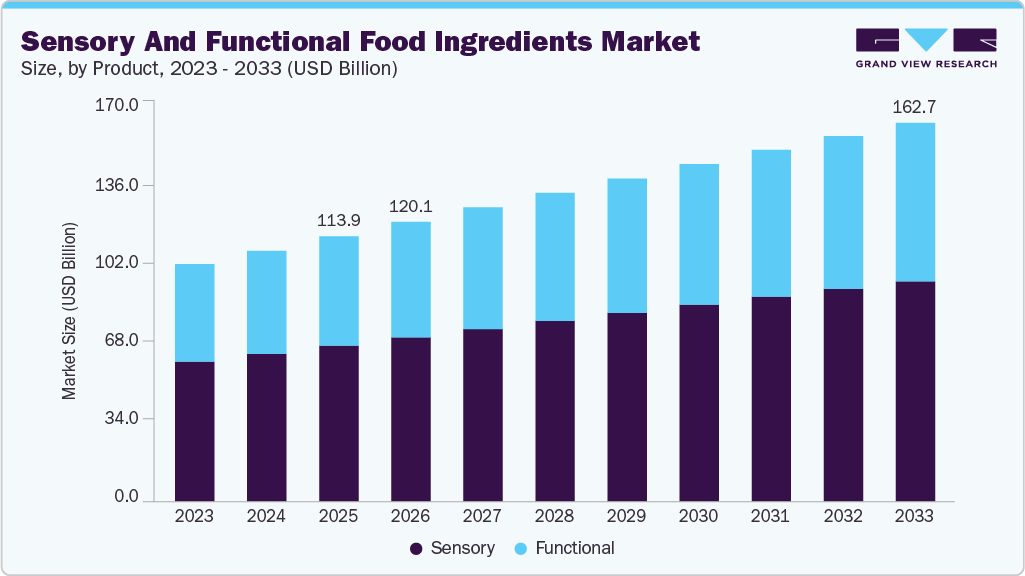
The global sensory and functional food ingredients market size was estimated at USD 113.87 billion in 2025 and is projected to reach USD 162.73 billion by 2033, growing at a CAGR of 4.4% from 2026 to 2033. The market has been witnessing an upsurge in the past few years, mainly due to the rising health awareness among consumers.
Key Market Trends & Insights
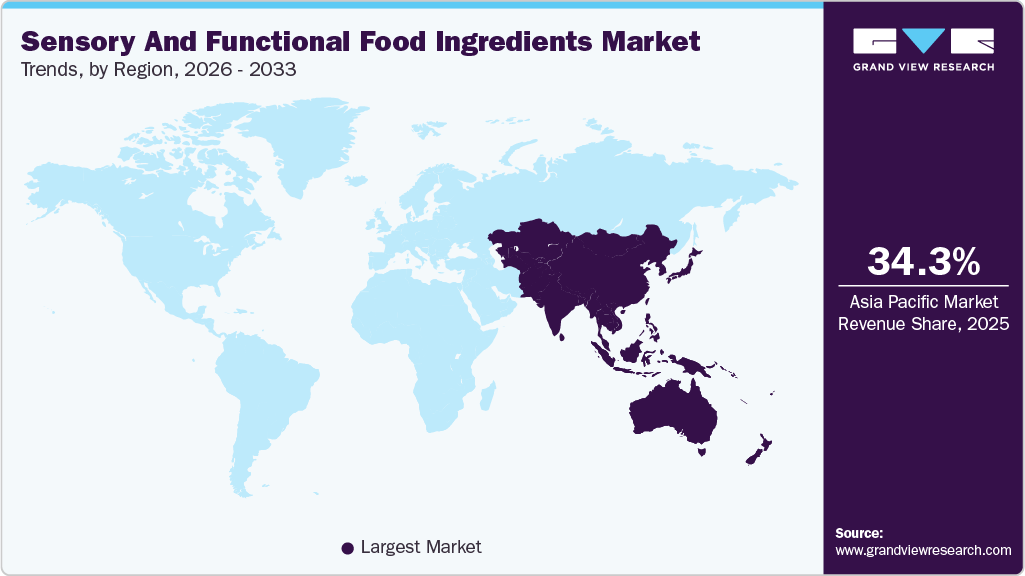
- Asia Pacific dominated the global sensory and functional food ingredients market with the largest revenue share of 34.30% in 2025.
- The China sensory and functional food ingredients market is experiencing robust growth.
- By product, the sensory segment led the market with the largest revenue share of 58.75% in 2025.
- By application, the meat, poultry, and seafood segment led the market with the largest revenue share of 16.18% in 2025.
Market Size & Forecast
- 2025 Market Size: USD 113.87 Billion
- 2033 Projected Market Size: USD 162.73 Billion
- CAGR (2026-2033): 4.4%
- Asia Pacific: Largest market in 2025
The increasing prevalence of chronic diseases such as obesity across the world has emerged as the primary driver towards the switch to healthy food alternatives. Due to this, food manufacturers have been increasingly incorporating functional ingredients, such as probiotics, emulsifiers, and hydrocolloids, into processed foods.
Various types of sensory and functional food ingredients are added into food products, including functional food ingredients, specialty starch and texturants, sweeteners, flavors, preservatives, emulsifiers, colorants, enzymes, cultures, proteins, specialty oils, yeast, and others. These ingredients are typically added to packaged food products, including beverages, bakery, dairy, confectionery, dried processed foods, frozen foods, and others. The growing trend of incorporating sugar substitutes, such as stevia and coconut sugar, into beverages, bakery, and confectionery products is likely to support the growth of the sensory and functional food ingredients industry in the coming years.
A large number of consumers are placing a high focus on personal health, preferring products that include minimal synthetic ingredients. Increasing preference towards healthy food, coupled with the willingness to pay a premium price for such products with better nutritional value, are also important factors that are likely to propel the demand for protein supplements over the forecast period.
Brand name, nutritional value, and safety of the products are some of the factors that influence the consumer's buying pattern. Awareness of high-quality products through advertisement across various forms of media, including electronic and social media, about the benefits offered by protein supplements, is further likely to influence consumer buying behavior.
The rapid socioeconomic development that has taken place over the decades has also resulted in increased cases of heart diseases, cancer, and diabetes across various segments of the population. The growing health consciousness has led to consumers preferring protein-based food products with added health benefits. Furthermore, factors such as a busy lifestyle that encourages on-the-go eating and the rising trend of replacing meals with smaller nutritional snacks have led to increased consumption of protein bars, cookies, and RTDs as part of a daily diet.
The trend of being proactive toward chronic health problems has spurred the demand for protein supplements in North America, as they contain essential ingredients that improve the overall health of consumers. Moreover, the growing trend of personalized nutrition in North America is expected to have a positive impact on the product demand.
Product Insights
The sensory food ingredients segment led the market with the largest revenue share of 58.75% in 2025, reflecting their critical role in enhancing taste, aroma, texture, and overall consumer experience across processed and packaged foods. These ingredients, including flavors, colors, sweeteners, texturants, and taste modulators, are widely used to differentiate products in highly competitive food and beverage markets. Rising demand for premium, indulgent, and convenience foods has accelerated the adoption of advanced sensory solutions that deliver consistent quality and sensory appeal. Additionally, growing reformulation efforts to reduce sugar, salt, and fat levels have increased reliance on sensory ingredients to maintain palatability without compromising taste. Clean-label trends and consumer preference for natural and plant-based sensory solutions have further shaped product innovation, encouraging manufacturers to develop natural flavors, extracts, and colorants that align with health, transparency, and sustainability expectations.
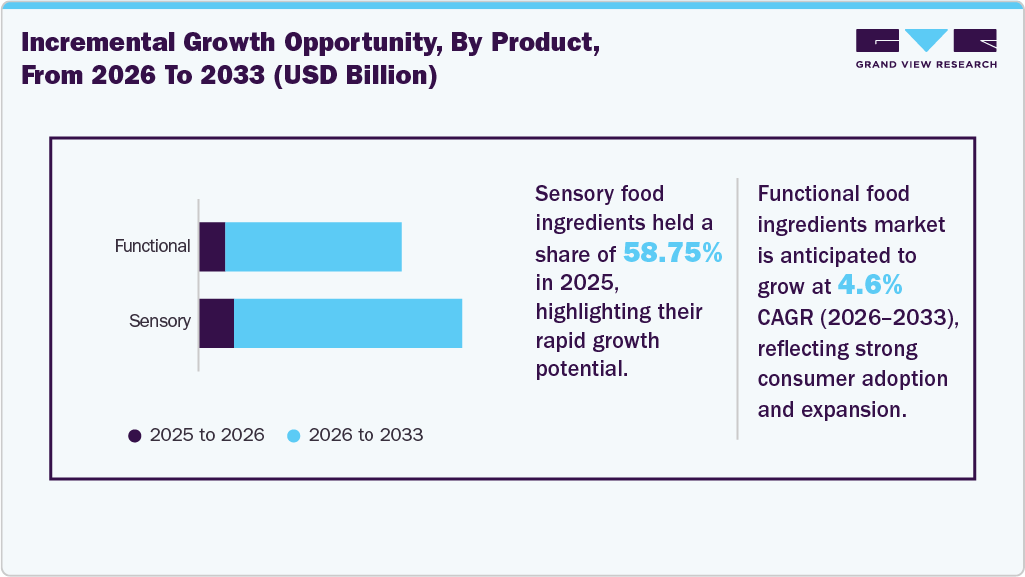
The functional food ingredients segment is expected to grow at the fastest CAGR of 4.6% from 2026 to 2033, supported by sustained consumer interest in health-oriented and value-added food products. Increasing emphasis on preventive healthcare is driving the incorporation of functional ingredients such as probiotics, prebiotics, dietary fibers, plant proteins, omega-3 fatty acids, and antioxidants into daily diets. Food and beverage manufacturers are actively reformulating products to offer targeted benefits related to digestive health, immunity support, energy, and metabolic wellness. Growth is further reinforced by rising adoption of functional beverages, sports and active nutrition products, and fortified staples. In addition, clean-label trends and the demand for natural, minimally processed ingredients are shaping innovation strategies across the industry. Technological advancements that enhance ingredient stability and bioavailability are enabling wider applications across the bakery, dairy, snacks, and beverages sectors, ensuring steady long-term growth of the functional sensory and functional food ingredients industry.
Application Insights
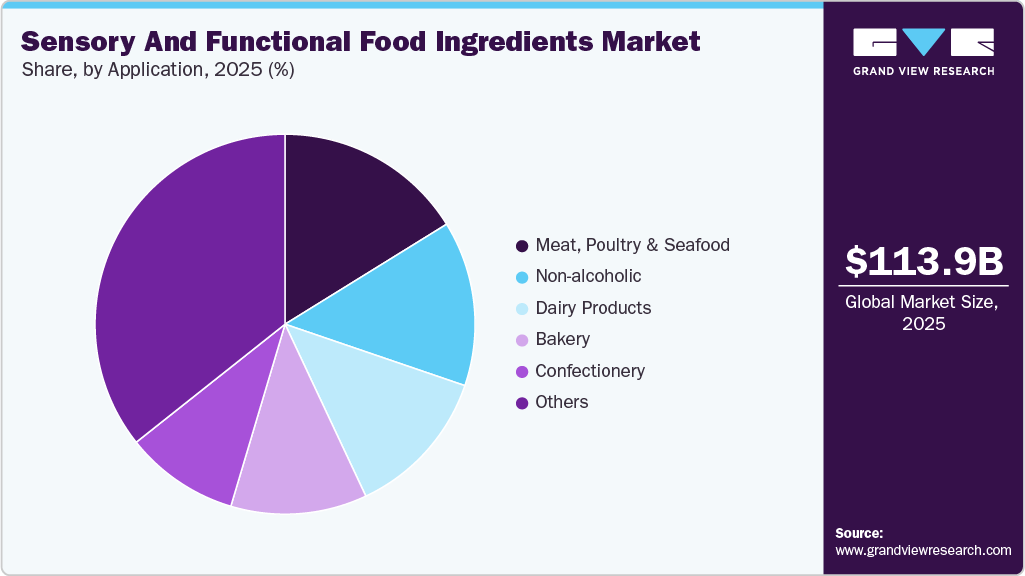
The meat, poultry, and seafood segment led the market with the largest revenue share of 16.18% in 2025. Specialty ingredients are widely used in the meat processing industry in order to improve the shelf life, texture, taste, and nutritional profile of the products. As a result, the growth of the meat processing industry is expected to have a positive impact on the demand for sensory and functional food ingredients for application in meat, poultry, and seafood. Growing adoption of frozen meat is also expected to boost the market growth over the forecast period. To fulfill the demand for certain seasonally available meat products, manufacturers are gradually shifting towards the frozen meat segment. Changing lifestyles across the globe and an increase in demand for ready-to-eat food are expected to drive the demand for frozen meat products.
The alcoholic beverages segment is projected to grow at the fastest CAGR of 5.3% from 2026 to 2033, driven by premiumization trends and evolving consumer preferences for differentiated taste profiles and improved drinking experiences. Brewers, distillers, and winemakers are increasingly utilizing specialty ingredients, including natural flavors, yeast extracts, enzymes, colorants, and functional additives, to enhance aroma, mouthfeel, clarity, and stability. The rising demand for craft beer, flavored spirits, and ready-to-drink (RTD) alcoholic beverages is further driving ingredient innovation. In addition, growing interest in low-alcohol, no-alcohol, and better-for-you alcoholic options is encouraging the use of specialty ingredients to maintain flavor complexity while reducing alcohol content. Sustainability and clean-label considerations are also influencing ingredient selection, with manufacturers favoring natural and fermentation-based solutions to meet regulatory requirements and shifting consumer expectations.
Regional Insights
The sensory and functional food ingredients market in North America held a significant share in 2025, supported by a well-developed food processing sector, high consumption of packaged and convenience foods, and strong demand for value-added ingredients. The U.S. leads the regional market due to continuous product innovation, advanced manufacturing capabilities, and early adoption of clean-label and functional ingredients. Canada contributes to the growing demand for natural and plant-based formulations across the bakery, dairy, and beverage sectors. In addition, the Mexico sensory and functional food ingredients industry is gaining traction, driven by expanding food and beverage manufacturing, rising urbanization, and increasing incorporation of flavors, colors, and functional ingredients in processed foods tailored to local taste preferences and export-oriented production.
U.S. Sensory And Functional Food Ingredients Market Trends
The sensory and functional food ingredients market in the U.S. accounted for the largest market revenue share in North America in 2025.The demand for sensory and functional food ingredients in the U.S. is highly influenced by its growing vegan population, high focus on the use of natural & organic food ingredients, and the presence of key manufacturers with wide distribution networks. Moreover, extensive consumption of resistant starch in the food & beverage industry to reduce weight fuels the demand for low-fat food products such as cereals, which, in turn, is projected to drive the overall market growth over the forecast period.
Asia Pacific Sensory And Functional Food Ingredients Market Trends
The Asia Pacific dominated the global sensory and functional food ingredients market with the largest revenue share of 34.30% in 2025, and is expected to grow at the fastest CAGR during the forecast period. The rising demand for natural nutritional products, driven by the increasing number of consumers adopting a healthy lifestyle, is projected to propel the market in the Asia Pacific over the forecast period. The Food Safety and Standards Authority of India, the Japan Health and Nutrition Food Association, and the China Food and Drug Administration regulate the use of various ingredients in food & beverage products in their respective countries to ensure quality and consumer safety. Thus, the manufacturers of these countries are required to adhere to the regulations imposed by their respective governing authorities in the food ingredients market.
The China sensory and functional food ingredients market is experiencing robust growth, driven by increasing disposable income, an expanding middle class, and a heightened emphasis on health and wellness in the wake of the pandemic. Consumers are moving beyond basic nutrition to seek products with specific health benefits, including enhanced immunity, improved digestive health, and better mental well-being. This trend is fueling demand for both sensory ingredients—such as natural flavors, colors, and texturizers that enhance the appeal of health-oriented products—and functional ingredients like probiotics, prebiotics, vitamins, and plant-based extracts. Additionally, the prevailing "clean label" movement is accelerating this transformation, as consumers prioritize transparency, natural ingredients, and product authenticity, prompting manufacturers to reformulate offerings and replace synthetic additives with natural alternatives.
Europe Sensory And Functional Food Ingredients Market Trends
The sensory and functional food ingredients market in Europe is projected to grow at a significant CAGR of 4.7% from 2026 to 2033. European consumers are more inclined toward probiotic foods and probiotic beverages, as awareness about the health benefits of these probiotic food products is increasing in the region. Furthermore, probiotic yogurt is one of the emerging probiotic food products in Europe, which, in turn, is boosting the growth of the food & beverages segment in the European sensory and functional food ingredients industry. Increasing use of probiotics to maintain gut health is the key factor for the growth of the dietary supplements segment in the market. Gut health is directly related to immune health; thus, since the outbreak of the COVID-19 pandemic globally, European consumers have actively considered gut health as one of the most important health issues. Thus, the use of probiotic ingredients in dietary supplements is expected to increase substantially in Europe over the forecast period.
The sensory and functional food ingredients market in the UK is experiencing rapid growth. Consumers in the UK are becoming increasingly aware of the importance of healthy lifestyles and are taking more responsibility to ensure the well-being of both their mental and physical health. The perception of being healthy has also undergone significant changes among UK consumers. The consumers in the country now perceive health in terms of preventing illness rather than treating it. As a result, the country has been experiencing a high demand for dietary supplements over the years. Increasing stress levels and the growing presence of an aging population are among the other factors driving the demand for dietary supplements and sensory and functional food ingredients in the country.
Central & South America Sensory And Functional Food Ingredients Market Trends
The sensory and functional food ingredients market in Central & South America is projected to grow at a CAGR of 2.6% from 2026 to 2033. Factors such as rapid urbanization and increased spending capacities in countries such as Argentina, Brazil, and Chile contribute significantly to the food & beverage industry growth. The growing consumer incomes after the economic recession and subsequent recovery are expected to result in a demand surge for beverages, dairy, and confectionery products, thereby driving the market growth. The rising demand for new flavors and cuisines in the food & beverage industry is expected to have a positive impact on market growth.
Middle East & Africa Sensory And Functional Food Ingredients Market Trends
The sensory and functional food ingredients market in the Middle East & Africa is projected to grow significantly from 2026 to 2033, driven by rising demand for packaged and convenience foods, urbanization, and changing dietary habits. Growth is supported by increasing investments in food processing, especially in GCC countries, and growing use of flavors, emulsifiers, and functional ingredients to enhance shelf life, taste, and product differentiation. Expanding hospitality and foodservice sectors further contribute to steady regional demand.
Key Sensory And Functional Ingredients Company Insights
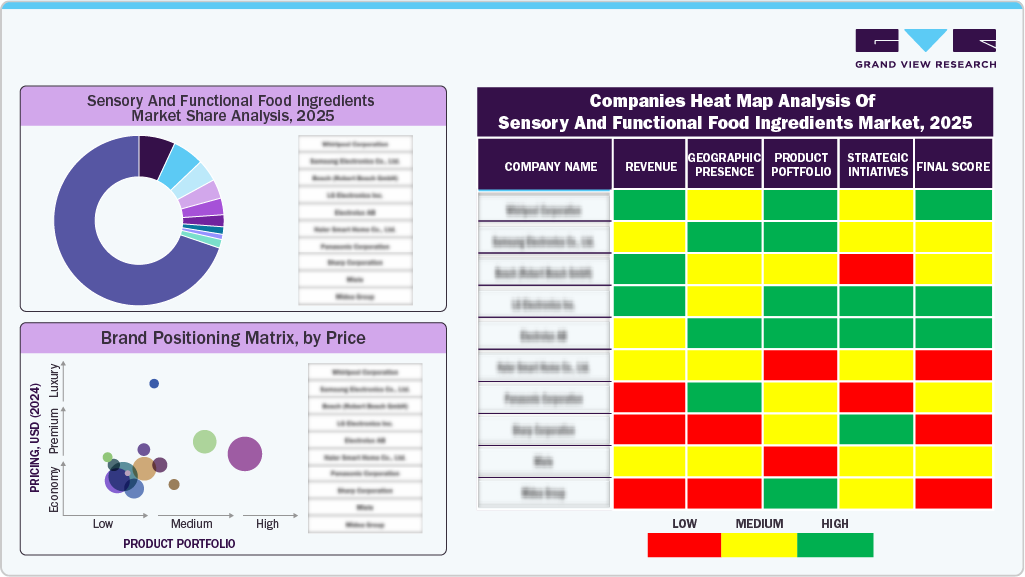
Established companies and emerging players in the sensory and functional food ingredients industry are fostering a highly competitive landscape by focusing on product innovation, quality enhancement, and strategic pricing strategies. This competition is fueled by continuous investments in advanced processing technologies, automation, and a skilled workforce to maintain operational efficiency and comply with stringent regulatory standards. In addition, increasing consumer demand for clean-label, sustainable, and functional protein sources is reshaping market dynamics. These factors collectively drive market share shifts and encourage the development of diverse, value-added sensory and functional food ingredients.
Key Sensory And Functional Food Ingredients Companies:
The following key companies have been profiled for this study on the sensory and functional food ingredients market.
- Kerry Inc
- Chr. Hansen Holding AS
- DSM
- ADM
- IFF
- DuPont de Nemours Inc
- Associated British Foods plc
- Lallemand Inc
- Archer Daniels Midland
- Advanced Enzyme Technologies
- Cargill Inc.
- Adisseo
Recent Developments
-
In November 2025, Probi broadened its offerings with two new probiotic lines: Sports & Active Nutrition, focused on physical performance, and Pet Health probiotics targeting digestive and oral health in companion animals, highlighting diversification beyond traditional human supplements.
-
In November 2025, Ingredion launches new clean-label ingredients: Ingredion introduced FIBERTEX CF 500 and CF 100 citrus fibre ingredients made from upcycled citrus peels that enhance texture, gelling, and viscosity for meat alternatives, baked goods, and savory foods. It also launched VITESSENCE Pea 100 HD protein to improve texture and softness in plant-based protein bars, showcased at IFT FIRST 2024
-
In July 2025, ClostraBio, Inc. announced that its next-generation probiotic strain CLB101 received self-affirmed GRAS status, positioning it for commercial launch in the U.S. market.
Sensory And Functional Food Ingredients Market Report Scope
|
Report Attribute
|
Details
|
|
Market size value in 2026
|
USD 120.09 billion
|
|
Revenue Forecast in 2033
|
USD 162.73 billion
|
|
Growth rate
|
CAGR of 4.4% from 2026 to 2033
|
|
Base year for estimation
|
2025
|
|
Historical data
|
2021 - 2024
|
|
Forecast period
|
2026 - 2033
|
|
Quantitative units
|
Revenue in USD million/billion, and CAGR from 2026 to 2033
|
|
Report coverage
|
Revenue forecast, company ranking, competitive landscape, growth factors, and trends
|
|
Segments covered
|
Product, application, region
|
|
Regional scope
|
North America; Europe; Asia Pacific; Central & South America; Middle East & Africa
|
|
Country scope
|
U.S.; Canada; Mexico; Germany; France; Italy; UK; France; Spain; China; India; Japan; South Korea; Brazil; and Saudi Arabia
|
|
Key companies profiled
|
Kerry Inc.; Chr. Hansen Holding AS; DSM; DuPont de Nemours Inc.; Associated British Foods plc; Lallemand Inc.; Archer Daniels Midland (ADM); Advanced Enzyme Technologies; Cargill Inc.; Adisseo; ADM; IFF
|
|
Customization scope
|
Free report customization (equivalent up to 8 analysts’ working days) with purchase. Addition or alteration to country, regional & segment scope.
|
|
Pricing and purchase options
|
Avail customized purchase options to meet your exact research needs. Explore purchase options
|
Global Sensory And Functional Food Ingredients Market Report Segmentation
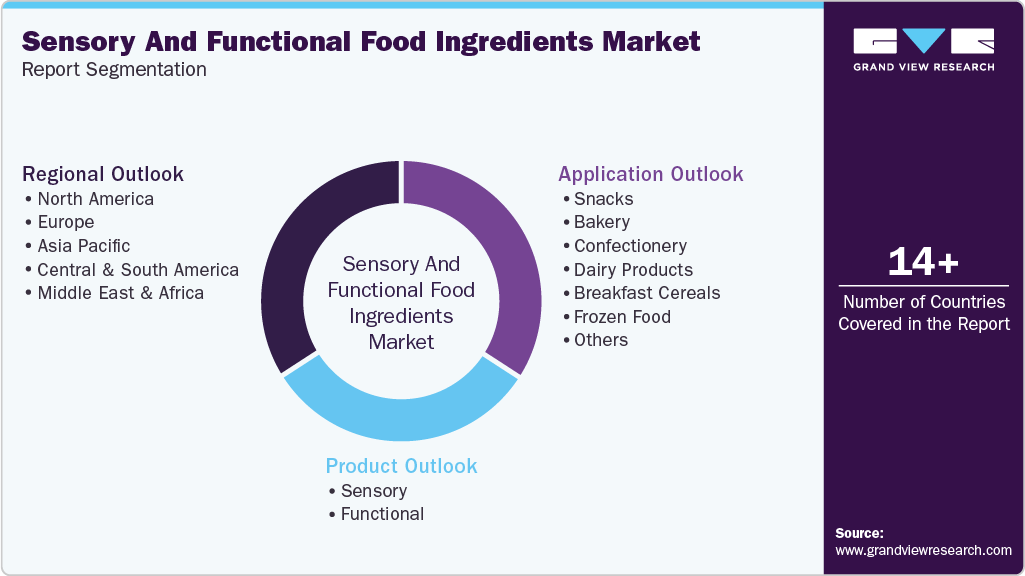
This report forecasts revenue growth at global, regional & country levels and provides an analysis of the latest trends and opportunities in each of the sub-segment from 2021 to 2033. For this study, Grand View Research has segmented the global sensory and functional food ingredients market report based on the product, application, and region:
-
Product Outlook (Revenue, USD Million, 2021 - 2033)
-
Sensory
-
Enzymes
-
Emulsifiers
-
Flavors
-
Colorants
-
Others
-
Functional
-
Vitamins
-
Minerals
-
Antioxidants
-
Preservatives
-
Others
-
Application Outlook (Revenue, USD Million, 2021 - 2033)
-
Snacks
-
Bakery
-
Confectionery
-
Dairy Products
-
Breakfast Cereals
-
Frozen Food
-
Meat, Poultry, and Seafood
-
Baby Food
-
Sauces, Dressings, and Condiments
-
Alcoholic
-
Non Alcoholic
-
Others
-
Regional Outlook (Revenue, USD Million, 2021 - 2033)
-
North America
-
Europe
-
Germany
-
UK
-
France
-
Italy
-
Spain
-
Asia Pacific
-
China
-
Japan
-
India
-
South Korea
-
Central & South America
-
Middle East & Africa

 Download Sample Report














