Saudi Arabia Dietary Supplements Market Summary
The Saudi Arabia dietary supplements market size was estimated at USD 845.4 million in 2024 and is projected to reach USD 1,538.3 million by 2030, growing at a CAGR of 10.3% from 2025 to 2030. The growth is attributed to rising health awareness among young people and increasing lifestyle diseases.
Key Market Trends & Insights
- By ingredients, the vitamin segment dominated the market with the largest share of 31.3% in 2024, owing to its widespread consumer recognition and proven health benefits .
- By form, tablet supplements accounted for the largest revenue share of 31.4% in 2024.
- By end use, dietary supplements for adults dominated the dietary supplements market, with a share of 62.2% in 2024.
Market Size & Forecast
- 2024 Market Size: USD 845.4 Million
- 2030 Projected Market Size: USD 1,538.3 Million
- CAGR (2025-2030): 10.3%
Growing emphasis on preventive healthcare also contributes to the market growth. Many consumers now view supplements such as vitamins C and D, zinc, probiotics, omega‑3, and protein powders as essential for long‑term wellness rather than remedial solutions, particularly in the wake of the COVID‑19 pandemic. Key market players are increasingly focusing on capacity expansion, fueling the market's growth and boosting the demand for dietary supplements across the country. For instance, in July 2024, Agthia Group PJSC officially announced the opening of its new protein manufacturing facility in Jeddah, Saudi Arabia. This strategic investment aligns with Saudi Vision 2030.
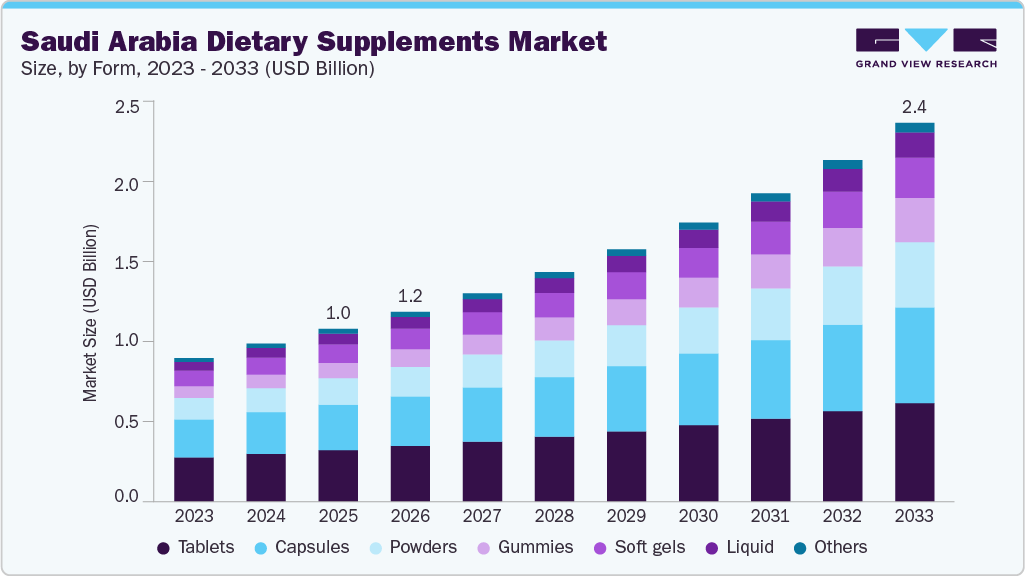
Additionally, e‑commerce and retail modernization have improved accessibility and trust, especially among urban millennials and Gen Z. These factors are expected to boost the dietary supplements market in Saudi Arabia.
Consumer Insights
Saudi Arabian consumers increasingly incorporate dietary supplements into their daily health routines, driven by rising awareness of preventive healthcare, chronic disease management, and immunity enhancement. Key user segments include young professionals and fitness enthusiasts using protein, multivitamins, and energy supplements, as well as middle-aged adults and seniors seeking solutions for joint health, bone strength, and cardiovascular wellness. Women are particularly active consumers, with growing demand for supplements supporting hair, skin, fertility, and hormonal balance.
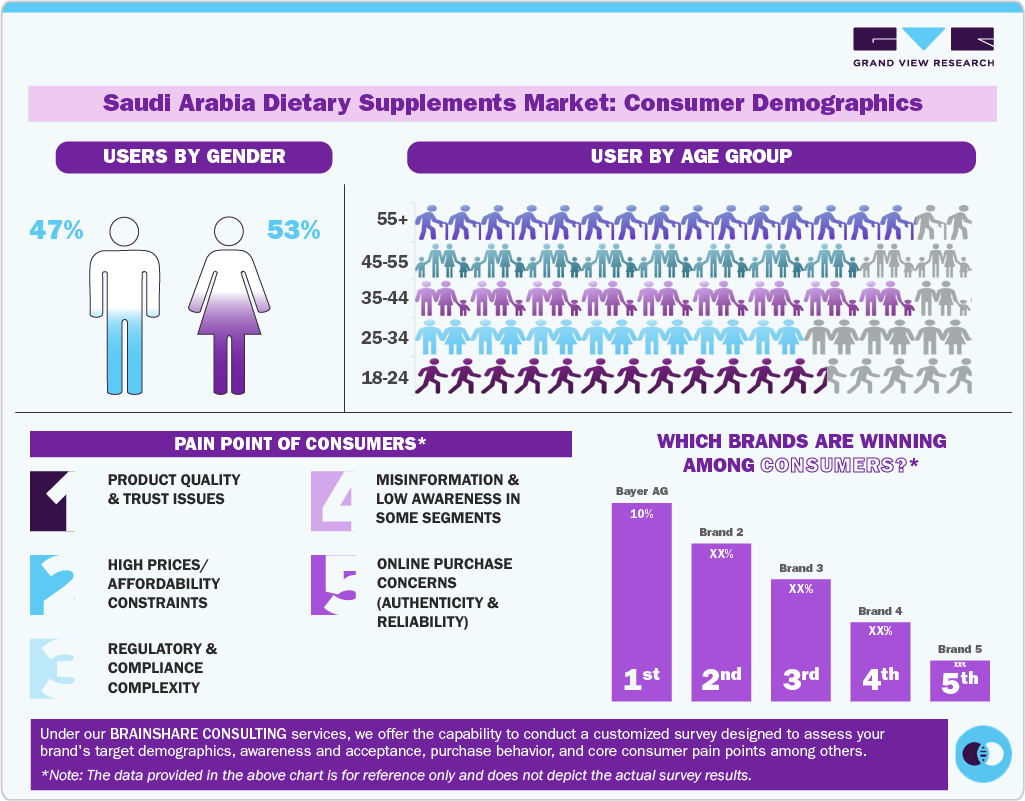
Saudi consumers strongly prefer halal-certified, natural, and scientifically validated products, with growing interest in vitamins and protein supplements. Consumers are also showing increased interest in personalized nutrition and innovative formats like gummies, effervescent tablets, and ready-to-drink shots that cater to convenience and modern lifestyles. Social media, fitness influencers, and trusted medical professionals are key drivers in supplement adoption, especially among younger demographics.
Ingredient Insights
The vitamin segment dominated the market with the largest share of 31.3% in 2024, owing to its widespread consumer recognition and proven health benefits. The growth is primarily attributed to the high prevalence of deficiencies, especially in vitamin D, iron, and calcium, across various demographic groups, including children, pregnant women, and older adults. In addition, increasing healthcare spending across the country is also contributing to the growth of the segment.
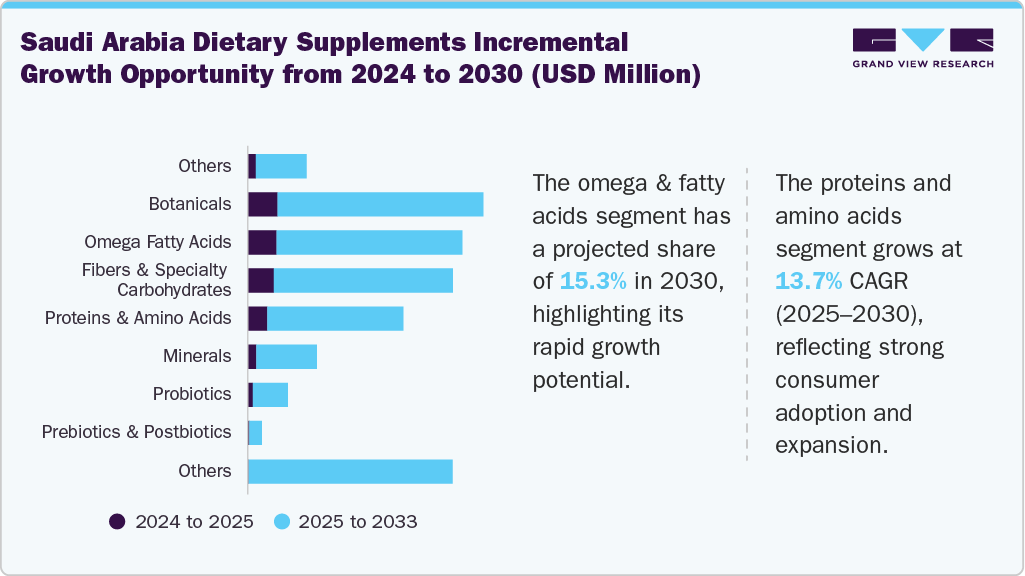
The proteins and amino acids segment is projected to be the fastest-growing segment, with a CAGR of 13.7% from 2025 to 2030. Rising awareness of protein's nutritional value and increasing demand among athletes are propelling the growth.
Form Insights
The tablet segment held the largest revenue share in 2024, driven by its convenience, precise dosing, and extended shelf life qualities, which the country’s health-conscious consumers highly value. Tablets are favored for their portability and ease of use, fitting seamlessly into daily routines amidst growing awareness of preventive health. Their wide availability in pharmacies and retail chains nationwide enhances their accessibility. Additionally, the ability to incorporate multiple active ingredients in tablet form aligns well with local demand for multifunctional supplements. In addition, dietary supplement tablets in the special food application category under the SFDA, which enforces strict quality and stability standards, offer a reliable and trusted format for long-term supplementation. These factors are expected to increase the demand for tablets nationwide in the dietary supplement market.
The gummies segment is anticipated to grow at the fastest CAGR over the forecast period, attributed to its appealing taste, ease of consumption, and suitability for all age groups. Especially popular among children and adults who have difficulty swallowing pills, gummies offer a more enjoyable and convenient alternative to traditional tablets or capsules. Their chewable nature enhances compliance, particularly for daily multivitamin routines or nutrient-specific regimens like Vitamin D, Biotin, or Omega-3s. In addition, companies' rising focus on expansion is driving the market's growth. In January 2023, NutriGums secured a seven‑figure distribution deal in Saudi Arabia. The company’s distributor, GulfBird Trading Group, in Riyadh, was expected to launch its plant-based gummy vitamins in major pharmacy chains nationwide.
Type Insights
The prescribed segment dominated the market in 2024 and is expected to grow at the fastest CAGR during the forecast period. This growth is mainly driven by strong public trust in doctors, as people see physician-recommended supplements as safer, more effective, and tailored to their health needs. A multivitamin-multimineral (MVMM) use among Saudi adults in Al-Majmah, Saudi Arabia, study published in April 2025 by the Journal of Pioneering Medical Sciences found that 38.6% of participants had obtained multivitamins and multiminerals through hospital prescriptions, highlighting the rising demand for prescribed supplements. Cultural habits also play a role, as many individuals and families in Saudi Arabia prefer to consult healthcare professionals for health decisions. For diagnosed deficiencies, supplements are usually given as part of a treatment plan, strengthening the reliance on doctor-prescribed products.
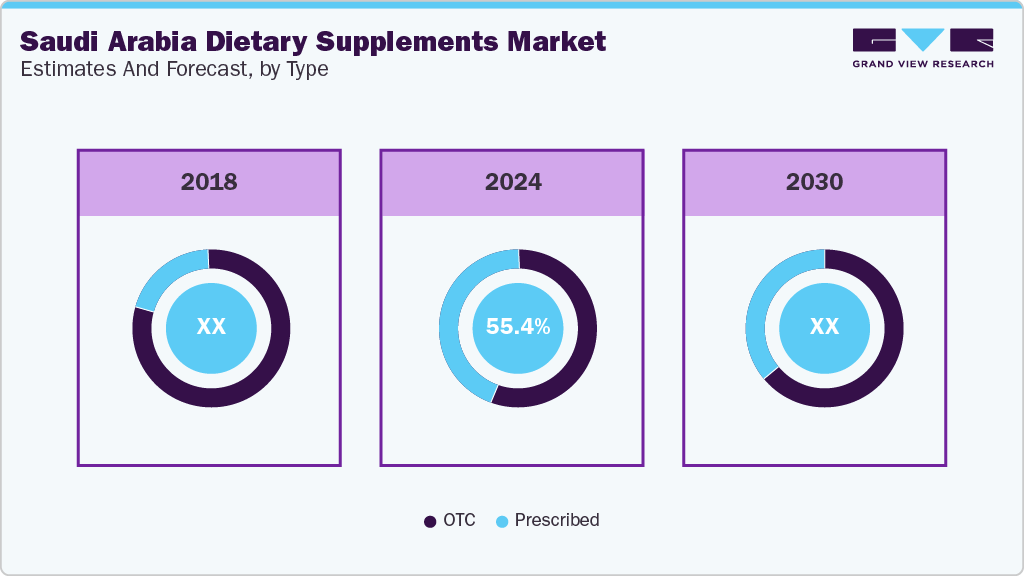
The OTC segment is expected to grow at the second fastest CAGR during the forecast period, propelled by its convenience, accessibility, and affordability. Moreover, increasing awareness among consumers due to the availability of information helps make easy purchase decisions, making it a faster and easier option for health-conscious consumers. Younger consumers, especially those in urban areas, are increasingly self-educating through social media and health influencers. The segment also benefits from strong regulatory support from the Saudi Food and Drug Authority (SFDA) and quality standards, reinforcing safety perceptions.
Application Insights
The immunity segment held the largest share in 2024 due to a growing public focus on preventive health, especially following the COVID-19 pandemic, which significantly heightened awareness about immune health. Rising incidences of lifestyle-related diseases, increasing adoption of supplements like vitamin C and zinc, consumers' proactive approach, herbal products, and government-led health awareness campaigns have further driven demand. Additionally, the high prevalence of vitamin D deficiency across the country has led many to turn to immunity-boosting supplements as a daily health measure.
The prenatal health segment is expected to grow rapidly from 2025 to 2030, driven by rising maternal and fetal nutrition awareness, increasing birth rates, and supportive government initiatives focused on women’s health. As per World Bank Group data, Saudi Arabia’s birth rate rose from 2.1 per woman in 2022 to 2.3 in 2023, reflecting a positive demographic trend. The growing use of prenatal vitamins such as folic acid, iron, and DHA by expecting mothers, better access to antenatal care, and a broader shift toward preventive healthcare are boosting demand.
End-use Insights
The adult segment dominated the market with the largest share in 2024, primarily due to rising health consciousness, lifestyle-related health issues, and increased supplement use for immunity, weight management, and chronic disease prevention. Adults' growing demand for multivitamins, minerals, and herbal supplements has further fueled this dominance. For instance, a study published in April 2025 in the Journal of Pioneering Medical Sciences revealed that 47% of the participants, the majority being in the age group of 18-28 years, in Al-Majmah, Saudi Arabia, reported regular multivitamin and multimineral (MVMM) supplements as part of their daily routine. This result shows rising adoption of dietary supplements across the adult age group.
The infants segment is projected to be the fastest-growing segment over the forecast period, driven by increasing parental emphasis on early childhood nutrition and developmental needs. Infant-specific supplements, including key vitamins and minerals, are becoming more popular for boosting immunity and healthy growth. Increased awareness of infant nutrition gaps and better healthcare guidance further drive demand. Additionally, companies are expanding their infant formula offerings in Saudi Arabia. In February 2023, Australian start-up Sprout Organic entered the Saudi market with its plant-based infant formula, improving product availability nationwide.
Distribution Channel Insights
Offline distribution channels led the market with the largest share in 2024 due totheir established presence and consumer trust. The segment is driven by evolving consumer preferences, regulatory considerations, and the expansion of organized retail infrastructure. Pharmacies, health and wellness stores, and specialty nutrition outlets continue to dominate due to the strong consumer inclination toward professional guidance and trusted purchasing environments. In addition, Offline channels provide greater assurance of product authenticity and regulatory compliance, particularly in light of growing concerns over counterfeit or unregulated supplements available online.
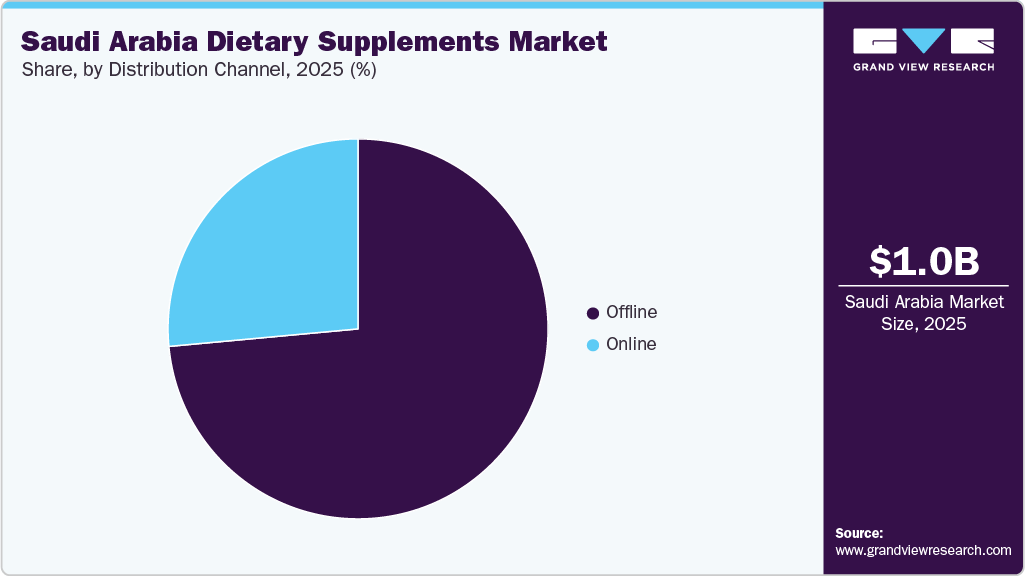
Online distribution channels are anticipated to witness lucrative growth during the forecast period. The market is driven by high internet penetration and a predominantly young, digitally active population, which has significantly enhanced the adoption of e-commerce platforms. Consumers increasingly prefer online channels for convenience, broader product selection, subscription models, and home delivery services. Online channels offer access to domestic and international brands, including halal-certified, organic, and specialty formulations often unavailable in physical stores.
Key Saudi Arabia Dietary Supplements Company Insights
Some key companies operating in the market include Abbott, Pfizer Inc., Bayer AG, Al Muhaidib Group (Nestlé), and GSK plc.
-
Abbott Saudi Arabia Trading LLC is a subsidiary of Abbott that offers a range of nutritional supplements in Saudi Arabia. The company provides well-known products like Ensure, Pediasure, and Similac, which support immunity, growth, and overall wellness for all age groups.
Key Saudi Arabia Dietary Supplements Companies:
- Abbott
- Pfizer Inc.
- Bayer AG
- GSK plc
- Al Muhaidib Group (Nestlé)
Recent Developments
-
In April 2025, King Abdulaziz University (Jeddah) and RCSI University of Medicine and Health Sciences in Dublin (Ireland) unveiled results from a major Human Nutritional Intervention Study focused on omega-3 DHA enriched foods.
-
In February 2023, OptiBiotix partnered with Nahdi Medical Co. to distribute a range of shakes and bars, GoFigure, to combat obesity rates in Saudi Arabia.
-
In January 2023, Nutrigums announced a partnership to sell products across three more Middle Eastern markets. The company has signed a multi-million-pound deal to launch its gummy vitamins in Saudi Arabia.
Saudi Arabia Dietary Supplements Market Report Scope
|
Report Attribute
|
Details
|
|
Market size value in 2025
|
USD 940.7 million
|
|
Revenue forecast in 2030
|
USD 1,538.3 million
|
|
Growth rate
|
CAGR of 10.3% from 2025 to 2030
|
|
Base year for estimation
|
2024
|
|
Historical data
|
2018 - 2023
|
|
Forecast period
|
2025 - 2030
|
|
Quantitative units
|
Revenue in USD million and CAGR from 2025 to 2030
|
|
Report coverage
|
Revenue forecast, company ranking, competitive landscape, growth factors, trends
|
|
Segments covered
|
Ingredients, form, type, application, end-use, distribution channel
|
|
Key companies profiled
|
Abbott, Pfizer Inc., Bayer AG, GSK plc, Al Muhaidib Group (Nestlé)
|
|
Customization scope
|
Free report customization (equivalent up to 8 analysts working days) with purchase. Addition or alteration to country, regional & segment scope.
|
|
Pricing and purchase options
|
Avail customized purchase options to meet your exact research needs. Explore purchase options
|
Saudi Arabia Dietary Supplements Market Report Segmentation
This report forecasts revenue growth at the country level and provides an analysis of the latest industry trends in each of the sub-segments from 2018 to 2030. For this study, Grand View Research has segmented the Saudi Arabia dietary supplements market report based on ingredients, form, type, application, end-use, and distribution channel:
-
Ingredients Outlook (Revenue, USD Million, 2018 - 2030)
-
Form Outlook (Revenue, USD Million, 2018 - 2030)
-
Tablets
-
Capsules
-
Soft Gels
-
Powders
-
Gummies
-
Liquid
-
Others
-
Type Outlook (Revenue, USD Million, 2018 - 2030)
-
Application Outlook (Revenue, USD Million, 2018 - 2030)
-
Bone & Joint Health
-
Gastrointestinal Health
-
Immunity
-
Cardiac Health
-
Diabetes
-
Anti-cancer
-
Lungs Detox/Cleanse
-
Skin/ Hair/ Nails
-
Sexual Health
-
Brain/Mental Health
-
Insomnia
-
Menopause
-
Anti-aging
-
Prenatal Health
-
Others
-
End-use Outlook (Revenue, USD Million, 2018 - 2030)
-
Adults
-
Millennials
-
Male
-
Female
-
Pregnant Women
-
Non-pregnant Women
-
Gen X
-
Male
-
Female
-
Pregnant Women
-
Non-pregnant Women
-
Gen Z
-
Male
-
Female
-
Pregnant Women
-
Non-pregnant Women
-
Boomers
-
Geriatric
-
Children
-
Infants
-
Distribution Channel Outlook (Revenue, USD Million, 2018 - 2030)

 Download Sample Report