Rice Market Summary
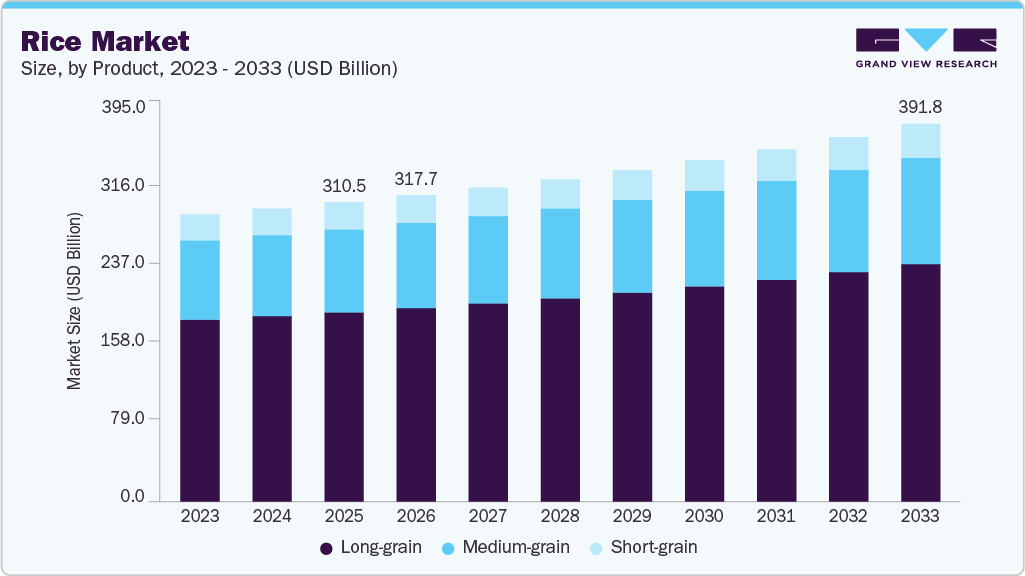
The global rice market size was estimated at USD 310.53 billion in 2025 and is projected to reach USD 391.82 billion by 2033, growing at a CAGR of 3.0% from 2026 to 2033. Rice is a staple food for more than half of the world’s population and contributes close to one-fifth of total caloric intake worldwide.
Key Market Trends & Insights
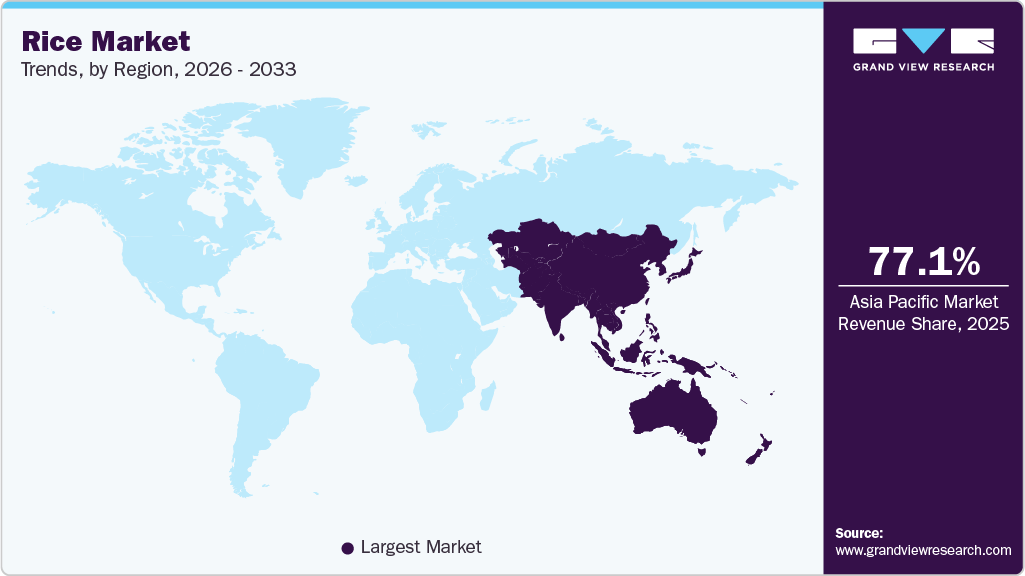
- By region, Asia Pacific led the market with a share of 77.1% in 2025.
- The rice industry in the U.S. is expected to grow at a CAGR of 4.4% from 2026 to 2033.
- By product, long-grain rice led the market and accounted for a share of 63.2% in 2025.
- By distribution channel, offline led the market and accounted for a share of 82.0% in 2025.
Market Size & Forecast
- 2025 Market Size: USD 310.53 Billion
- 2033 Projected Market Size: USD 391.82 Billion
- CAGR (2026-2033): 3.0%
- Asia Pacific: Largest market in 2025
According to data from the FAO and national agriculture agencies, global rice consumption crossed 510 million metric tons in 2024, driven primarily by population growth in Asia and Africa, rising urbanisation, and the affordability of rice compared with other staple grains. Governments across developing economies continue to prioritise rice production and procurement as part of food security programs, which further supports sustained market expansion.
While rice remains a basic staple, consumers are increasingly demanding higher-quality, healthier, and more differentiated rice products. There is growing interest in brown rice, parboiled rice, organic rice, and low-glycaemic-index varieties, particularly among urban consumers who associate these products with better digestion, weight management, and diabetes control. Recent surveys state that rice’s gluten-free nature and versatility have strengthened its position among health-conscious consumers and those with dietary restrictions. At the same time, busy lifestyles are boosting demand for easy-to-cook, pre-washed, and ready-to-heat rice formats.
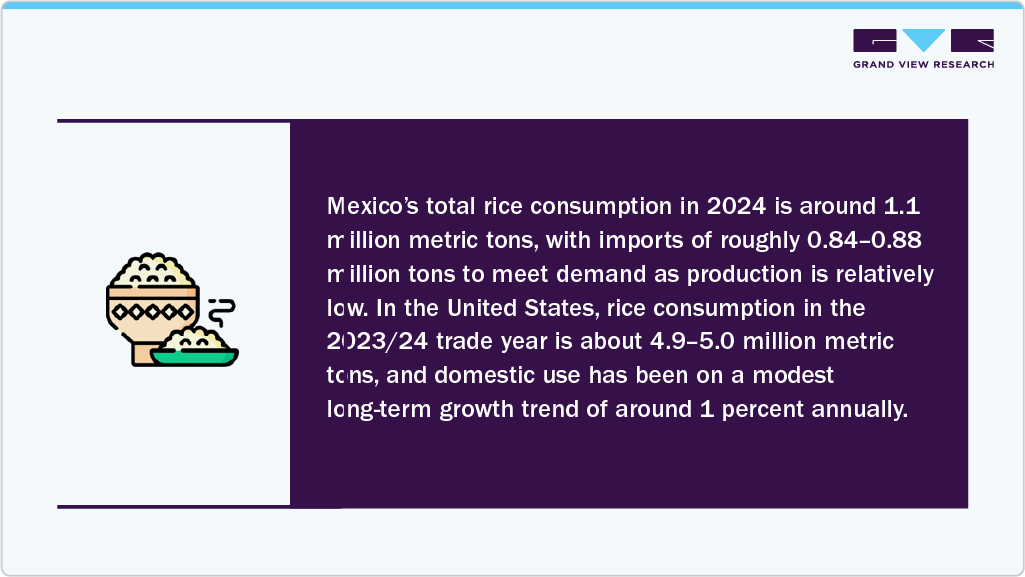
In Mexico, rice remains an important staple in the national diet, though its consumption patterns and market dynamics differ from those in high-rice consumption countries in Asia. Rice is considered a basic cereal in Mexican diets and figures in many traditional meals such as arroz a la tumbada, morisqueta, and arroz rojo where it complements beans, stews, and other proteins in everyday family cooking.
Cultural diversity plays a major role in sustaining and expanding rice consumption across regions. In South Asia, rice is deeply embedded in everyday meals as well as religious and ceremonial occasions, with varieties such as basmati and sona masuri dominating household consumption. In East Asia, short-grain and medium-grain rice are integral to traditional meals and food rituals, particularly in countries such as Japan and South Korea. Southeast Asian cuisines rely heavily on jasmine and sticky rice, while in the Middle East and parts of Africa, rice is central to communal dishes and festive meals. Beyond traditional consumption, the globalization of food culture has increased exposure to international rice-based cuisines such as sushi, risotto, paella, biryani, rice bowls, and fried rice, encouraging consumers to experiment with new cooking styles and rice varieties.
In addition, consumers are showing rising interest in aromatic rice varieties such as basmati and jasmine due to their fragrance and texture, while flavored and seasoned rice products are gaining traction in urban retail channels. India and China remain the world’s largest rice-consuming countries in 2024, largely due to their population size and cultural dependence on rice as a daily staple. Data from the FAO, USDA, and national agriculture ministries indicate that India and China together account for more than half of global rice consumption, with India consuming well over 100 million metric tons annually. Countries such as Bangladesh, Indonesia, and Vietnam also rank among the top consumers, reflecting both high population reliance on rice and limited substitution with other staples. On a per-capita basis, Southeast Asian countries such as Vietnam and Indonesia continue to record some of the highest rice consumption levels globally, according to government nutrition surveys and agricultural statistics.
Product Insights
Long-grain rice dominated the market with a share of 63.2% in 2025. Long-grain varieties such as basmati and jasmine remain fluffy and separate after cooking, making them ideal for a wide range of cuisines, including Asian, Middle Eastern, and Western dishes. Growing urbanization and time-constrained lifestyles have increased the consumption of easy-to-cook staple foods, while the rising popularity of ethnic and international cuisines has further supported demand. In addition, long-grain rice is often perceived as lighter and easier to digest, reinforcing its preference among health-conscious consumers and foodservice operators seeking consistent texture and presentation.
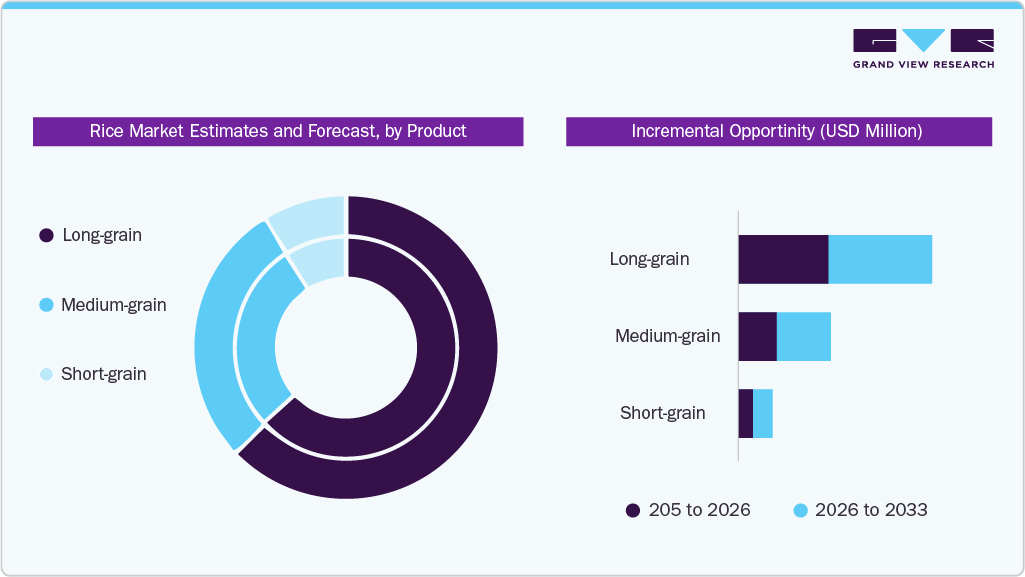
Medium-grain rice is expected to grow at a CAGR of 3.3% from 2026 to 2033. Medium-grain rice offers a balance between the fluffiness of long-grain rice and the stickiness of short-grain varieties, making it ideal for dishes such as risotto, paella, rice bowls, soups, and home-style meals. As consumers increasingly cook at home and experiment with global cuisines, medium-grain rice is being preferred for its ability to absorb flavors while maintaining a soft, slightly creamy texture. Additionally, its consistent cooking performance and affordability make it attractive for foodservice operators and institutional buyers, further supporting demand growth across both retail and commercial channels.
Distribution Channel Insights
Sales of rice through the offline channel accounted for a share of 82.0% in 2025. Many consumers, especially in developing and rice-consuming regions, prefer buying rice from local kirana stores, supermarkets, and wholesale markets where they can assess grain quality, aroma, and packaging before purchase. Offline retail also offers better price flexibility, including bulk discounts, loose rice options, and immediate availability without delivery delays, which is critical for a high-consumption staple. Furthermore, government-linked public distribution systems, fair-price shops, and organized retail chains continue to play a major role in rice sales, reinforcing the dominance of offline channels for daily household procurement.
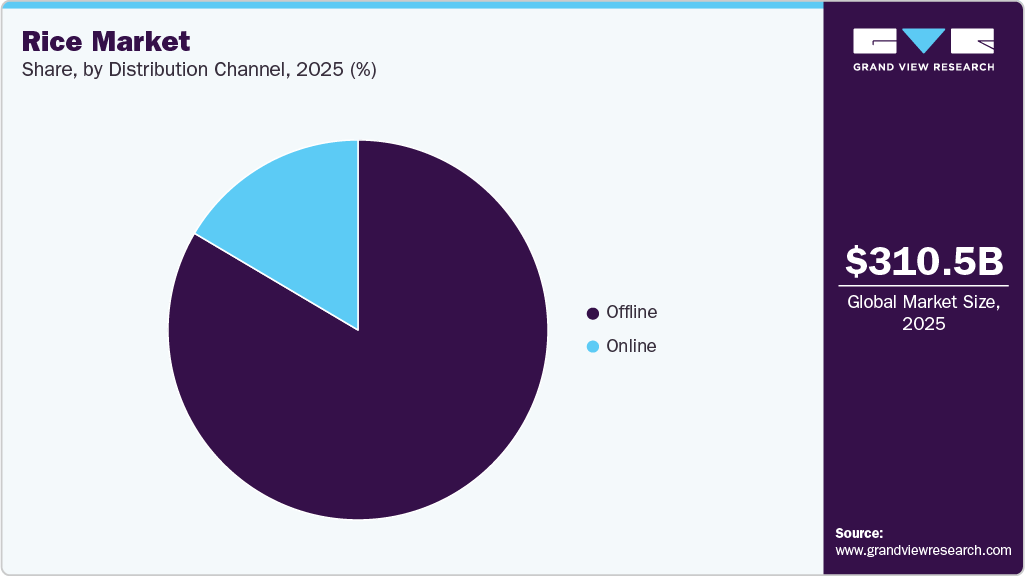
Sales of rice through the online distribution channel are expected to grow at a CAGR of 3.8% from 2026 to 2033. E-commerce platforms allow consumers to easily compare prices, brands, grain varieties (such as basmati, jasmine, brown, and organic rice), and pack sizes, which is particularly appealing for a staple product with frequent repurchase cycles. Online channels also support home delivery of heavy grocery items, reducing the need for physical store visits. In addition, the growth of digital grocery platforms, subscription-based replenishment models, and attractive online discounts has accelerated adoption, especially among urban households and working consumers.
Regional Insights
The North American rice industry is expected to grow at a CAGR of 4.7% from 2026 to 2033. The market is rising due to shifting dietary preferences, population diversity, and the growing role of rice as a convenient, versatile staple. Increasing immigration and multicultural consumption patterns have expanded demand for rice across Asian, Hispanic, Middle Eastern, and African cuisines, making it a regular household food rather than an occasional side dish. At the same time, consumers are seeking gluten-free, allergen-friendly, and plant-based carbohydrate sources, positioning rice as a preferred alternative to wheat-based products.
U.S. Rice Market Trends
The rice industry in the U.S. is expected to grow at a CAGR of 4.4% from 2026 to 2033. Rice is viewed as a cost-effective, versatile, and shelf-stable staple, making it attractive amid food inflation and economic uncertainty. Consumer demand is also supported by the expansion of ready-to-cook and microwaveable rice products, which align with busy lifestyles and time-constrained households. Additionally, rising interest in plant-based diets and gluten-free foods has strengthened rice’s position as a preferred carbohydrate alternative, further driving sustained growth in the U.S. market.
Asia Pacific Rice Market Trends
The rice industry in the Asia Pacific accounted for a share of 77.1% in 2025. Rapid population growth, urbanization, and rising food demand in countries such as China, India, Indonesia, Vietnam, and the Philippines continue to sustain high per-capita rice consumption. Besides, government support through minimum support prices, public distribution systems, and food security programs helps stabilize production and consumption across the region. Changing lifestyles are also driving demand for value-added rice products such as fortified rice, packaged rice, and ready-to-cook variants, particularly in urban markets.
Europe Rice Market Trends
The rice industry in Europe is expected to grow at a CAGR of 2.3% from 2026 to 2033. European consumers are increasingly adopting health-conscious and flexible diets, with rice, especially brown, basmati, and specialty varieties, perceived as a gluten-free, easily digestible alternative to wheat-based products. The growing popularity of ready-to-cook and ready-to-eat meals, meal kits, and home cooking has further supported demand, as rice offers long shelf life, affordability, and versatility across cuisines. In addition, sustainability-driven preferences and interest in locally produced or sustainably sourced rice in countries such as Italy and Spain are reinforcing market growth across Europe.
Key Rice Company Insights
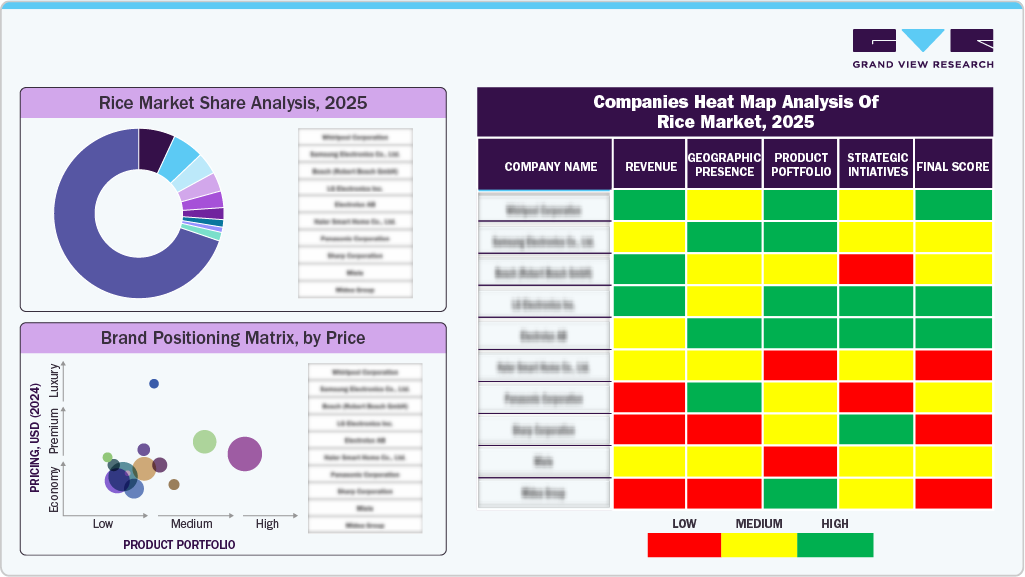
The presence of a few established players and new entrants characterizes the market. Many big players are increasing their focus on the growing trend of the rice market. Players in the market are diversifying their service offerings in order to maintain market share.
Key Rice Companies:
The following key companies have been profiled for this study on the rice market.
- Kohinoor Foods Ltd.
- Adani Wilmar Limited
- LT Foods
- KRBL Limited
- Aeroplane Rice Ltd.
- Sridhar Agro Product P Ltd
- Gautam General Trading LLC
- Sri Sainath Industry Pvt. Ltd
- Shriram Food Industry Pvt. Ltd.
- Aashirvad International
Recent Developments
-
In September 2025, Krayon Grains expanded its nationwide retail presence for its Himalayan-grown premium basmati rice range, offering four tiers Signature, Royal, Occasion, and Daily sourced from the GI-recognized basmati belt of Haryana, Punjab, Himachal Pradesh, Uttarakhand, and western Uttar Pradesh, with an emphasis on export-grade quality, clean-label (chemical-free, naturally cholesterol- and fat-free) products, and strict FSSAI-licensed standards (License No. 13324006000372) for everyday to celebratory cooking needs across India.
-
In April 2024, Arju Rice Mill promoted by aviation tycoon Birendra Bahadur Basnet, announced the launch of Everest aromatic super long grain rice, a Nepali-produced rice variety that measures 17.46 mm when cooked and is expected to be priced around Rs175 per kg. The company has been working with thousands of local farmers across more than 4,000 bighas of land in Morang, Sunsari, and Jhapa to source paddy for this premium product.
Rice Market Report Scope
|
Report Attribute
|
Details
|
|
Market size value in 2026
|
USD 317.54 billion
|
|
Revenue forecast in 2033
|
USD 391.82 billion
|
|
Growth rate
|
CAGR of 3.0% from 2026 to 2033
|
|
Base year for estimation
|
2025
|
|
Historical data
|
2021 - 2025
|
|
Forecast period
|
2026 - 2033
|
|
Quantitative units
|
Revenue in USD million/billion and CAGR from 2026 to 2033
|
|
Report coverage
|
Revenue forecast, company ranking, competitive landscape, growth factors, and trends
|
|
Segments covered
|
Product, distribution channel, region
|
|
Regional scope
|
North America; Europe; Asia Pacific; Central & South America; Middle East & Africa
|
|
Country scope
|
U.S.; Canada; Mexico; Germany; UK; France; Italy; Spain; China; Japan; India; Australia & New Zealand; South Korea; Brazil; South Africa
|
|
Key companies profiled
|
Kohinoor Foods Ltd.; Adani Wilmar Limited; LT Foods; KRBL Limited; Aeroplane Rice Ltd.; Sridhar Agro Product P Ltd.; Gautam General Trading LLC; Sri Sainath Industry Pvt. Ltd.; Shriram Food Industry Pvt. Ltd.; Aashirvad International
|
|
Customization scope
|
Free report customization (equivalent up to 8 analysts working days) with purchase. Addition or alteration to country, regional & segment scope.
|
|
Pricing and purchase options
|
Avail customized purchase options to meet your exact research needs. Explore purchase options
|
Global Rice Market Report Segmentation
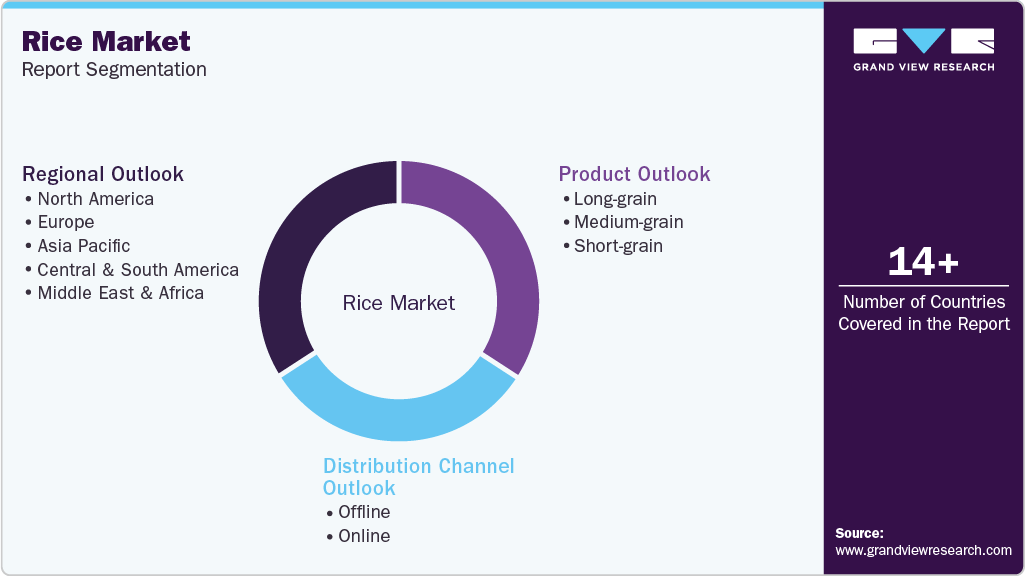
This report forecasts revenue growth at global, regional & country levels and provides an analysis on the latest trends and opportunities in each of the sub-segments from 2021 to 2033. For this study, Grand View Research has segmented the global rice market report on the basis of product, distribution channel, and region:
-
Product Outlook (Revenue, USD Million, 2021 - 2033)
-
Long-grain
-
Medium-grain
-
Short-grain
-
Distribution Channel Outlook (Revenue, USD Million, 2021 - 2033)
-
Regional Outlook (Revenue, Revenue, USD Million, 2021 - 2033)
Frequently Asked Questions About This Report
b. Key factors that are driving the market growth include globalization and expansion of food and foodservice industry, increasing migration, and increasing popularity of rice dishes.
b. The global rice market size was estimated at USD 310.53 billion in 2025 and is expected to reach USD 317.74 billion in 2026.
b. The global rice market is expected to grow at a compound annual growth rate of 3.0% from 2026 to 2033 to reach USD 391.82 billion by 2033.
b. Long-grain rice dominated market with a share of 63.2% in 2025. Long-grain varieties such as basmati and jasmine remain fluffy and separate after cooking, making them ideal for a wide range of cuisines including Asian, Middle Eastern, and Western dishes. Growing urbanization and time-constrained lifestyles have increased the consumption of easy-to-cook staple foods, while the rising popularity of ethnic and international cuisines has further supported demand.
b. Some key players operating in the rice market include Kohinoor Foods Ltd.; Adani Wilmar Limited; LT Foods; KRBL Limited; Aeroplane Rice Ltd.; Sridhar Agro Product P Ltd; Gautam General Trading LLC; Sri Sainath Industry Pvt. Ltd; Shriram Food; Industry Pvt. Ltd.; and Aashirvad International.

 Download Sample Report














