
- Home
- »
- Paints, Coatings & Printing Inks
- »
-
Natural Dyes & Pigments Market Size & Trends Analysis Report, 2024GVR Report cover
![Natural Dyes & Pigments Market Size, Share & Trends Report]()
Natural Dyes & Pigments Market (2025 - 2033) Size, Share & Trends Analysis Report By Source (Plant-Based, Animal-Based, Mineral-Based, Microbial-Based), By Product (Natural Dyes, Natural Pigments), By Color, By End Use, By Region, And Segment Forecasts
- Report ID: GVR-4-68040-826-7
- Number of Report Pages: 80
- Format: PDF
- Historical Range: 2018 - 2023
- Forecast Period: 2025 - 2033
- Industry: Bulk Chemicals
- Report Summary
- Table of Contents
- Segmentation
- Methodology
- Download FREE Sample
-
 Download Sample Report
Natural Dyes & Pigments Market Summary
The global natural dyes & pigments market size was estimated at USD 4,831.2 million in 2024 and is projected to reach USD 7,945.0 million by 2033, growing at a CAGR of 5.8% from 2025 to 2033. Natural dyes and pigments are gaining significant attention as people and industries seek safer and more environmentally friendly coloring options.
Key Market Trends & Insights
- Asia Pacific dominated the global natural dyes & pigments market with the largest revenue share of 73.3% in 2024.
- By source, the microbial-based segment is expected to grow at the fastest CAGR of 6.7% from 2025 to 2033.
- By product, the natural dyes segment led the market with the largest revenue share of 62.6% in 2024.
- By color, the blue segment led the market with the largest revenue share of 20.8% in 2024.
- By end use, the pharmaceuticals & nutraceuticals segment is anticipated to grow at the fastest CAGR of 6.8% from 2025 to 2033.
Market Size & Forecasts
- 2024 Market Size: USD 4,831.2 Million
- 2033 Projected Market Size: USD 7,945.0 Million
- CAGR (2025-2033): 5.8%
- Largest Region: Asia Pacific
The shift away from synthetic chemicals is making natural colorants more useful in various applications. This change is occurring as companies and consumers seek healthier and more responsible options. The natural dyes & pigments industry is growing because more industries want color ingredients that come from plants, minerals, and biological sources. Many companies now prefer natural options in textiles, food, cosmetics, and personal care products. This is happening as buyers respond more positively to products made with recognizable and trusted ingredients. Brands also view natural colorants as a means to enhance their image and develop products that meet the evolving expectations of new customers.There is also a rise in farming and processing activities that support the production of natural dyes. Better farming methods for dye plants and more controlled systems for microbial colorants are helping increase supply. These improvements allow manufacturers to achieve stronger shades and more stable performance, making natural dyes more dependable for large-scale use. As a result, more businesses are willing to replace synthetic options when natural colorants meet the required standards.
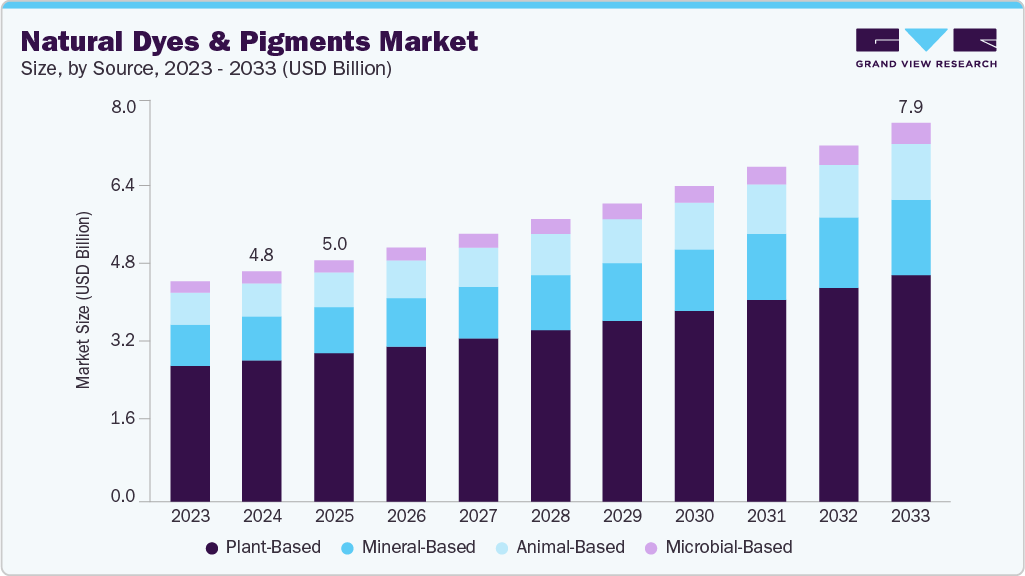
There are clear opportunities ahead for companies working with natural dyes and pigments. Food and cosmetics brands are adding more natural color ranges, and textile producers are investing in cleaner dyeing methods. The market is also benefiting from efforts to reduce harmful waste and support safer working conditions. As more regions adopt rules that encourage the use of natural ingredients, the demand for natural dyes and pigments is expected to keep rising.
Market Concentration & Characteristics
The natural dyes & pigments industry displays a balanced blend of established producers and emerging innovators, creating a moderately concentrated environment. Long-standing companies with deep expertise in botanical, mineral, and microbial extraction continue to shape industry standards. At the same time, newer entrants are focusing on specialized niches, such as fermentation-derived pigments and clean-label formulations. This combination fosters competitive diversity, allowing suppliers with unique technical capabilities, strong sourcing networks, and proprietary processing methods to maintain an influential presence without restricting room for newer players.
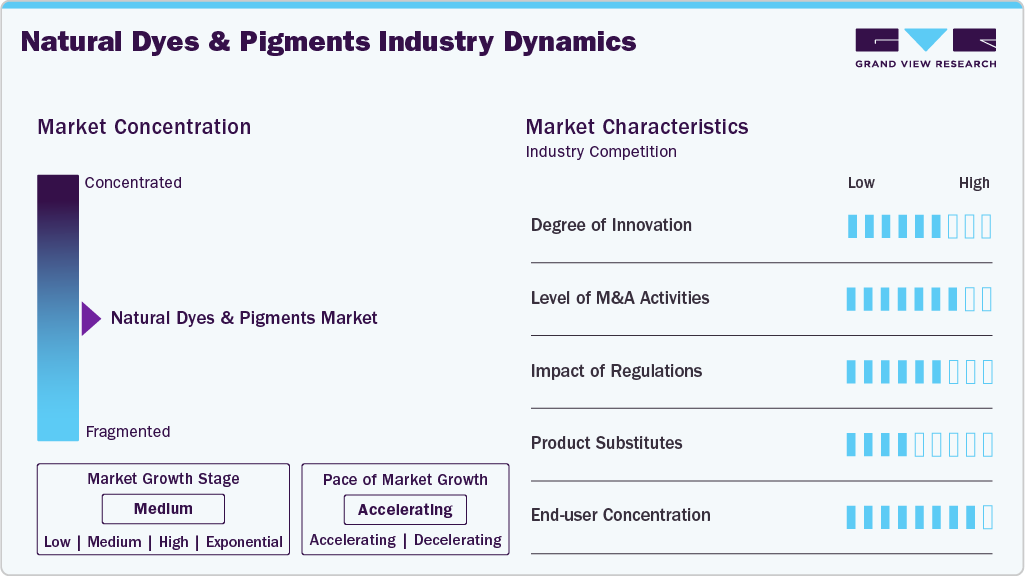
The natural dyes & pigments industry is characterized by increasing interest in bio-derived colorants, stable supply chains for plant materials, and growing investment in research aimed at improving performance, consistency, and application range. Companies place a strong emphasis on traceability, environmental responsibility, and scalable production methods, which in turn influence product positioning and customer adoption. As consumer-facing industries increasingly favor naturally sourced ingredients, producers refine their extraction techniques and quality benchmarks to align with evolving regulatory expectations and brand requirements.
Source Insights
The plant-based segment led the market with the largest revenue share of 61.6% in 2024. The plant-based segment led the market primarily due to its wide availability, diverse color range, and strong compatibility across various textile, food, cosmetic, and personal care applications. Manufacturers are increasingly relying on plant materials, such as leaves, roots, flowers, and fruit extracts, because they offer dependable supply chains and meet the rising demand for clean-label and environmentally aligned ingredients. This segment also benefits from growing consumer trust, established extraction processes, and regulatory acceptance, strengthening its overall market leadership.
The microbial-based segment is expected to grow at the fastest CAGR of 6.7% from 2025 to 2033. Microbial-based colorants are poised for rapid expansion as biotechnology enables consistent, scalable, and controlled pigment production. Fungi, bacteria, yeasts, and algae offer high-yield color compounds while reducing dependence on agricultural land and seasonal variability. Their growing relevance is linked to improved fermentation techniques, rising interest in bio-engineered alternatives, and strong demand for pigments with enhanced purity and stability. This positions microbial sources as a promising solution for industries seeking reliable and sustainable next-generation colorants.
Product Insights
The natural dyes segment led the market with the largest revenue share of 62.6% in 2024, as industries increasingly favored plant-, mineral-, and bio-derived colorants that align with cleaner labeling and lower-impact manufacturing. Demand strengthened across textiles, personal care, and specialty applications as companies sought alternatives to synthetic dyes linked to chemical residues and regulatory pressure. Growing support for biodegradable materials, along with rising consumer trust in naturally sourced inputs, further reinforced the segment’s leading market position.
The natural pigments segment is anticipated to grow at the fastest CAGR during the forecast period. The natural pigments are colorants derived from botanical, mineral, or biological sources, offering an alternative to synthetic formulations across textiles, foods, cosmetics, and creative applications. Their appeal continues to rise as industries prioritize safer ingredients, reduced ecological pressure, and transparent sourcing. Advances in extraction, purification, and stabilization techniques have strengthened their performance, enabling vibrant shades and improved durability. As sustainability commitments intensify, natural pigments are becoming central to cleaner production practices and consumer-driven product reformulation.
Color Insights
The blue color segment led the market with the largest revenue share of 20.8% in 2024, due to its strong demand across textiles, food, cosmetics, and personal care applications. Natural blue pigments remain relatively scarce in nature, making high-quality, stable options such as indigo and spirulina-derived phycocyanin especially valuable. Their versatility in both vibrant and muted formulations strengthens adoption, while brands increasingly rely on natural blues to replace synthetic alternatives in clean-label and environmentally conscious product lines.
The green color segment is expected to grow at the fastest CAGR of 6.5% from 2025 to 2033. The green segment is projected to expand rapidly as industries seek plant- and algae-derived chlorophyll and chlorophyllin for cleaner formulations with natural visual appeal. Growing consumer interest in wellness-linked colors and botanical-based aesthetics supports the broader use of these elements in nutraceuticals, beverages, and cosmetic products. Manufacturers are also improving extraction processes to enhance stability and application flexibility, encouraging companies to transition from artificial greens to naturally sourced pigments during the forecast period.
End Use Insights
The textiles segment led the market with the largest revenue share of 44.1% in 2024. The textiles segment held the leading share as natural dyes remain strongly embedded in apparel, home furnishings, and traditional textile production. Growing awareness of chemical-free coloration, rising demand for sustainable fashion, and the shift among brands toward biodegradable inputs all strengthened its position. Natural dyes are widely adopted in denim, ethnic garments, premium fabrics, and artisanal textiles, where consumers value clean-label materials and traceable supply chains. These factors ensured consistent demand and reinforced textiles as the core application area for natural dyes and pigments.
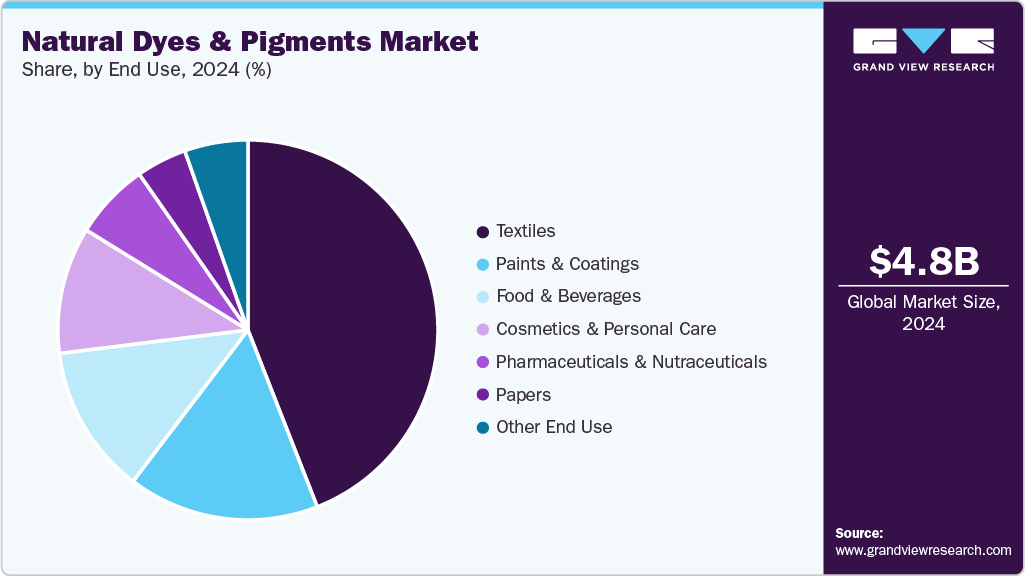
The pharmaceuticals & nutraceuticals segment is expected to grow at the fastest CAGR of 6.8% from 2025 to 2033. The pharmaceuticals and nutraceuticals segment is poised for the fastest expansion, as natural pigments increasingly serve roles in product stabilization, functional coloring, and clean-label formulations. The growing preference for plant- and microbe-derived colorants in capsules, supplements, and herbal formulations encourages manufacturers to replace synthetic dyes with safer, biocompatible alternatives. Regulatory encouragement for natural ingredients, combined with rising consumer trust in naturally colored health products, is widening the commercial scope. This shift is accelerating adoption across wellness, therapeutic, and preventive healthcare categories, supporting robust long-term growth.
Regional Insights
The natural dyes & pigments market in North America is expected to grow at the fastest CAGR of 5.6% from 2025 to 2033, as industries shift toward cleaner ingredients, transparent sourcing, and non-synthetic color solutions. The region is witnessing a growing adoption of bio-based pigments in pharmaceuticals, nutraceuticals, premium foods, and clean-label cosmetics. Regulatory scrutiny of artificial dyes, growing consumer awareness of health impacts, and corporate sustainability targets are encouraging manufacturers to transition toward natural alternatives. In addition, ongoing innovation in microbial pigments, biotech fermentation, and plant-extract processing strengthens domestic supply capabilities. These targeted market dynamics position North America for rapid growth through the forecast period.
U.S. Natural Dyes & Pigments Market Trends
The natural dyes & pigments market in the U.S. benefits from strong demand for clean-label and bio-derived ingredients, driven by evolving regulatory momentum toward reducing synthetic colorants in food, personal care, and pharmaceuticals. Growing consumer scrutiny of product composition and expanding adoption of natural pigments by large packaged goods companies strengthen domestic uptake. The presence of advanced biotechnology firms and ongoing investment in fermentation-derived pigments further supports the country’s leadership in innovation and premium natural color solutions.
Asia Pacific Natural Dyes & Pigments Market Trends
Asia Pacific dominated the natural dyes & pigments market with the largest revenue share of 73.3% in 2024, due to its strong reliance on plant-based and naturally derived colorants across various industries, including textiles, food processing, cosmetics, and traditional medicine. Countries such as India, China, Indonesia, and Bangladesh have extensive raw material availability, including indigo, turmeric, and botanical extracts, which support large-scale manufacturing at competitive costs. The region also benefits from established dyeing and pigment production clusters, a growing base of natural-label consumers, and supportive initiatives promoting low-impact coloring alternatives. These factors together enable the Asia Pacific to maintain its advantage in production, consumption, and export of natural dyes and pigments.
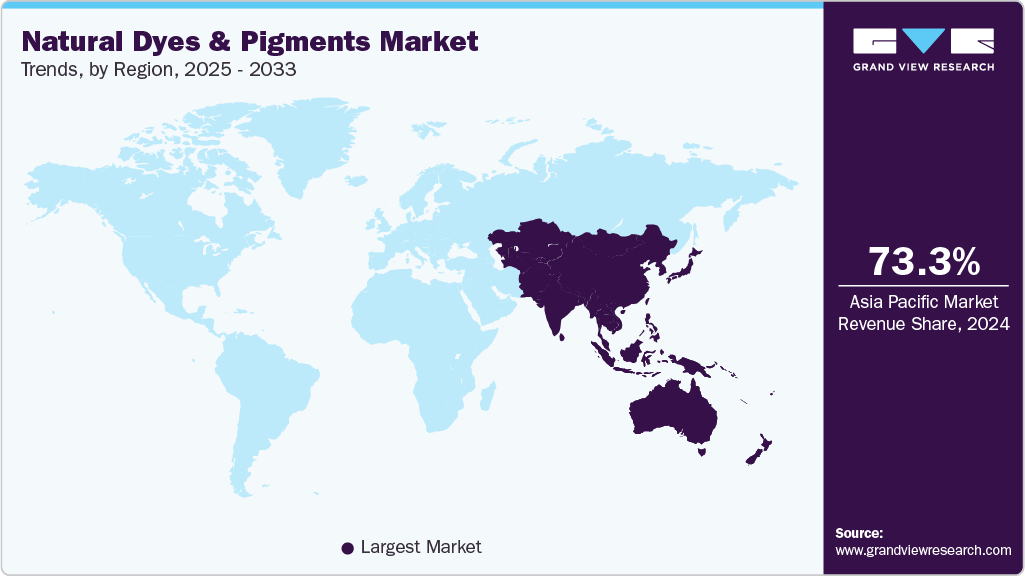
The natural dyes & pigments market in China continues to expand as its textile, food processing, and cosmetics sectors shift toward safer, traceable, and environmentally aligned colorants. The government's emphasis on reducing pollution and promoting greener manufacturing is prompting producers to adopt plant-based and microbial-derived pigments. China’s robust agricultural base enables cost-effective production of botanical dyes. At the same time, its rapidly growing functional foods and herbal nutraceutical industries increase demand for naturally sourced colorants tailored to traditional wellness practices.
Europe Natural Dyes & Pigments Market Trends
The natural dyes & pigments market in Europe remains a high-value market for natural dyes and pigments due to its stringent chemical regulations and long-standing preference for plant-based and bio-derived ingredients. Strong enforcement of safety and sustainability standards motivates manufacturers to invest in natural alternatives across various applications, including food, beauty, and textiles. The region also benefits from mature clean-label consumption habits, active R&D in bio-based chemistry, and robust demand from premium cosmetic and artisanal textile industries seeking transparent supply chains.
Latin America Natural Dyes & Pigments Market Trends
The natural dyes & pigments market in Latin America is shaped by its rich biodiversity and expanding use of botanical ingredients in food, beverages, and natural cosmetics. Countries such as Brazil, Peru, and Mexico have increasing commercial interest in indigenous dye plants and fruit-derived pigments, which enhances local sourcing opportunities. Rising exports of natural foods and growing participation in sustainable fashion are accelerating the shift toward eco-friendly colorants, although production scalability and regulatory harmonization remain areas for development.
Middle East & Africa Natural Dyes & Pigments Market Trends
The natural dyes & pigments market in the Middle East & Africa is showing gradual adoption, supported by rising demand for natural ingredients in beverages, confectionery, and halal-certified personal care products. Growing interest in organic farming and regional initiatives to diversify manufacturing is accelerating the introduction of plant-based and mineral-derived pigments. North African countries with traditional dyeing cultures contribute to supply potential, while Gulf nations drive consumption through premium beauty and food sectors, favoring clean and high-purity natural colorants.
Key Natural Dyes & Pigments Company Insights
The two key dominant manufacturers in the market are AMA Herbal and Archroma.
-
AMA Herbal is widely known for its development of pre-reduced natural indigo and other botanically sourced dyes that support traceable, low-carbon production methods. Its commitment to sustainable chemistry enables industries to shift away from synthetic colorants while maintaining performance consistency, making AMA Herbal a strategic contributor to the evolution of natural dye technologies.
-
Archroma is best known for its EarthColors portfolio, which transforms agricultural and botanical residues into high-value dyes for fashion and apparel. Its emphasis on process efficiency, transparency, and environmental responsibility has strengthened industry adoption of natural and bio-based alternatives, reinforcing Archroma’s influence in reshaping global coloration practices.
Key Natural Dyes & Pigments Companies:
The following are the leading companies in the natural dyes & pigments market. These companies collectively hold the largest market share and dictate industry trends.
- AMA Herbal
- Archroma
- GNT Group
- Stony Creek Colors
- Döhler GmbH
- Sensient Technologies
- ADM
- Givaudan
- Kalsec Inc.
- Roha Dyechem
Recent Developments
-
In March 2025, Sun Chemical announced new metallic and natural effect pigments for cosmetics at in-cosmetics Global 2025, introducing vibrant vegan formulations and showcasing Timica Terra pigments designed to support multifunctional beauty products with enhanced radiance and easier manufacturing.
-
In August 2024, Organic Dyes & Pigments announced its acquisition of Bolger & O’Hearn, expanding ORCO’s capabilities in specialty chemicals and colorants and strengthening its presence across textile, paper and coatings markets while integrating the company’s customers, employees and long-standing expertise.
-
In October 2024, Sudarshan Chemical Industries announced that its subsidiary Sudarshan Europe BV will acquire Heubach’s global pigment business for about Rs 1,180 crore, expanding Sudarshan’s international footprint as the deal is expected to close within three to four months.
Natural Dyes & Pigments Market Report Scope
Report Attribute
Details
Market size value in 2025
USD 5,070.4 million
Revenue forecast in 2033
USD 7,945.0 million
Growth rate
CAGR of 5.8% from 2025 to 2033
Base year for estimation
2024
Historical data
2018 - 2023
Forecast period
2025 - 2033
Quantitative units
Revenue in USD million/billion, Volume in Kilotons, and CAGR from 2025 to 2033
Report coverage
Revenue forecast, company ranking, competitive landscape, growth factors, and trends
Segments covered
Source, product, color, end use, region
Regional scope
North America; Europe; Asia Pacific; Latin America; Middle East & Africa
Country scope
U.S.; Canada; Mexico; Brazil; Argentina; Germany; UK; Italy; Spain; France; China; Japan; South Korea; Saudi Arabia; South Africa
Key companies profiled
AMA Herbal; Archroma; GNT Group; Stony Creek Colors; Döhler GmbH; Sensient Technologies; ADM; Givaudan; Kalsec Inc.; Roha Dyechem
Customization scope
Free report customization (equivalent to up to 8 analysts’ working days) with purchase. Addition or alteration to country, regional & segment scope.
Pricing and purchase options
Avail customized purchase options to meet your exact research needs. Explore purchase options
Global Natural Dyes & Pigments Market Report Segmentation
This report forecasts revenue growth at global, regional, and country levels and provides an analysis of the latest industry trends in each of the sub-segments from 2018 to 2033. For this study, Grand View Research has segmented the global natural dyes & pigments market report based on source, product, color, end use, and region:
-
Source Outlook (Volume, Kilotons; Revenue, USD Million, 2018 - 2033)
-
Plant-Based
-
Leaves
-
Roots
-
Woods and Barks
-
Flowers
-
Fruits/Seeds
-
-
Animal-Based
-
Insects
-
Mollusks
-
Other Animals
-
-
Mineral-Based
-
Ochres
-
Clays
-
Other Minerals
-
-
Microbial-Based
-
Fungi
-
Bacteria
-
Yeasts
-
Algae
-
-
-
Product Outlook (Volume, Kilotons; Revenue, USD Million, 2018 - 2033)
-
Natural Dyes
-
Vat Dyes
-
Direct Dyes
-
Mordant Dyes
-
Acid Dyes
-
Reactive Dyes
-
Other Natural Dyes
-
-
Natural Pigments
-
-
Color Outlook (Volume, Kilotons; Revenue, USD Million, 2018 - 2033)
-
Red
-
Blue
-
Yellow
-
Orange
-
Green
-
Other Colors
-
-
End Use Outlook (Volume, Kilotons; Revenue, USD Million, 2018 - 2033)
-
Textiles
-
Papers
-
Food & Beverages
-
Cosmetics & Personal Care
-
Paints & Coatings
-
Pharmaceuticals & Nutraceuticals
-
Other End Use
-
-
Regional Outlook (Volume, Kilotons; Revenue, USD Million, 2018 - 2033)
-
North America
-
U.S.
-
Canada
-
Mexico
-
-
Europe
-
Germany
-
UK
-
Italy
-
Spain
-
France
-
-
Latin America
-
Brazil
-
Argentina
-
-
Asia Pacific
-
China
-
Japan
-
South Korea
-
-
Middle East & Africa
-
Saudi Arabia
-
South Africa
-
-
Frequently Asked Questions About This Report
b. The global natural dyes & pigments market size was estimated at USD 4,831.2 million in 2024 and is expected to reach USD 5,070.4 million in 2025.
b. The global natural dyes & pigments market is expected to grow at a compound annual growth rate of 5.8% from 2025 to 2033, reaching USD 7,945.0 million by 2033.
b. Natural pigments are colorants derived from botanical, mineral, or biological sources, offering an alternative to synthetic formulations across textiles, foods, cosmetics, and creative applications. Their appeal continues to rise as industries prioritize safer ingredients, reduced ecological pressure, and transparent sourcing. Advances in extraction, purification, and stabilization techniques have strengthened their performance, enabling vibrant shades and improved durability. As sustainability commitments intensify, natural pigments are becoming central to cleaner production practices and consumer-driven product reformulation.
b. Some of the key players operating in the natural dyes & pigments Market include AMA Herbal, Archroma, GNT Group, Stony Creek Colors, Döhler GmbH, Sensient Technologies, ADM, Givaudan, Kalsec Inc., Roha Dyechem.
b. Rising preference for cleaner ingredients, expanding applications across textiles, food, cosmetics and wellness, and growing restrictions on synthetic colorants are encouraging the shift toward plant-, mineral- and microbe-derived alternatives, strengthening demand for natural dyes and pigments across global production ecosystems.


Share this report with your colleague or friend.
Need a Tailored Report?
Customize this report to your needs — add regions, segments, or data points, with 20% free customization.


ISO 9001:2015 & 27001:2022 Certified
We are GDPR and CCPA compliant! Your transaction & personal information is safe and secure. For more details, please read our privacy policy.
Trusted market insights - try a free sample
See how our reports are structured and why industry leaders rely on Grand View Research. Get a free sample or ask us to tailor this report to your needs.












