
- Home
- »
- Consumer F&B
- »
-
Middle East Sports Nutrition Market, Industry Report, 2033GVR Report cover
![Middle East Sports Nutrition Market Size, Share & Trend Report]()
Middle East Sports Nutrition Market (2025 - 2033) Size, Share & Trend Analysis Report By Product Type (Sports Supplement, Sports Drinks, Sports Foods), By Formulation (Tablets, Capsules, Powder), By Age Group (Children, Adults), By Distribution Channel (Brick & Mortar, E-Commerce), By Country, And Segment Forecasts
- Report ID: GVR-4-68040-813-3
- Number of Report Pages: 110
- Format: PDF
- Historical Range: 2021 - 2024
- Forecast Period: 2025 - 2033
- Industry: Consumer Goods
- Report Summary
- Table of Contents
- Segmentation
- Methodology
- Download FREE Sample
-
 Download Sample Report
Middle East Sports Nutrition Market Summary
The Middle East sports nutrition market size was estimated at USD 1.04 billion in 2024 and is projected to reach USD 1.94 billion in 2033, growing at a CAGR of 7.3% from 2025 to 2033. The Middle East sports nutrition products market is expected to witness steady growth due to the increasing awareness of fitness and health.
Key Market Trends & Insights
- By product type, the sports drinks segment in the Middle East sports nutrition market accounted for a share of 37.50% in 2024.
- By formulation, the liquids segment held a share of 45.11% in 2024.
- By age group, the adult segment held the largest share of 88.96% in 2024.
- By distribution channel, the brick & mortar segment dominated the market with a revenue share of 82.56% in 2024.
Key Market Trends & Insights
- 2024 Market Size: USD 1.04 Billion
- 2033 Projected Market Size: USD 1.94 Billion
- CAGR (2025-2033): 7.3%
Several consumers, especially athletes and fitness enthusiasts, opt for sports nutrition products to increase their protein intake. A high-protein diet helps build muscle, aids muscle recovery, and may promote fat loss by boosting metabolism and suppressing appetite.In addition, the growing food & beverage industry and increasing middle-class population with high-income levels are expected to drive product demand over the forecast period. In the Middle East, there is a preference for halal-certified products, which influences product formulation and marketing strategies. Brands are adapting by offering sports nutrition products that meet these dietary requirements while aligning with local taste preferences. The growing fitness industry, including gyms and fitness centers, has also contributed to the growth of the sports nutrition products market in the region. These facilities often sell supplements to their members, providing a convenient way for consumers to access and purchase these products.
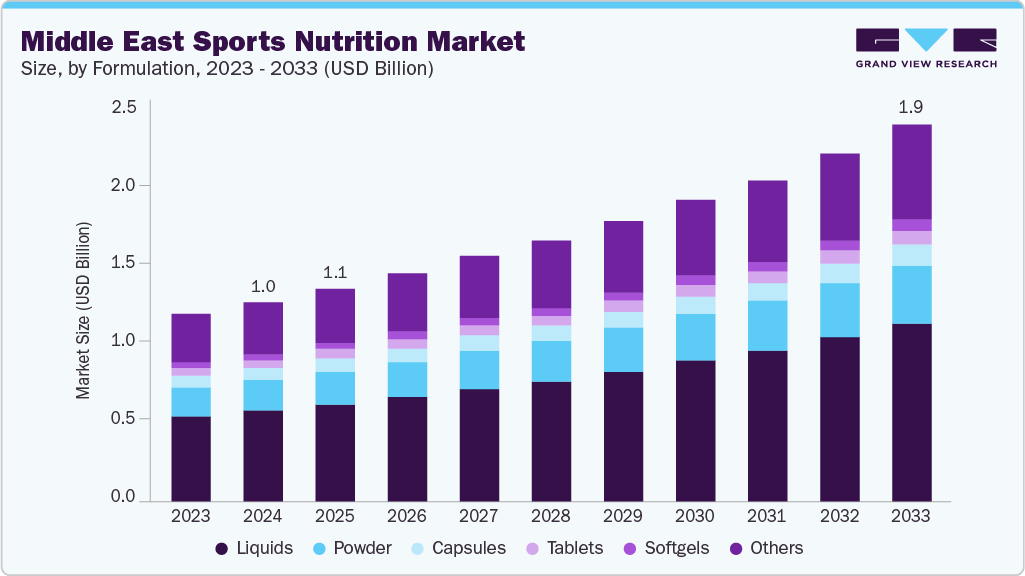
The sports-nutrition market in the Middle East is being shaped by rapid growth in fitness culture, especially in the Gulf Cooperation Council (GCC) countries such as Saudi Arabia and United Arab Emirates (UAE), where government initiatives and rising disposable incomes are driving increased gym memberships and wellness-oriented consumer behavior. Alongside this, product innovation is accelerating: ready-to-drink (RTD) shakes, on-the-go bars and other convenient formats are gaining favor with urban Millennials and Gen Z who value ease and lifestyle alignment in their nutrition choices.
Moreover, dietary preferences and regulatory factors are reshaping this market. Demand for halal-certified, plant-based and clean-label sports-nutrition products is rising strongly, reflecting both cultural norms and health-conscious consumers seeking alternative proteins and natural ingredients. At the same time, e-commerce and digital channels are expanding the reach of sports-nutrition brands, enabling direct-to-consumer models, subscription formats and influencer-led marketing that resonate with younger, tech-savvy households.
Consumer Insights for the Sports Nutrition Market
Consumer buying behavior in the Middle East sports nutrition market is evolving alongside a growing fitness and wellness culture. Male consumers still represent the dominant user group, primarily purchasing sports nutrition products aimed at muscle gain, endurance, and performance enhancement. Their buying decisions are influenced by gym trainers, social media fitness influencers, and peer recommendations. Women, on the other hand, are increasingly adopting sports nutrition as part of holistic wellness and lifestyle goals, focusing more on weight management, energy maintenance, and recovery. This shift is driven by the rise in female gym participation, home workouts, and culturally inclusive fitness spaces that encourage active lifestyles among women.
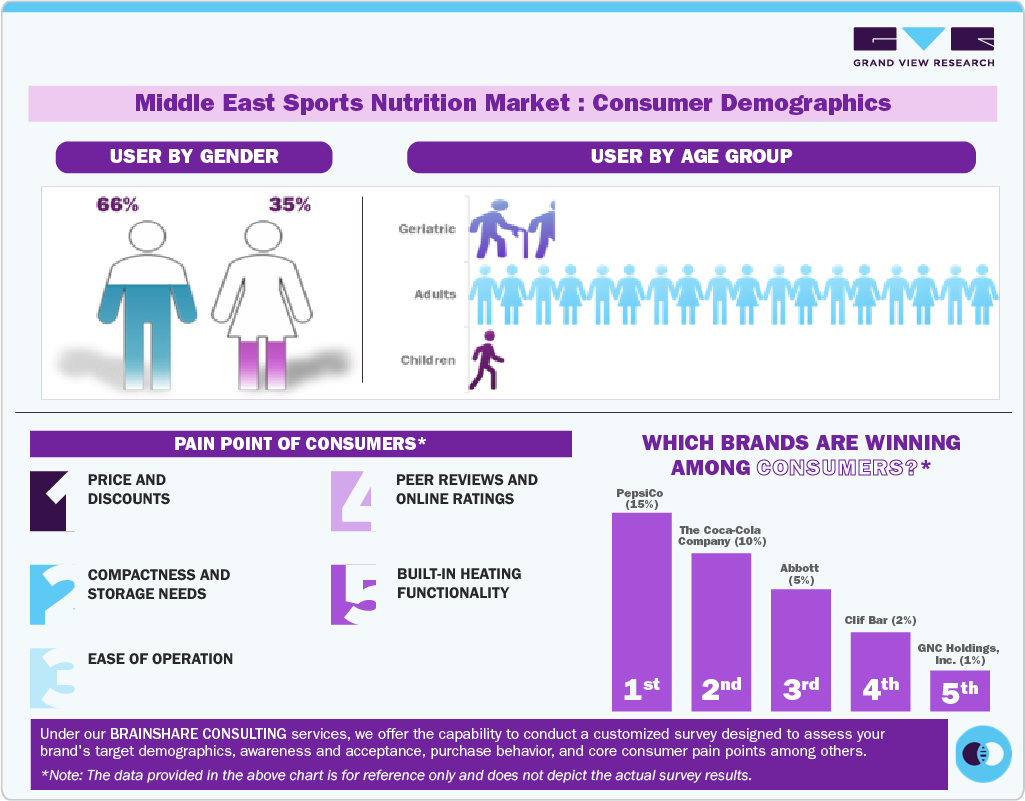
The results revealed significant age-related differences in the popularity of strength training versus endurance activities. Over half of the respondents aged 18-24 indicated that strength or gym training was their most frequent form of exercise. In contrast, consumers aged 55 and older showed a stronger preference for endurance activities.
Across the region, consumers show a strong preference for trusted international brands, halal-certified products, and natural formulations with clean labels. Urban youth and working professionals are major demand drivers, seeking convenient, on-the-go products such as protein bars and ready-to-drink shakes. E-commerce has become a key purchasing channel, particularly among younger demographics who value online discounts and brand authenticity. Marketing strategies focusing on social media engagement, localized endorsements, and gender-specific formulations are further shaping consumer preferences. Overall, the region’s sports nutrition market is shifting from a performance-centric approach toward a more balanced health and lifestyle-oriented consumer mindset.
Product Type Insights
Sports drinks held the largest share, accounting for 37.50% of the Middle East sports nutrition industry. The growth of the sports drinks industry is driven by hot climates cause high hydration needs, making electrolyte beverages everyday staples; rising fitness culture and major sporting events boost demand for hydration and recovery products; convenient RTD formats suit urban lifestyles; product innovation-low/zero-sugar, electrolyte-enhanced, protein-fortified expands use cases beyond athletes; higher disposable incomes in GCC and broad retail/e-commerce distribution improve accessibility; cultural drivers (preference for halal-certified, trusted international brands) plus influencer marketing raise trial and loyalty; manufacturers' localized flavours and smaller pack sizes lower purchase barriers; seasonality and workplace/outdoor worker hydration needs sustain year-round sales; clinical positioning & trainer education increase perceived efficacy and repeat purchase.
Sports foods is anticipated to grow at a CAGR of 7.4% from 2025 to 2033 driven by rising demand for convenient, high-protein snacks and energy bars among fitness enthusiasts and working professionals. The increasing popularity of endurance sports, gym culture, and healthy snacking trends is expanding the consumer base beyond athletes. Moreover, the introduction of fortified, halal-certified, and plant-based formulations is attracting health-conscious and vegan consumers. Manufacturers are focusing on product innovation with locally appealing flavors and functional ingredients to enhance energy and recovery. Expanding retail and online availability further supports sustained growth across the region.
Formulation Insights
Liquids segment held the largest share of 45.11% in 2024, primarily due to their convenience, faster absorption, and suitability for on-the-go consumption. Ready-to-drink protein shakes, energy beverages, and electrolyte drinks are increasingly favored by gym-goers and busy professionals seeking quick hydration and recovery solutions. The hot climate across much of the Middle East further amplifies demand for liquid formulations that provide instant refreshment and nutrient delivery. In addition, product innovation in flavors, low-sugar options, and functional blends is attracting both fitness enthusiasts and casual consumers. Strong retail visibility, particularly in convenience stores, gyms, and e-commerce platforms, continues to reinforce liquid formats’ dominance.
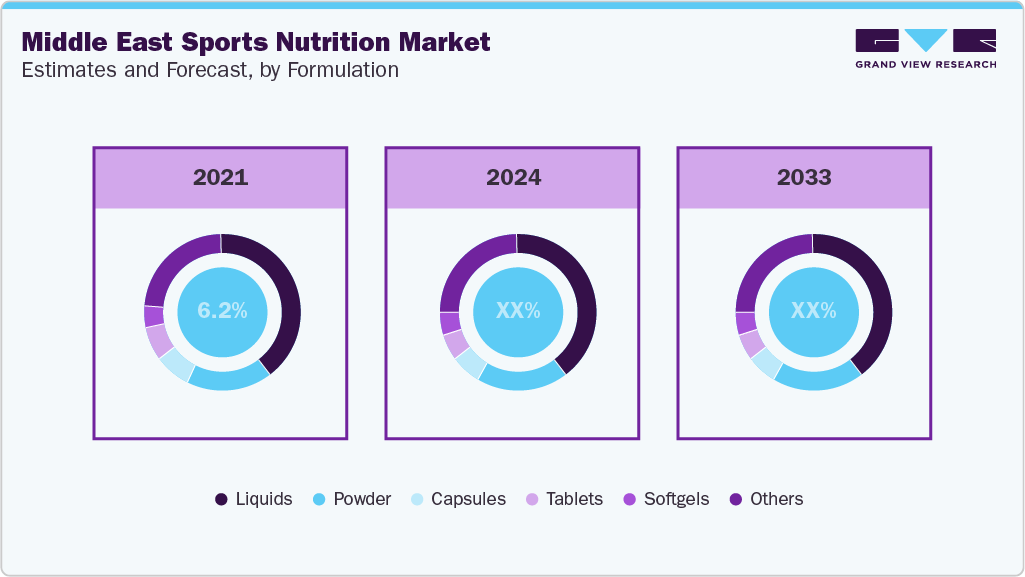
Powdered sports nutrition products are anticipated to grow at a CAGR of 7.2% in the forecast period driven by their versatility, cost-effectiveness, and customizable dosing. Consumers in the Middle East increasingly prefer powders for protein supplementation, pre-workout, and recovery due to their longer shelf life and ability to mix with various beverages. The growing popularity of home workouts and personalized nutrition plans supports steady adoption among both men and women. In addition, manufacturers are expanding offerings with plant-based, clean-label, and halal-certified formulations to meet evolving dietary preferences. E-commerce platforms and fitness influencers are further boosting awareness and accessibility of powdered sports nutrition products across the region.
Age Group Insights
The adult segment held the largest share, accounting for 88.98% in 2024, driven by rising participation in fitness, gym workouts, and recreational sports. Adults increasingly adopt sports nutrition products to support muscle building, weight management, and overall wellness. The growing awareness of preventive health and balanced nutrition further boosts product uptake among working professionals and active lifestyle consumers. Moreover, marketing campaigns and product innovations such as ready-to-drink shakes, energy bars, and low-sugar formulations are primarily targeted toward this demographic. Expanding gym memberships, fitness apps, and corporate wellness programs also contribute to sustained demand from the adult consumer base.
The geriatric segment is anticipated to grow at a CAGR of 6.2% from 2025 to 2033, driven by increasing awareness of muscle health, mobility, and nutrition among older adults. As aging populations across the Middle East seek to maintain strength, energy, and immunity, protein-enriched and nutrient-dense sports nutrition products are gaining traction. The shift toward preventive healthcare and active aging lifestyles encourages seniors to incorporate supplements and functional foods into their daily routines. Manufacturers are developing easy-to-digest, low-sugar, and fortified formulations tailored to older consumers’ needs. Additionally, medical recommendations and rising retail availability in pharmacies and health stores are supporting steady segment growth.
Distribution Channel Insights
The sale of sports nutrition products through the brick-and-mortar channel accounted for share of 82.56% of total Middle East revenues in 2024, reflecting consumers’ strong preference for in-store product evaluation and trust in physical retail outlets. Gyms, health clubs, specialty nutrition stores, and pharmacies remain key purchase points where consumers can access professional advice and verify product authenticity. The tactile experience of comparing brands, tasting samples, and reading labels reinforces confidence, particularly in a market where counterfeit concerns persist. In addition, the expanding presence of international brands in supermarkets and fitness centers, along with promotional campaigns and in-store discounts, continues to strengthen brick-and-mortar dominance across the region.
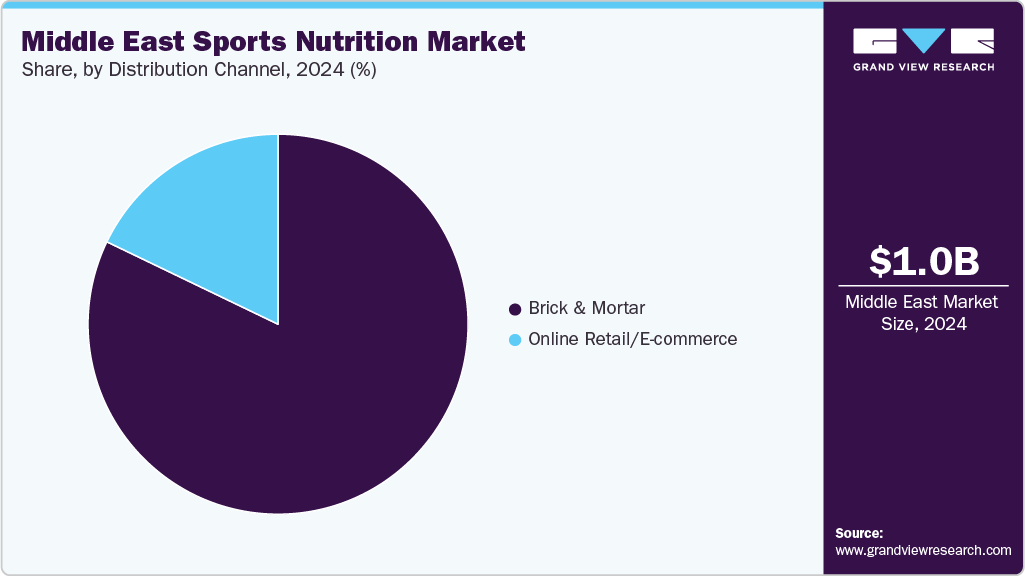
Sale of sports nutrition products through e-commerce is anticipated to grow at a CAGR of 10.3% from 2025 to 2033. The surge in internet users, coupled with the accessibility of numerous brands and the fast-paced lifestyles of consumers, is fueling the demand for sports nutrition products through online distribution channels. The convenience of online shopping, round-the-clock availability of products, and diverse range of offerings further contribute to the increasing sales of these supplements online.
The benefits to customers, including comparison in price range and the availability of a number of brands with customer reviews, are further driving sales of supplements through this channel. Moreover, the presence of different discussion portals, discounts and offers, easy payment options, and various promotion strategies are projected to fuel online sales of dietary supplements over the forecast period.
Country Insights
UAE Sports Nutrition Market Trends
The UAE Sports nutrition market is expected to grow at a CAGR of 7.9% from 2025 to 2033. The country’s high disposable income levels contribute to a strong market for premium sports nutrition products. Consumers in the UAE are willing to invest in high-quality, branded supplements that offer proven benefits and align with their fitness goals. This has led to a growing presence of international and premium sports nutrition brands in the market. Products that highlight superior quality, effectiveness, and advanced formulations are particularly well-received.
In the UAE, there is a significant demand for halal-certified sports nutrition products. As a predominantly Muslim country, consumers prefer products that comply with halal dietary guidelines. Brands that offer halal-certified supplements and ensure compliance with local religious and dietary standards are better positioned to succeed in the UAE market. This includes providing clear labeling and certifications to assure consumers of the product’s adherence to halal requirements.
Saudi Arabia Sports Nutrition Market Trends
The sports nutrition market in the Saudi Arabia held a market share of 34.51% of the North America sports nutrition industry in 2024. The sports nutrition market in Saudi Arabia is governed by regulations set by the Saudi Food and Drug Authority (SFDA). These regulations ensure that sports nutrition products meet safety and quality standards, including accurate labelling and adherence to halal requirements. Compliance with SFDA guidelines is essential for manufacturers to enter the market and build consumer trust.
Sports sponsorships and events play a significant role in promoting sports nutrition products in Saudi Arabia. High-profile events, such as marathons, football tournaments, and fitness expos, offer brands opportunities to engage with consumers and showcase their products. Sponsorship of local sports events and teams helps increase brand visibility and connect with a target audience that values fitness and athletic performance. There is a notable demand for functional and performance-enhancing sports nutrition products in Saudi Arabia. Consumers are increasingly seeking products that offer specific benefits, such as improved muscle recovery, enhanced energy levels, and overall health support. This trend is driving innovation in the market, with brands developing products that cater to these specific needs and highlight their performance benefits.
Key Middle East Sports Nutrition Company Insights
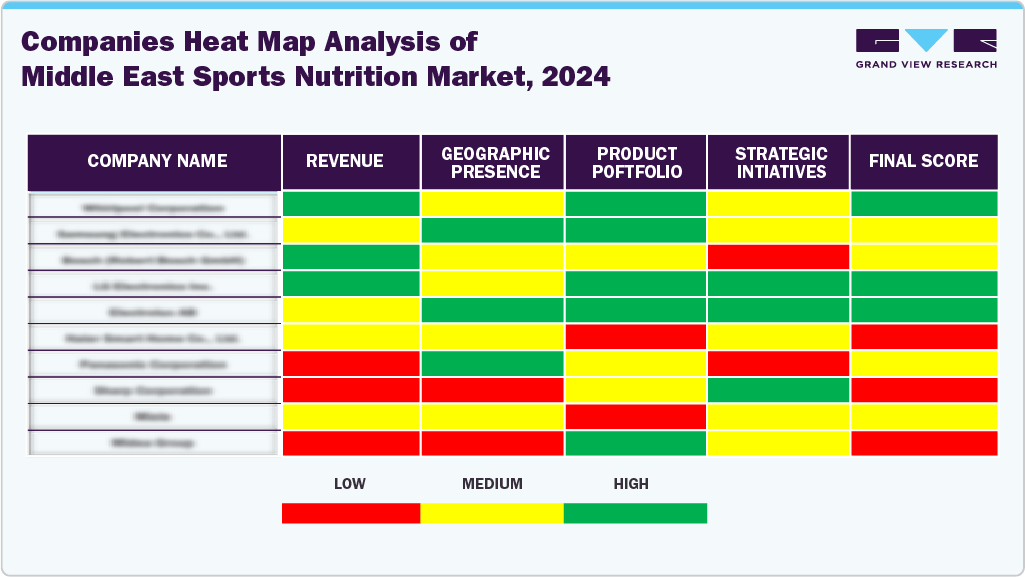
Key companies in Middle East sports nutrition market primarily focus on innovation, formulation diversity, and health-centric offerings. They are investing in product type development, strategic partnerships, and sustainable packaging to cater to evolving consumer preferences, expand their footprint, and strengthen competitiveness across regions.
Key Middle East Sports Nutrition Companies:
- BA Sports Nutrition, LLC
- Abbott
- Quest Nutrition
- PepsiCo
- Mondelēz International, Inc.
- The Coca Cola Company
- FitLife Brands
- GNC Holdings, Inc.
- Nutra Holdings
- Nutrivend
Recent Developments
-
CORE Nutritionals & Unmatched entry into the UAE via partnership with Vivandi Distribution Announced October 2025 at the Dubai Muscle Show 2025. These US-based premium sports-nutrition brands debut regionally with full product line (pre-workouts, hydration + EAA blends, protein blends) under exclusive regional distribution.
-
In October 2024, Lionel Messi launched a new sports drink Mas+. The sports drink is a low-sugar formulation infused with electrolytes and vitamins and available in 4 variants: Miami Punch, Limón Lime League, Berry Copa Crush, and Orange d'Or.
-
In September 2024, PepsiCo brand Gatorade announced the launch of Gatorade Hydration Booster, an electrolyte drink mix designed to support hydration throughout the day. The new product is backed by Gatorade Sports Science Institute and the formula contains essential vitamins such as vitamin A, vitamin B3, B5, B6 and vitamin C with no artificial flavors, colors or sweeteners.
-
MuscleBlaze “BIOZORB” whey-protein range in the UAE - Launched June 2024, this halal-certified formulation promises ~50% enhanced protein absorption and features online availability across Noon, Sporter, Amazon, and its local UA site.
Middle East Sports Nutrition Market Report Scope
Report Attribute
Details
Market size value in 2025
USD 1.11 billion
Revenue Forecast in 2033
USD 1.94 billion
Growth rate
CAGR of 7.3% from 2025 to 2033
Actual data
2021 - 2024
Forecast period
2025 - 2033
Quantitative units
Revenue in USD million/billion, and CAGR from 2025 to 2033
Report coverage
Revenue forecast, company ranking, competitive landscape, growth factors, and trends
Segments covered
Product type, formulation, age group, distribution channel, country
Regional scope
Middle East
Country scope
Saudi Arabia; UAE; Qatar
Key companies profiled
BA Sports Nutrition, LLC; Abbott; Quest Nutrition; PepsiCo; Mondelēz International, Inc.; The Coca Cola Company; FitLife Brands; GNC Holdings, Inc.; Nutra Holdings; Nutrivend
Customization scope
Free report customization (equivalent up to 8 analysts’ working days) with purchase. Addition or alteration to country, regional & segment scope.
Pricing and purchase options
Avail customized purchase options to meet your exact research needs. Explore purchase options
Middle East Sports Nutrition Market Report Segmentation
This report forecasts revenue growth regional & country levels and provides an analysis of the latest trends and opportunities in each of the sub-segment from 2021 to 2033. For this study, Grand View Research has segmented the Middle East sports nutrition market based on product type, formulation, age group, distribution channel, and country:
-
Product Type Outlook (Revenue, USD Billion, 2021 - 2033)
-
Sports Supplement
-
Protein Supplements
-
Egg Protein
-
Soy Protein
-
Pea Protein
-
Lentil Protein
-
Hemp Protein
-
Casein
-
Quinoa Protein
-
Whey Protein
-
Whey Protein Isolate
-
Whey Protein Concentrate
-
-
-
Vitamins
-
Minerals
-
Calcium
-
Potassium
-
Magnesium
-
Iron
-
Zinc
-
-
Amino Acid
-
BCAA
-
Arginine
-
Aspartate
-
Glutamine
-
Beta Alanine
-
Creatine
-
L-carnitine
-
-
Probiotics
-
Omega -3 Fatty Acids
-
Carbohydrates
-
Maltodextrin
-
Dextrose
-
Waxy Maize
-
Karbolyn
-
-
Detox Supplements
-
Electrolytes
-
Others
-
-
Sports Drinks
-
Isotonic
-
Hypotonic
-
Hypertonic
-
-
Sports Foods
-
Protein Bars
-
Energy Bars
-
Protein Gel
-
-
Meal Replacement Products
-
Weight Loss Products
-
-
Formulation Outlook (Revenue, USD Billion, 2021 - 2033)
-
Tablets
-
Capsules
-
Powder
-
Softgels
-
Liquids
-
Others
-
-
Age Group Outlook (Revenue, USD Billion, 2021 - 2033)
-
Children
-
Adult
-
Men
-
Women
-
-
Geriatric
-
-
Distribution Channel Outlook (Revenue, USD Billion, 2021 - 2033)
-
Brick & Mortar
-
Direct Selling
-
Chemist/Pharmacies
-
Health Food Shops
-
Hypermarkets
-
Supermarkets
-
Others
-
-
E-Commerce
-
-
Regional Outlook (Revenue, USD Billion, 2021 - 2033)
-
Middle East
-
Saudi Arabia
-
UAE
-
Qatar
-
-
Frequently Asked Questions About This Report
b. The Middle East sports nutrition market was estimated at USD 1.04 billion in 2024 and is expected to reach USD 1.11 billion in 2025.
b. The Middle East sports nutrition market is expected to grow at a compound annual growth rate of 7.3% from 2025 to 2033 to reach USD 1.94 billion by 2033.
b. Based on product type, sports drinks dominated the Middle East sports nutrition market in 2024 with a share of about 37.50%.
b. Key players in the Middle East sports nutrition market are BA Sports Nutrition, LLC; Abbott; Quest Nutrition; PepsiCo; Mondelēz International, Inc.; The Coca Cola Company; FitLife Brands; GNC Holdings, Inc.; Nutra Holdings; Nutrivend, among others.
b. Key factors driving Middle East sports nutrition market growth include rising fitness awareness, gym culture expansion, increased participation in sports, growing youth population, higher disposable incomes, and demand for protein-rich, performance-enhancing nutritional products.


Share this report with your colleague or friend.
Need a Tailored Report?
Customize this report to your needs — add regions, segments, or data points, with 20% free customization.


ISO 9001:2015 & 27001:2022 Certified
We are GDPR and CCPA compliant! Your transaction & personal information is safe and secure. For more details, please read our privacy policy.
Trusted market insights - try a free sample
See how our reports are structured and why industry leaders rely on Grand View Research. Get a free sample or ask us to tailor this report to your needs.












