Middle East Gelato Market Summary
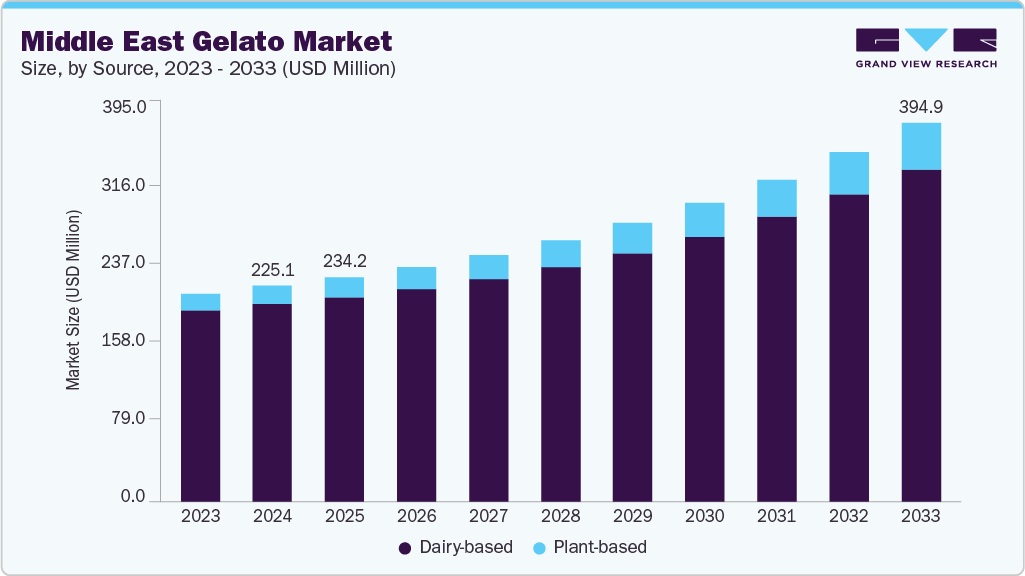
The Middle East gelato market was valued at approximately USD 225.1 million in 2024 and is projected to reach USD 394.9 million by 2033, growing at a CAGR of 6.7% from 2025 to 2033. Growth is driven by the region’s hot climate, rising disposable incomes, and increasing demand for premium and artisanal desserts.
Key Market Trends & Insights
- Saudi Arabia held the largest share of the Middle East gelato market in 2024, accounting for 46.6%.
- By source, the dairy-based segment dominated the market with a 91.4% share in 2024.
- By flavor, the chocolate segment dominated the market with a 29.5% share in 2024.
- By production method, the artisanal gelato segment dominated the market with a 65.8% share in 2024.
- By packaging, the take-home packaging segment dominated the market and accounted for 51.8% in 2024
Market Size & Forecast
- 2024 Market Size: USD 225.1 Million
- 2033 Projected Market Size: USD 394.9 Million
- CAGR (2025-2033): 6.7%
- Saudi Arabia: Largest market in 2024
- UAE: Fastest growing market
Gelato’s smooth texture, rich flavor, and authentic Italian heritage have positioned it as a refined alternative to traditional ice cream. The expansion of tourism, urbanization, and a diverse consumer base in markets such as the UAE and Saudi Arabia continues to boost consumption across retail and foodservice channels. The rise of boutique parlors and global franchises has further enhanced product accessibility and brand visibility in major cities.
The region’s evolving consumer landscape reflects a growing interest in health-conscious indulgence and natural ingredients. A rising number of consumers are opting for low-sugar, dairy-free, and vegan gelato variants that align with balanced and sustainable lifestyles. This shift is most evident among younger and urban populations who actively seek desserts that combine rich flavor with functional nutrition. In response, regional and global producers are reformulating their offerings with clean-label ingredients, natural sweeteners, and plant-based alternatives without compromising taste or texture. Locally inspired flavor innovations, such as dates, rose water, pistachios, and Arabic coffee (gahwa), are gaining traction, helping brands connect with regional tastes while maintaining artisanal authenticity.
Ongoing innovation and international brand expansion continue to shape the market landscape. For instance, in April 2024, Venchi, in partnership with Azadea Group, launched its iconic Chocogelateria concept in Dubai, UAE, expanding its luxury chocolate and gelato retail presence across the region. Such developments reflect the rising appeal of experiential dessert formats that combine indulgence with premium craftsmanship. The growing presence of international franchises and homegrown artisanal brands through modern retail and online delivery platforms is enhancing product reach and consumer engagement.
Consumer Insights
The Middle East gelato market is influenced by a young, urban consumer base that values premium, handcrafted desserts as a form of indulgence and social experience. A large share of middle-income and young adults is driving demand for artisanal frozen desserts. According to the CIA World Factbook, the median age in the United Arab Emirates was 35.8 years in 2024, reflecting a youthful population with strong purchasing power and a preference for high-quality, experiential food offerings. These consumers perceive gelato as a lifestyle product associated with sophistication, freshness, and authenticity.
Consumer Demographics
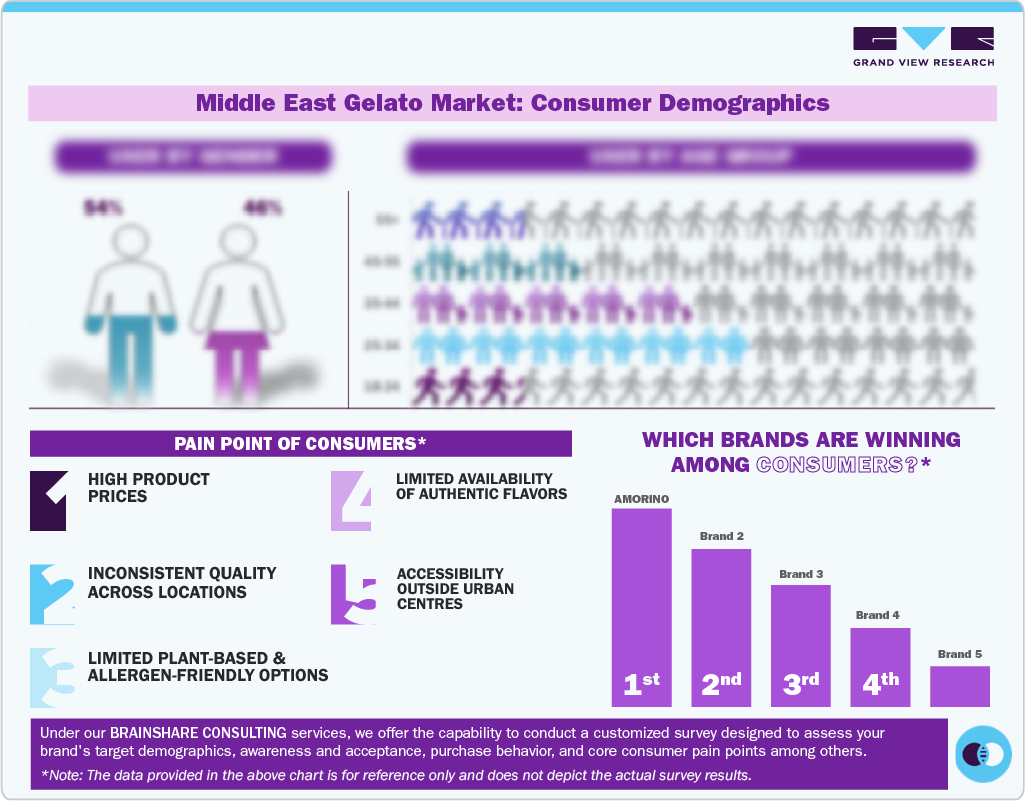
Health-conscious trends are reshaping purchasing behavior, with younger demographics seeking dairy-free, vegan, and low-sugar gelato options that align with balanced living. Leading brands are expanding their retail footprint and introducing artisanal concepts to match evolving consumer expectations. For instance, in April 2025, the premium gelato brand Amorino expanded its catering services in the United Arab Emirates by introducing its Gelato Mobile Cart, catering to weddings, corporate gatherings, and private events, in response to rising demand in the premium gelato segment. The growing emphasis on health, authenticity, and sustainable production continues to redefine gelato consumption patterns in the region, driving innovation and widening appeal among modern, experience-oriented consumers.
Source Insights
The dairy-based segment accounted for the largest share of 91.4%, in the Middle East gelato market revenue in 2024. This dominance is driven by a strong consumer preference for authentic Italian-style gelato, made with milk and cream, which offers rich flavor, a dense texture, and superior indulgence. Traditional dairy formulations are widely associated with authenticity, quality, and craftsmanship, making them the preferred choice among consumers seeking premium dessert experiences. The availability of imported high-quality dairy ingredients and well-established cold-chain infrastructure across Gulf countries supports consistent production standards. Artisanal and boutique gelato parlors across the UAE, Saudi Arabia, and Qatar continue to showcase fresh, dairy-based recipes that maintain authenticity and deliver a smooth, creamy profile appealing to both local and international consumers.
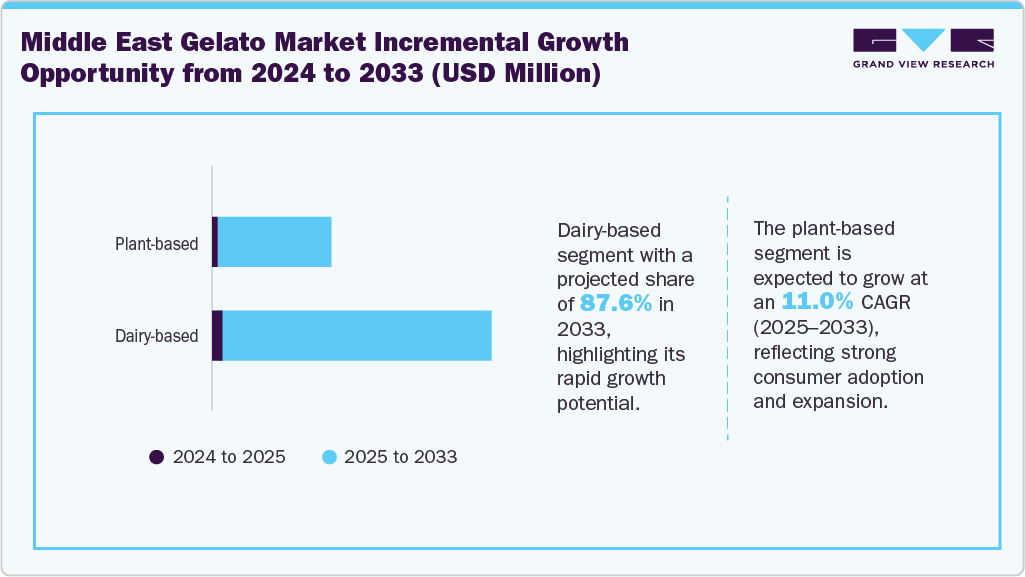
The plant-based segment is expected to grow at the fastest CAGR of 11.0% over the forecast period. Growth is driven by rising consumer awareness of health, sustainability, and lactose intolerance, particularly among younger, urban populations. Increasing demand for vegan, dairy-free, and clean-label desserts has encouraged producers to develop gelato made with almond, coconut, oat, and soymilk bases that deliver creamy textures without dairy. Expanding availability of premium plant-based offerings in cafes, boutique parlors, and modern retail outlets across the UAE and Saudi Arabia supports this trend. Global wellness movements and growing interest in ethical consumption are influencing purchasing behavior across the region. International and regional brands are investing in plant-based innovation to meet evolving preferences for nutritious and eco-friendly indulgence. These factors position the plant-based segment as the fastest-growing source category in the Middle East gelato industry.
Flavor Insights
The vanilla segment dominated the market in 2024. This growth is driven by vanilla’s universal appeal, smooth texture, and association with premium quality and natural indulgence, making it a preferred choice among consumers across diverse age groups and cultural backgrounds. Its versatility allows it to complement a wide range of toppings, sauces, and locally inspired flavors such as dates, pistachio, and saffron, reinforcing its status as a staple in retail and foodservice offerings. The growing presence of global artisanal gelato brands in the region has further strengthened demand for authentic and visually distinctive dessert experiences. For instance, in July 2024, the Italian gelato brand Amorino debuted its signature rose-shaped gelato at Souk Madinat Jumeirah in Dubai, UAE, reinforcing the premium artisanal dessert trend in the Middle East. Such developments highlight the enduring popularity of classic flavors, like vanilla, which embody authenticity and indulgence.
The fruits and berries segment is expected to grow at the fastest CAGR from 2025 to 2033. This growth is driven by increasing health awareness and a growing preference for light, refreshing, and naturally flavored desserts among consumers. Fruit-based gelato, made with real fruit pulp and natural sweeteners, is perceived as a healthier alternative to dairy-rich varieties and aligns with the region’s rising demand for clean-label, low-fat, and nutritious indulgences. Producers are introducing tropical and locally inspired flavors such as mango, pomegranate, fig, and date to cater to regional tastes while emphasizing freshness and authenticity. The vibrant appearance and naturally sweet profile of fruit and berry gelato enhance consumer appeal, particularly among younger demographics seeking both flavor and visual satisfaction.
Production Method Insights
The artisanal gelato segment accounted for the largest revenue share in the Middle East gelato market in 2024. Driven by rising consumer demand for premium, handcrafted desserts that emphasize authenticity, freshness, and high-quality ingredients. Global and regional brands are expanding their presence across the region through boutique stores and specialty outlets, catering to evolving consumer preferences. For example, in May 2024, Cremeria Opera opened its first boutique in Dubai, United Arab Emirates, introducing Italian-style artisanal gelato to the Middle Eastern market and expanding its international premium dessert footprint. The growing cafe culture, tourism expansion, and preference for clean-label formulations with locally inspired flavors, such as dates, pistachios, and rose water, continue to reinforce the market shift toward artisanal offerings, positioning the segment as the fastest-growing production method category in the gelato industry.
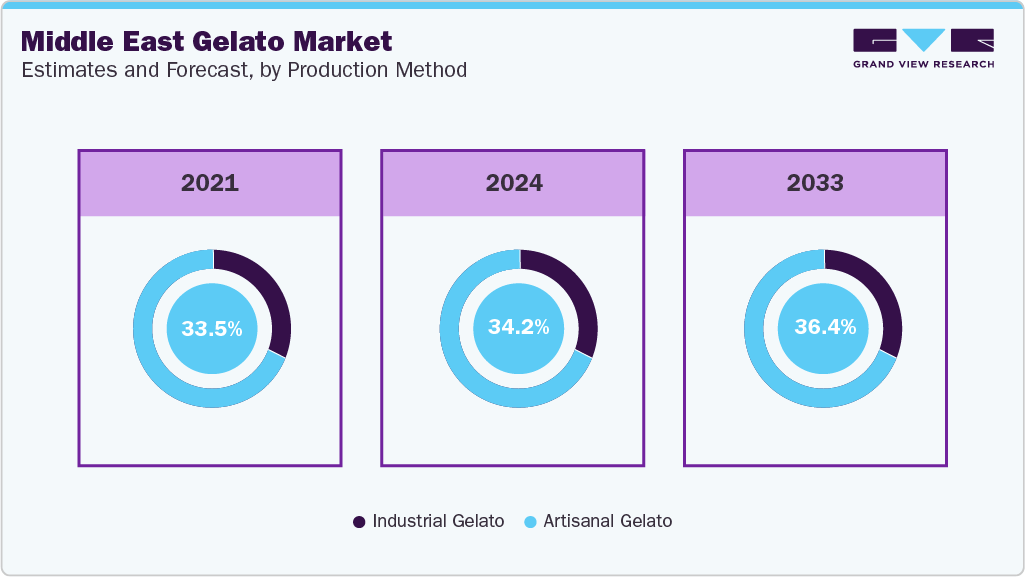
The industrial gelato segment is projected to grow at the fastest CAGR over the forecast period within the production method segment. Large-scale manufacturing efficiency, extensive distribution networks, and the growing availability of packaged gelato across supermarkets, hypermarkets, and convenience stores drive this dominance. Industrial production ensures consistent quality, standardized flavors, and longer shelf life, making gelato more accessible to a wider consumer base. The rising demand for convenient and ready-to-eat desserts, supported by robust cold-chain infrastructure in Gulf countries, has further strengthened this segment. Additionally, the affordability and widespread availability of industrial gelato products make them more competitive than artisanal alternatives, particularly in high-consumption markets such as Saudi Arabia and the UAE.
Packaging Insights
The take-home packaging accounted for the largest revenue share in 2024, driven by the growing preference for convenient, family-sized dessert options that cater to home consumption. Consumers in urban areas sought premium indulgence at home, driving demand for packaged gelato tubs that offer variety, hygiene, and extended shelf life. The segment is expected to grow due to the expansion of modern retail formats, including supermarkets and hypermarkets, which have improved product accessibility and visibility. The combination of convenience, quality assurance, and adaptability to home dining occasions has positioned take-home packaging as the leading format in the market.
The impulse packaging segment is projected to grow at the fastest CAGR of XX% from 2025 to 2033, due to the rising demand for on-the-go and single-serve dessert options that offer convenience and immediate indulgence. Small-format gelato servings such as cups, cones, and bars appeal to younger consumers seeking quick, portable treats during leisure, travel, or social occasions. The expansion of modern retail outlets, quick-service restaurants, and convenience stores across the region has further enhanced product accessibility. The increasing popularity of tourism, outdoor dining culture, and premium impulse offerings launched by global and regional brands further support the segment's growth.
Distribution Channel Insights
The offline segment accounted for the largest revenue share in 2024. Driven by a strong presence of specialty gelato parlors, cafés, and dessert boutiques that emphasize experiential consumption. Consumers in the region prefer in-store purchases where they can enjoy freshly prepared gelato, sample multiple flavors, and experience the brand’s ambiance. This growing preference has encouraged the expansion of international franchises and local artisanal brands across malls, tourist destinations, and high-traffic urban areas. For example, in August 2022, Kerten Hospitality launched the female-led gelato brand Nakhati in Saudi Arabia, aligning with the country’s rising demand for premium, handcrafted gelato and reflecting the growing significance of boutique outlets in shaping offline sales. The combination of immersive brand experiences, premium offerings, and strong retail presence has further supported the offline channel as the leading mode of gelato distribution in the region.
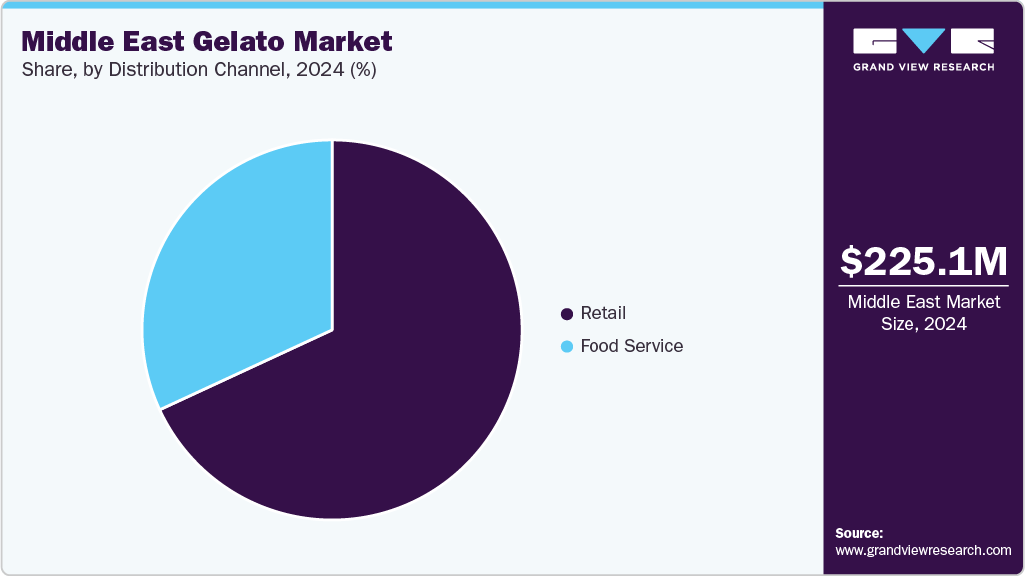
The online segment is expected to grow at the fastest CAGR over the forecast period. The growth is driven by the expanding presence of e-commerce platforms, food delivery applications, and digital payment systems that enhance convenience and accessibility across the region. The increasing penetration of smartphones and the growing popularity of quick commerce services have encouraged consumers to order gelato online for home delivery and gifting purposes. Leading brands are partnering with delivery aggregators to expand their reach to a wider consumer base and increase accessibility through digital channels. In August 2024, Amorino launched home delivery of its artisanal gelato and gelato-filled macarons in Dubai, UAE, through the Deliveroo platform, expanding its digital presence in the Middle East market. The rising adoption of online delivery services by premium brands, coupled with promotional offers and customizable options, continues to strengthen the region’s digital sales channel and support the segment’s rapid growth.
Regional Insights
Saudi Arabia Gelato Market Trends
Saudi Arabia held the largest revenue share of 46.6% in 2024, growth is driven by country’s cafe and dessert culture, especially in Riyadh, Jeddah, and Dammam. This growth is increasing the demand for high-quality, artisanal desserts, making gelato a popular choice. It is enjoyed in scoops, plated desserts, and creative combinations that attract younger consumers and families. In addition, rising tourism and a rising number of expats, driven by Vision 2030 initiatives and large projects such as NEOM and the Red Sea development, are looking for familiar, premium dessert options in places like hotels, resorts, malls, and entertainment venues. Together, these trends boost gelato consumption in food service and premium retail and strengthen its appealing image.
UAE Gelato Market Trends
The gelato market in the UAE is projected to grow at the fastest CAGR of 7.8% from 2025 to 2033. The UAE has a strong demand for premium, international desserts, especially in Dubai and Abu Dhabi. This demand supports the growth of gelato as consumers, tourists, and expatriates look for high-quality, artisanal treats. Specialty cafes, high-end restaurants, and mall-based shops offer gelato to enhance their menus and create visually appealing experiences that are great for social media. Furthermore, major malls, hypermarkets, and rapidly growing e-commerce platforms make it easier to access packaged gelato for home use. Reliable cold-chain logistics, seasonal promotions, and good visibility in stores help increase the popularity of gelato in both food service and retail settings.
Key Companies & Market Share Insights
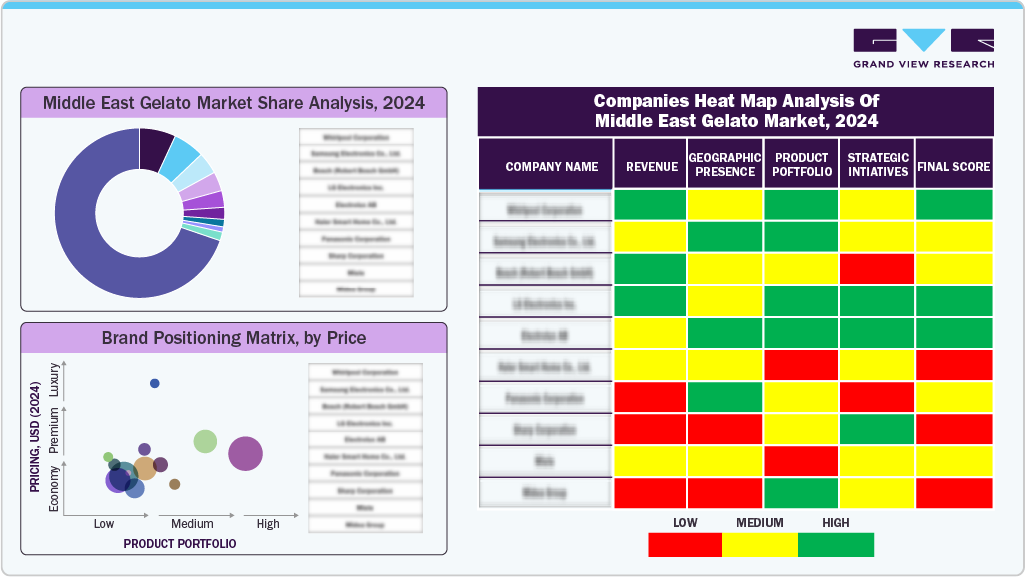
Domestic gelato producers employ targeted strategies to enhance their market position and adapt to evolving consumer preferences. Growth is driven by innovation in flavor development, product reformulation, and the expansion of health-oriented offerings such as plant-based, low-sugar, and dairy-free gelato. Producers focus on locally inspired and seasonal flavors to appeal to regional tastes and differentiate their brand. Companies expand their presence across supermarkets, cafes, and boutique outlets, investing in experiential marketing to emphasize authenticity and craftsmanship. Strategic partnerships with retailers and foodservice operators support wider distribution and visibility. By aligning with trends in wellness, sustainability, and premiumization, producers enhance consumer engagement and reinforce their competitive edge in the market.
-
Unilever PLC is a leading global player in the frozen desserts market with strong regional presence through its well-established ice cream brands. The company benefits from extensive manufacturing capabilities, wide retail penetration, and sustained product innovation that support its competitive position across premium and mass-market segments.
-
Amorino is an international premium gelato brand known for traditional Italian preparation methods and natural ingredient sourcing. Its focus on artisanal formulations, visually distinctive servings, and strategically located boutiques strengthen its appeal among consumers seeking authentic, high-quality gelato.
Key Middle East Gelato Companies:
- Unilever PLC
- Amorino
- Kerten Hospitality.
- Gelatissimo
- Nestle Middle East FZE
- Baskin-Robbins, Inc.
Recent Developments
- In April 2025, Amorino announced plans to expand its footprint beyond Dubai by opening new outlets in Sharjah and Abu Dhabi, reflecting the brand’s commitment to strengthening its presence across the UAE. This move aligned with the country’s growing gelato market, where increasing consumer demand for artisanal, premium, and authentic frozen desserts continues to attract international brands.
Middle East Gelato Market Report Scope
|
Report Attribute
|
Details
|
|
Revenue Forecast in 2033
|
USD 394.9 million
|
|
Growth Rate (Revenue)
|
CAGR of 6.7% from 2025 to 2033
|
|
Actuals
|
2021 - 2024
|
|
Forecast period
|
2025 - 2033
|
|
Quantitative (Revenue) units
|
Revenue in USD Million, and CAGR from 2025 to 2033
|
|
Report coverage
|
Revenue forecast, company ranking, competitive landscape, growth factors, and trends
|
|
Segments covered
|
Source, flavor, production method, packaging, distribution channel
|
|
Key companies profiled
|
Unilever PLC; Amorino; Kerten Hospitality; Gelatissimo; Nestle Middle East FZE; Baskin-Robbins, Inc.
|
|
Customization scope
|
Free report customization (equivalent up to 8 analysts’ working days) with purchase. Addition or alteration to country, segment scope.
|
|
Pricing and purchase options
|
Avail customized purchase options to meet your exact research needs. Explore purchase options
|
Middle East Gelato Market Report Segmentation
This report forecasts revenue growth at the country level and provides an analysis of the latest industry trends and opportunities in each of the sub-segments from 2021 to 2033. For the purpose of this study, Grand View Research has segmented the Middle East gelato market report on the basis of source, flavor, production method, packaging, and distribution channel.
-
Source Outlook (Revenue, USD Million, 2021 - 2033)
-
Flavor Outlook (Revenue, USD Million, 2021 - 2033)
-
Vanilla
-
Chocolate
-
Fruits & Berries
-
Nuts
-
Others
-
Production Method Outlook (Revenue, USD Million, 2021 - 2033)
-
Industrial Gelato
-
Artisanal Gelato
-
Packaging Outlook (Revenue, USD Million, 2021 - 2033)
-
Impulse packaging
-
Take-home packaging
-
Distribution Channel Outlook (Revenue, USD Million, 2021 - 2033)
-
Country Outlook (Revenue, USD Million, 2021 - 2033)
-
Saudi Arabia
-
UAE
-
Qatar
-
Oman

 Download Sample Report














