Japan Dairy Alternatives Market Summary
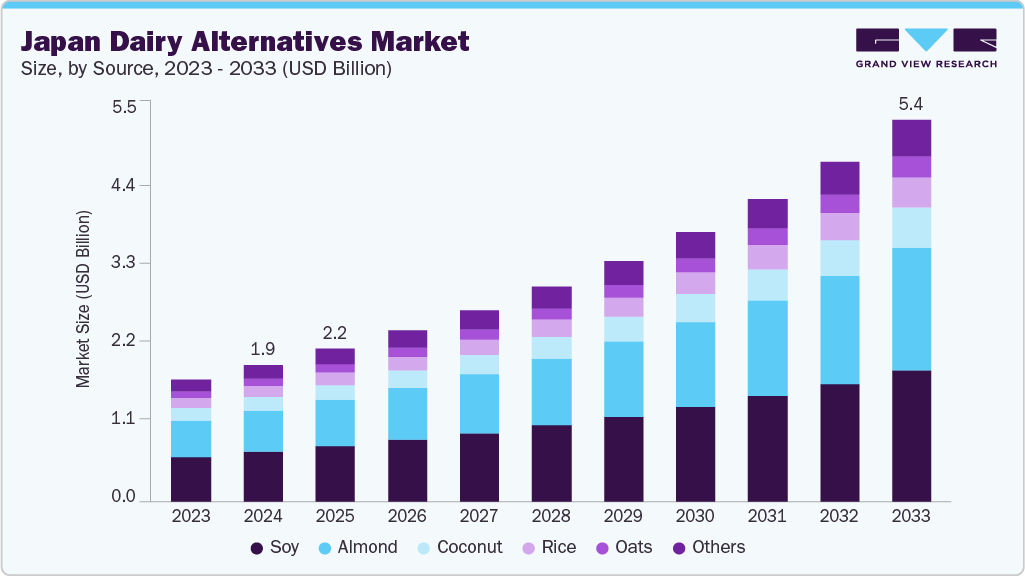
The Japan dairy alternatives market size was estimated at USD 1.94 billion in 2024 and is expected to reach USD 5.43 billion in 2030, growing at a CAGR of 12.1% from 2025 to 2033. The market is primarily driven by rising health consciousness, high rates of lactose intolerance, and growing environmental awareness among consumers.
Key Market Trends & Insights
- By source, the soy segment held the highest market share of 36.7% in 2024.
- By source, the almond segment is expected to grow at the fastest CAGR of 13.0% from 2025 to 2033.
- Based on product, the milk segment held the highest market share of 67.6% in 2024.
- By distribution channel, the supermarket & hypermarkets segment held the highest market share of 40.9% in 2024.
Market Size & Forecast
- 2024 Market Size: USD 1.94 Billion
- 2033 Projected Market Size: USD 5.43 Billion
- CAGR (2025-2033): 12.1%
Demand for non-dairy substitutes such as soy, almond, and oat-based products has surged, and consumers are seeking low-fat, low-cholesterol options aligned with healthier dietary patterns. Environmental concerns also influence purchasing behavior, as plant-based dairy alternatives typically have a lower carbon footprint and require fewer natural resources than traditional dairy.
In Japan, the shift toward plant based products is driven by health consciousness, environmental awareness, and evolving lifestyle preferences. Consumers are becoming more aware of what they eat and are choosing products that support better health, such as those low in fat, cholesterol, and sugar. Plant based alternatives such as soy, almond, and oat milk are increasingly considered healthier, more digestible, and nutritionally appealing options. In addition, younger generations and urban consumers are increasingly adopting a flexitarian or vegan lifestyle, supported by growing product availability in supermarkets, convenience stores, and cafes. In 2024, Yakult Honsha Co., Ltd. entered Japan’s plant based market with its new brand “The Power of Soy Milk,” introducing fermented soy milk products. The product is made with lactobacilli and bifidobacteria, the products are designed to eliminate bitterness and beany odors, offering a smooth, dessert-friendly taste while promoting health. In addition, the product features claims for lowering cholesterol.
Consumer Insights
Japanese consumers are primarily health-conscious individuals, including younger urban residents and adults seeking to manage dietary sensitivities such as lactose intolerance. Their choices are largely driven by health motivations, with a growing preference for products low in sugar, fat, and cholesterol, as well as those free from allergens and animal-derived ingredients. Consumers tend to favor plant-based beverages such as soy, almond, and oat milk, especially when fortified with calcium and other nutrients.
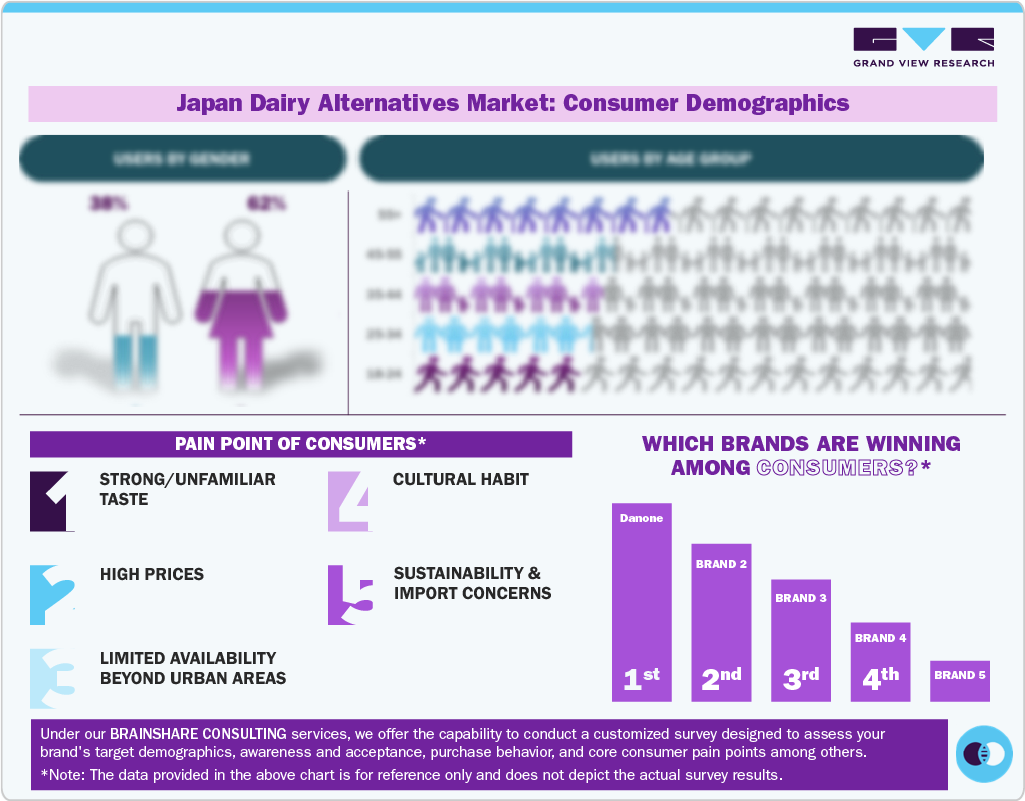
In Japan, health and beauty are the primary drivers behind the growing preference for plant-based milks, such as soy and almond milk, which are the most popular due to their nutritional benefits. Oat milk is also gaining traction as consumer interest in alternatives expands.
Japanese consumers are increasingly seeking foods supporting active lifestyles, muscle maintenance, and overall well-being, while aligning with clean-label and allergen-free preferences. As plant-based options become more accessible and varied, consumers are more willing to integrate these alternatives into their daily diet. Innovations in texture, taste, and nutritional fortification have further enhanced the appeal of plant based dairy, making it a viable substitute for traditional dairy products without compromising on flavor or functionality.
Source Insights
The soy segment dominated the Japanese dairy alternative market and accounted for a share of 36.7% in 2024. Soy milk products are available in a wide range of flavors and formats. it is a staple in Japanese supermarkets and convenience stores, making them the go-to choice for consumers seeking dairy-free products. Its cultural familiarity, local production, and variety solidify its leading position in the plant-based segment across the country. In 2024, FUJI OIL CO., LTD. launched its first retail plant-based product, soy milk cream butter, under the “GOODNOON” PBF brand. It is a rich and clean finish butter alternative. The product is available via Co-op Deli and Pal System in Japan’s Kanto region.
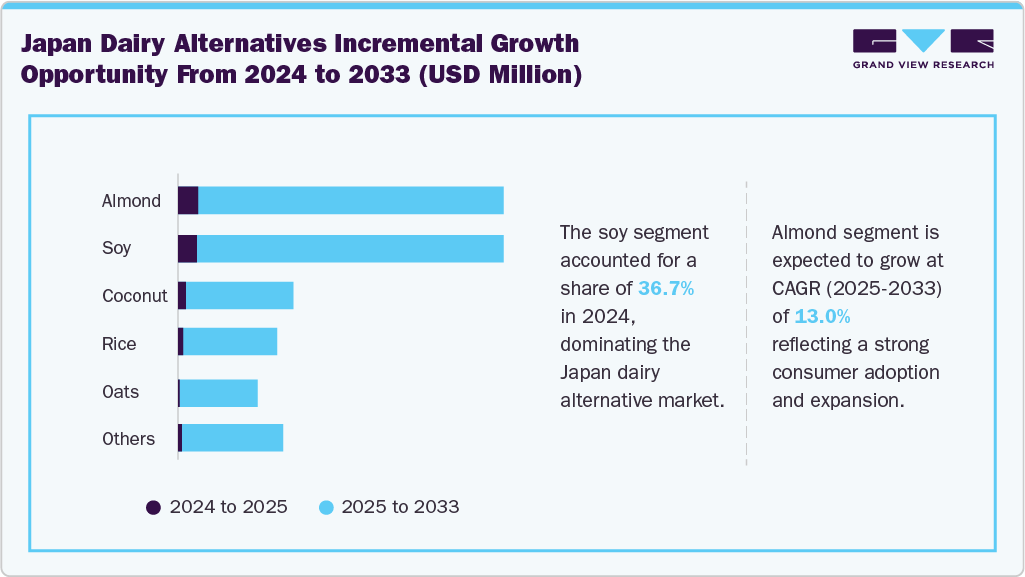
The almond segment is expected to grow at the fastest CAGR of 13.0% from 2025 to 2033. Japan’s rising focus on wellness and healthy living, particularly among younger and urban consumers, is expected to support continued growth in the almond-based dairy alternatives market. In addition, increasing awareness of dietary sensitivities and the desire for low-calorie, cholesterol-free options has driven interest in almond milk as a nutritious and versatile substitute.
Almond-based beverages are increasingly positioned as suitable choices for individuals seeking plant-based, clean-label products that align with modern health trends and evolving dietary habits. In 2024, KAGOME CO., Ltd. formed a partnership with U.S.-based Blue Diamond Growers. to introduce the “Almond Breeze” brand to the Japanese market. The move aligns with KAGOME CO., Ltd. strategic focus on expanding its plant based product portfolio, capitalizing on growing demand for almond milk among health and beauty conscious consumers, especially women.
Product Insights
The milk segment dominated the Japanese dairy alternatives industry and accounted for the largest revenue share in 2024, due to its convenience, versatility, and alignment with modern health and lifestyle preferences. Consumers appreciate the beverages' easy integration into daily routines, appealing flavors, and suitability for on-the-go consumption. The plant-based nature and perceived health benefits, such as being low in calories, cholesterol-free, and often fortified with vitamins, resonate strongly with urban, health-conscious individuals seeking functional nutrition.
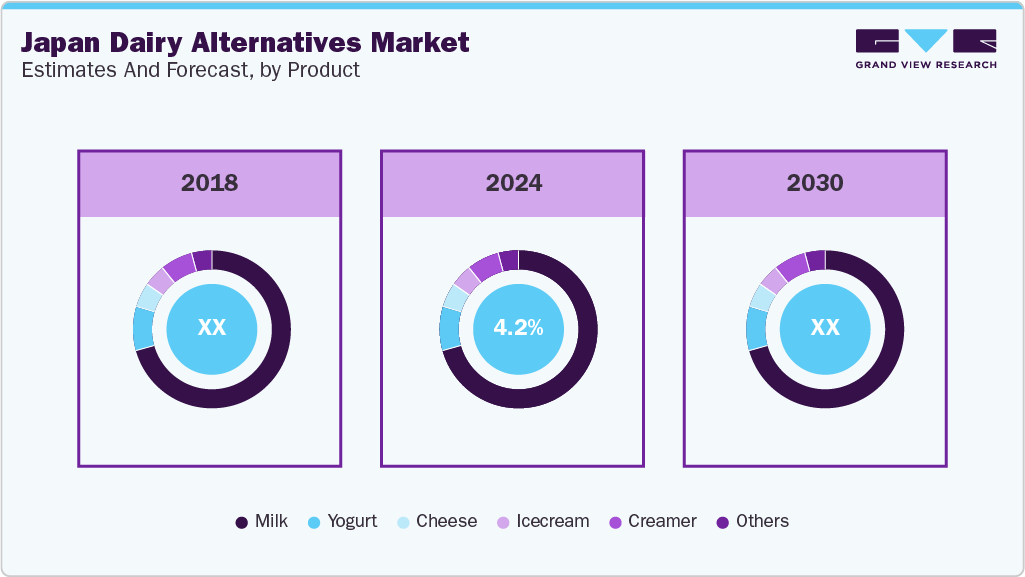
The ice cream segment is expected to record the fastest CAGR from 2025 to 2033, driven by increasing consumer demand for indulgent yet health-conscious options. As awareness of lactose intolerance, vegan lifestyles, and other preferences grows, more consumers are seeking dairy-free frozen treats made from ingredients such as soy, almond, and coconut. These products appeal to adults and children, offering familiar textures and flavors while catering to dietary sensitivities choices. In 2024, Morinaga & Co., Ltd. launched its first rice based plant milk ice creams, “OKOMETO Vanilla” and “OKOMETO Chocolate”. Products are free from 28 major allergens, including dairy, eggs, and soy, and are made with domestically sourced rice milk and rice flour.
Distribution Channel Insights
The supermarket & hypermarkets segment dominated the Japanese dairy alternative industry. It accounted for the largest revenue share in 2024, offering consumers convenience, product variety, and easy accessibility within their daily shopping routines. These stores play a vital role in expanding awareness and trial of plant-based options by prominently featuring them alongside traditional dairy products. With clear labeling, frequent promotions, and increasing shelf space for soy, almond, oat, and rice-based alternatives, supermarkets cater to health-conscious consumers. As demand grows for plant based products, supermarkets and hypermarkets continue to drive the mainstream adoption of dairy alternatives across diverse age groups and lifestyles in Japan. In December 2024, FamilyMart Co., Ltd., one of Japan’s largest convenience store chains, expanded its Blue Green plant based product line, offering environmentally friendly, animal free options. The range includes desserts, soy milk-based cake, soy meat alternative, and rice ball with vegetables.
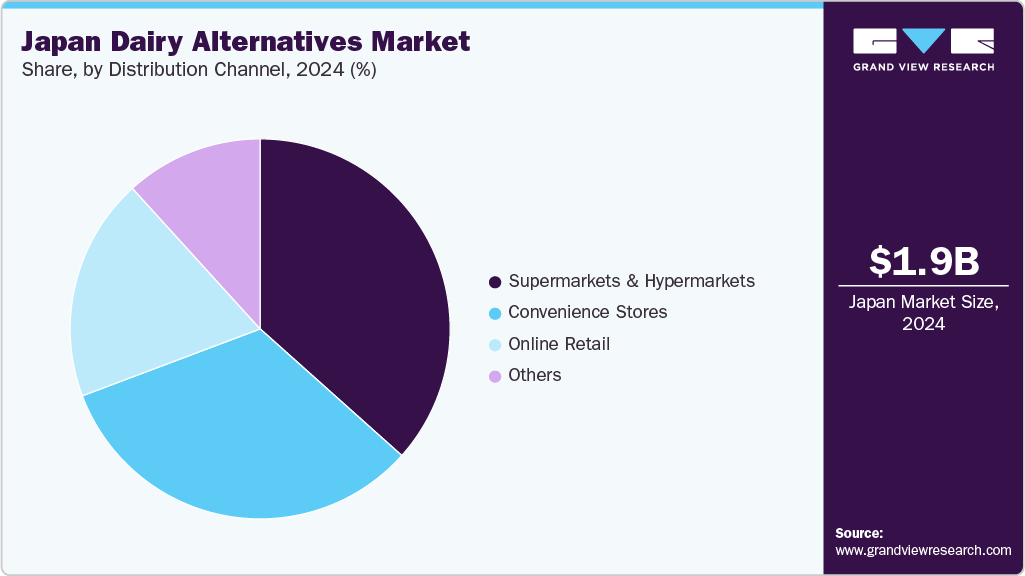
The online retail segment is projected to experience the fastest CAGR from 2025 to 2033, driven by shifting consumer behavior toward convenience and digital accessibility. As more Japanese consumers prioritize health-conscious and plant-based choices, e-commerce platforms offer a flexible, efficient way to explore and purchase various dairy alternatives, such as soy, almond, and oat-based beverages.
Key Japan Dairy Alternative Company Insights
Some of the key companies operating in the Japanese dairy alternative industry include Kikkoman Corporation, Yakult Honsha, Hain Celestial, and others.
Key Japan Dairy Alternatives Companies:
- Kikkoman Corporation
- Yakult Honsha
- Hain Celestial
Recent Developments
-
In February 2025, Kikkoman Corporation launched Kikkoman Soymilk global website, to support the overseas expansion of its soymilk brand.
-
In 2024, MORINAGA MILK INDUSTRY CO., LTD. launched a new plant based beverage line called “Plants&Me”, available in original and sugar free variants. Blended from oats, coconut, chickpeas, soybeans, and almonds, the drinks are vegan-certified by the NPO Veggie Project Japan and fortified with Soy E, fiber, calcium, and folic acid.
Japan Dairy Alternatives Market Report Scope
|
Report Attribute
|
Details
|
|
Market size value in 2025
|
USD 2.17 billion
|
|
Revenue forecast in 2033
|
USD 5.43 billion
|
|
Growth rate
|
CAGR of 12.1% from 2025 to 2033
|
|
Base year for estimation
|
2024
|
|
Historical data
|
2021 - 2023
|
|
Forecast period
|
2025 - 2033
|
|
Quantitative units
|
Revenue in USD million/billion and CAGR from 2025 to 2033
|
|
Report coverage
|
Revenue forecast, company ranking, competitive landscape, growth factors, trends
|
|
Segments covered
|
Source, product, distribution channel.
|
|
Key companies profiled
|
Kikkoman Corporation, Yakult Honsha, Hain Celestial
|
|
Customization scope
|
Free report customization (equivalent up to 8 analysts working days) with purchase. Addition or alteration to country, regional & segment scope.
|
|
Pricing and purchase options
|
Avail customized purchase options to meet your exact research needs. Explore purchase options
|
Japan Dairy Alternative Market Report Segmentation
This report forecasts revenue growth at the country level and provides an analysis of the latest industry trends in each of the sub-segments from 2021 to 2033. For this study, Grand View Research has segmented the Japan dairy alternative market report based on source, product, and distribution channel:
-
Source Outlook (Revenue, USD Million, 2021 - 2033)
-
Soy
-
Almond
-
Coconut
-
Rice
-
Oats
-
Others
-
Product Outlook (Revenue, USD Million, 2021 - 2033)
-
Milk
-
Yogurt
-
Cheese
-
Ice cream
-
Creamer
-
Others
-
Distribution Channel Outlook (Revenue, USD Million, 2021 - 2033)

 Download Sample Report














