Germany Hospitality Mattress Market Trends
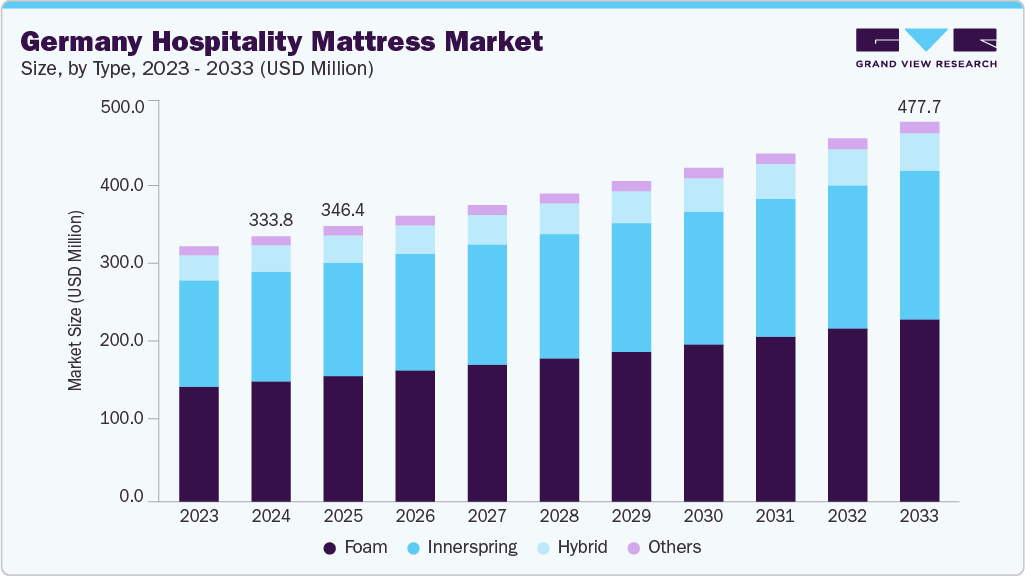
The Germany hospitality mattress market size was estimated at USD 333.8 million in 2024 and is projected to reach USD 477.7 million by 2033, growing at a CAGR of 4.1% from 2025 to 2033. The German market for hospitality mattress is being significantly driven by the country’s flourishing tourism and business travel sectors. As one of Europe’s top destinations for leisure and corporate travel, Germany consistently hosts millions of domestic and international visitors annually. According to Destatis, the country’s federal statistics office, the number of overnight stays by foreign visitors reached 85.3 million in 2024, marking a 5.4% increase from the previous year. In December 2024 alone, accommodation establishments recorded 31 million overnight stays, reflecting a 3.6% year-on-year growth. This consistent rise in overnight demand highlights the sustained pressure on hospitality operators to maintain high standards of guest comfort, driving investments in durable, supportive, and premium-grade mattresses that enhance sleep quality and overall guest satisfaction.
A prominent trend in the Germany hospitality mattress market is the growing emphasis on sustainability and eco-conscious products. Hotel operators are becoming increasingly selective about the materials used in their bedding, favoring mattresses made from natural latex, organic cotton, and biodegradable or recycled components. This shift reflects Germany’s broader environmental values and the rising demand for eco-friendly travel experiences. Certifications such as OEKO-TEX and the EU Ecolabel are gaining importance as hoteliers look to differentiate their offerings and appeal to sustainability-minded guests.
Furthermore, with accommodation establishments experiencing higher occupancy rates, the need for mattresses that are not only environmentally responsible but also durable and easy to maintain has become essential. As a result, circular economy initiatives such as mattress recycling and refurbishment are gaining traction in the hospitality sector.
Moreover, technological innovation is also reshaping the mattress landscape in Germany’s hospitality sector. The integration of smart mattress features, such as pressure-sensitive sensors, climate regulation, and adjustable firmness, is increasingly adopted in luxury and wellness-focused accommodations. Hotels are also exploring modular mattress systems that allow for tailored guest experiences. With boutique and design-led hotels expanding, there is a rising demand for mattresses that offer both superior ergonomics and modern aesthetics. These trends, combined with Germany’s strict hygiene and fire safety regulations, are accelerating the demand for specialized, high-performance mattresses in the country’s dynamic hospitality landscape.
Buyers’ Behavioral Analysis
In Germany hospitality mattress market, buyer behavior is heavily influenced by the need to balance guest comfort with long-term value and compliance with national safety standards. Hotel and accommodation operators prioritize mattresses that are durable, easy to maintain, and certified for fire resistance and hygiene, attributes that are especially critical in high-traffic establishments. Purchasing decisions are also driven by warranty coverage, supplier reliability, and after-sales services, such as mattress recycling or refurbishment. With increasing competition in the hospitality sector, especially in major cities like Berlin, Munich, and Frankfurt, hotel buyers are placing greater importance on mattresses that contribute to positive guest reviews, as sleep quality is a key determinant of overall guest satisfaction.
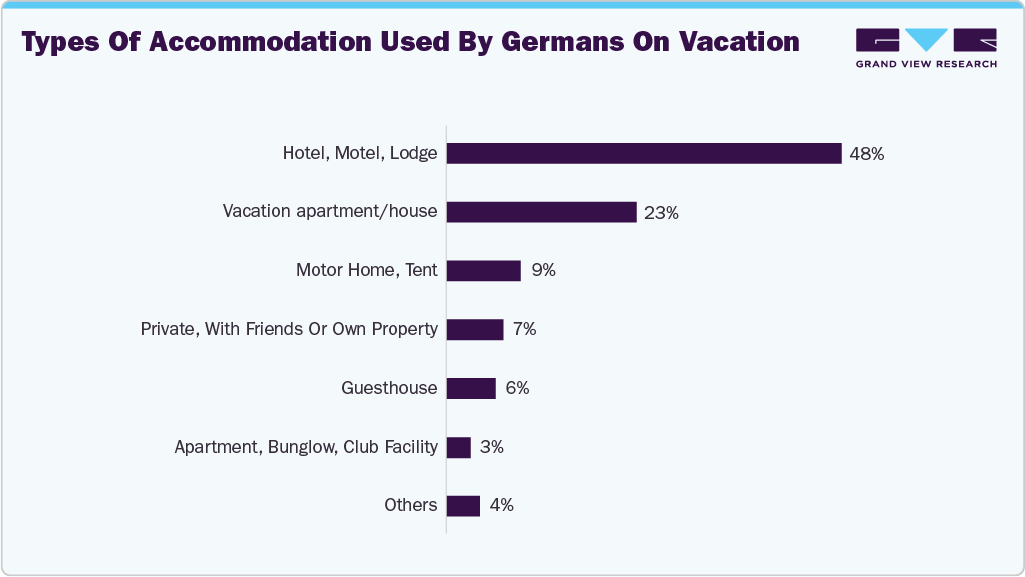
Buyer preferences also vary based on accommodation type. Luxury hotels and boutique properties tend to invest in high-end, customized mattresses that offer adjustable features, smart technology integration, or premium comfort layers. In contrast, budget hotels, hostels, and short-stay apartments typically favor cost-efficient, high-density foam or innerspring options that offer basic comfort with extended durability. Meanwhile, wellness resorts and medical spas prioritize orthopedic and hypoallergenic mattresses to align with their health-focused offerings. These segmented buying patterns reflect the diverse operational needs and guest expectations across Germany’s broad accommodation landscape.
Type Insights
The foam mattress accounted for a revenue share of 45.32% of the Germany hospitality mattress market in 2024 due to its superior comfort, affordability, and versatility across various accommodation types. Foam mattresses, particularly memory foam and high-resilience variants, are favored for their pressure-relieving properties, ability to conform to body contours, and minimal motion transfer, qualities that enhance guest sleep quality and reduce disturbances in shared accommodations. Additionally, their lightweight structure makes them easier for hotel staff to handle during room turnovers and maintenance, contributing to operational efficiency.
Furthermore, foam mattresses are available in a wide range of price points, allowing hospitality buyers to select models that align with their budget and brand positioning, from budget-friendly options for hostels and economy hotels to premium memory foam mattresses for upscale and boutique hotels. Their adaptability to different bed bases and room configurations also adds to their appeal, especially in properties with space constraints or modular furniture setups.
The hybrid mattress is expected to grow at a CAGR of 4.1% from 2025 to 2033 within the Germany hospitality mattress industry. Hybrid mattresses, which blend innerspring coils with layers of foam, latex, or gel, offer the benefits of both support and cushioning, making them an ideal choice for hospitality establishments aiming to enhance sleep quality. As competition intensifies in Germany’s hotel industry, especially among upscale and wellness-oriented properties, hoteliers are seeking mattress solutions that deliver a more luxurious and differentiated sleep experience. Hybrid models cater well to this demand, offering advanced pressure relief, improved airflow, and greater adaptability to different body types and sleeping positions.
End Use Insights
Mattresses for hotels and resorts accounted for a revenue share of 70.51% of the hospitality mattress industry of Germany in 2024. Hotels and resorts continuously invest in high-quality, durable mattresses to meet guest expectations, enhance comfort, and drive positive reviews. The emphasis on superior sleep quality as a key differentiator, especially in luxury and upscale properties, has led to consistent upgrades and replacements of mattresses. Moreover, the recovery of tourism and increased occupancy rates in urban and leisure destinations have further driven procurement within this segment.
The mattresses for hostels are expected to grow at a CAGR of 4.8% from 2025 to 2033, largely driven by the growing number of budget-conscious and experience-seeking travelers, including millennials, Gen Z, solo adventurers, and backpackers. The growing popularity of shared economy models and the expansion of youth and boutique hostels, particularly in urban and tourist-centric areas, are driving the need for cost-effective yet durable mattress solutions. Hostel operators are increasingly focusing on improving sleep quality and hygiene standards to attract and retain guests, leading to increased investments in better-quality mattresses. Additionally, the surge in solo and group travel, coupled with the recovery of the travel sector post-pandemic, is accelerating the growth of this segment.
Size Insights
The queen-size mattress accounted for a revenue share of 43.23% of the hospitality mattress market in Germany in 2024, reflecting their strong preference across a wide range of accommodation types. This dominance is largely attributed to their ideal balance between space efficiency and guest comfort. Queen-size mattresses offer ample sleeping area for both single and double occupancy, making them a versatile choice for standard rooms in midscale, upscale, and boutique hotels. Their size provides sufficient comfort without occupying excessive room space, which is particularly advantageous in urban hotels where maximizing usable floor space is critical.
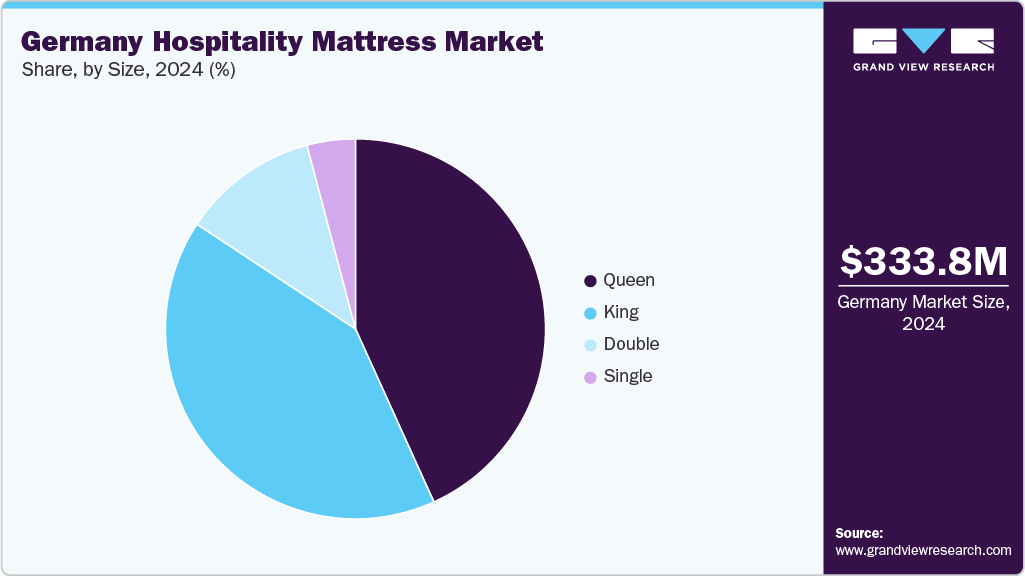
The king-size mattress is expected to grow at a CAGR of 4.6% from 2025 to 2033. This growth is further fueled by the shift in guest expectations, particularly among international travelers who are accustomed to larger bed formats. Upscale and luxury hotels in major cities like Berlin, Munich, and Frankfurt, as well as resort destinations, are adopting king-size beds to align with global hospitality trends and enhance their competitive positioning. Properties targeting business executives, honeymooners, and high-spending tourists are prioritizing king mattresses to differentiate their offerings and increase satisfaction scores. Additionally, wellness resorts and boutique hotels are integrating king-size beds as part of holistic guest experience strategies that emphasize rest and recovery.
Key Germany Hospitality Mattress Company Insights
The Germany hospitality mattress industry combines well-established brands and emerging manufacturers. Leading companies actively respond to evolving hospitality trends by innovating sleep solutions and broadening their product portfolios to enhance comfort, durability, and sustainability. This strategic adaptation helps them maintain a competitive edge and strengthen their position in a dynamic industry.
-
Serta Simmons Bedding, LLC (SSB) is one of the largest and most established mattress manufacturers and suppliers. The company is headquartered in Doraville, Georgia, and serves both consumer and commercial markets. SSB is a key supplier to major hotel chains in the hospitality sector in the Germany, offering specialized mattress lines designed for durability, comfort, and high guest turnover.
-
Tempur Sealy International, Inc. is the world’s largest bedding provider and a leader in sleep innovation and omnichannel retail strategies. With a heritage tracing back to the Tempur‑Pedic and Sealy brands, the company designs, manufactures, and distributes a broad portfolio, including Tempur‑Pedic, Sealy, Sealy Posturepedic, Stearns & Foster, plus private-label and OEM offerings to customers in over 100 countries. Its hospitality division delivers tailored sleep solutions for hotels, resorts, and lodging operators, combining memory foam, hybrid innersprings, adjustable sleep systems, and cooling technologies with strong warranties and consistency across global properties.
Key Germany Hospitality Mattress Companies:
- Serta Simmons Bedding, LLC
- Tempur Sealy International, Inc.
- King Koil Licensing Company, Inc.
- Hilding Anders International AB
- Corsicana Mattress Company
- Restonic Mattress Corporation.
- KINGSDOWN, INC.
- Whitestone Home Furnishings, LLC (Saatva)
- Therapedic International
- Brooklyn Bedding, LLC.
Recent Developments
-
In January 2025, Tempur Sealy launched an all-new Sealy Posturepedic lineup, featuring PrecisionFit coils designed to adapt to individual body shapes and maintain spinal alignment. The collection includes four tiers: Posturepedic, Plus, Pro, and Elite. It offers support and cooling technologies (MAXSUPPORT, DURAFLEX coil edge, SealyChill) catering to mid-range and premium segments.
-
In April 2024, Westin introduced its Next Generation Heavenly Bed, a complete redesign developed in collaboration with Simmons Bedding. The updated Heavenly Bed includes a plush-top innerspring mattress with gel‑infused memory foam, antimicrobial silver fiber covers, and hypoallergenic bedding. It aims to enhance guest wellness and elevate sleep quality across more than 240 global properties.
Germany Hospitality Mattress Market Report Scope
|
Report Attribute
|
Details
|
|
Market size value in 2025
|
USD 346.4 million
|
|
Revenue forecast in 2033
|
USD 477.7 million
|
|
Growth rate
|
CAGR of 4.1% from 2025 to 2033
|
|
Actual data
|
2021 - 2024
|
|
Forecast period
|
2025 - 2033
|
|
Quantitative units
|
Revenue in USD million, and CAGR from 2025 to 2033
|
|
Report coverage
|
Revenue forecast, company ranking, competitive landscape, growth factors, and trends
|
|
Segments covered
|
Type, size, end use
|
|
Country scope
|
Germany
|
|
Key companies profiled
|
Serta Simmons Bedding, LLC; Tempur Sealy International, Inc.; King Koil Licensing Company, Inc.; Hilding Anders International AB; Corsicaxrffna Mattress Company; Restonic Mattress Corporation.; KINGSDOWN, INC.; Whitestone Home Furnishings, LLC (Saatva); Therapedic International; Brooklyn Bedding, LLC.
|
|
Customization
|
Free report customization (equivalent up to 8 analysts working days) with purchase. Addition or alteration to country, regional & segment scope.
|
|
Pricing and purchase options
|
Avail customized purchase options to meet your exact research needs. Explore purchase options |
Germany Hospitality Mattress Market Report Segmentation
This report forecasts revenue growth at the country level and provides an analysis of the latest industry trends and opportunities in each of the sub-segments from 2021 to 2033. For this study, Grand View Research has segmented the Germany hospitality mattress market report based on type, size, and end use:
-
Type Outlook (Revenue, USD Million, 2021 - 2033)
-
Innerspring
-
Foam
-
Hybrid
-
Others
-
Size Outlook (Revenue, USD Million, 2021 - 2033)
-
End Use Outlook (Revenue, USD Million, 2021 - 2033)
-
Hotels & Resorts
-
Vacation Rental
-
Hostels
-
Others
Frequently Asked Questions About This Report
b. The Germany hospitality mattress market was estimated at USD 333.8 million in 2024 and is expected to reach USD 346.4 million in 2025.
b. The Germany hospitality mattress market is expected to grow at a compound annual growth rate of 4.1% from 2025 to 2033 to reach USD 477.7 million by 2033.
b. The foam mattress accounted for a revenue share of 45.32% of the Germany hospitality mattress market in 2024. Foam mattresses provide pressure relief, motion isolation, and consistent support, making them ideal for diverse guest needs in hotels and short-term rentals.
b. Some of the key players in the Germany hospitality mattress market is Serta Simmons Bedding, LLC; Tempur Sealy International, Inc.; King Koil Licensing Company, Inc.; Hilding Anders International AB; Corsicana Mattress Company; Restonic Mattress Corporation.; KINGSDOWN, INC.; Whitestone Home Furnishings, LLC (Saatva); Therapedic International; Brooklyn Bedding, LLC.
b. The growth of Germany hospitality mattress market is primarily driven by rising hotel renovations, growing traveler demand for premium sleep quality, and increased investment in durable, hygienic, and comfort-oriented sleep solutions.

 Download Sample Report














