
- Home
- »
- Consumer F&B
- »
-
Fast Food & Quick Service Restaurant Market Report, 2033GVR Report cover
![Fast Food & Quick Service Restaurant Market Size, Share & Trends Report]()
Fast Food & Quick Service Restaurant Market (2026 - 2033) Size, Share & Trends Analysis Report By Type (Independent, Chain), By Cuisine (American, Chinese, Italian, Mexican), By Region, And Segment Forecasts
- Report ID: GVR-4-68038-523-6
- Number of Report Pages: 83
- Format: PDF
- Historical Range: 2021 - 2025
- Forecast Period: 2026 - 2033
- Industry: Consumer Goods
- Report Summary
- Table of Contents
- Segmentation
- Methodology
- Download FREE Sample
-
 Download Sample Report
Fast Food & Quick Service Restaurant Market Summary
The global fast food & quick service restaurant market size was estimated at USD 296.63 billion in 2025 and is projected to reach USD 885.41 billion by 2033, growing at a CAGR of 14.8% from 2026 to 2033. Quick service restaurants and fast food restaurants have evolved as a major provider of this mass-produced food, which has been attracting an increasing number of people towards experiencing and enjoying their services.
Key Market Trends & Insights
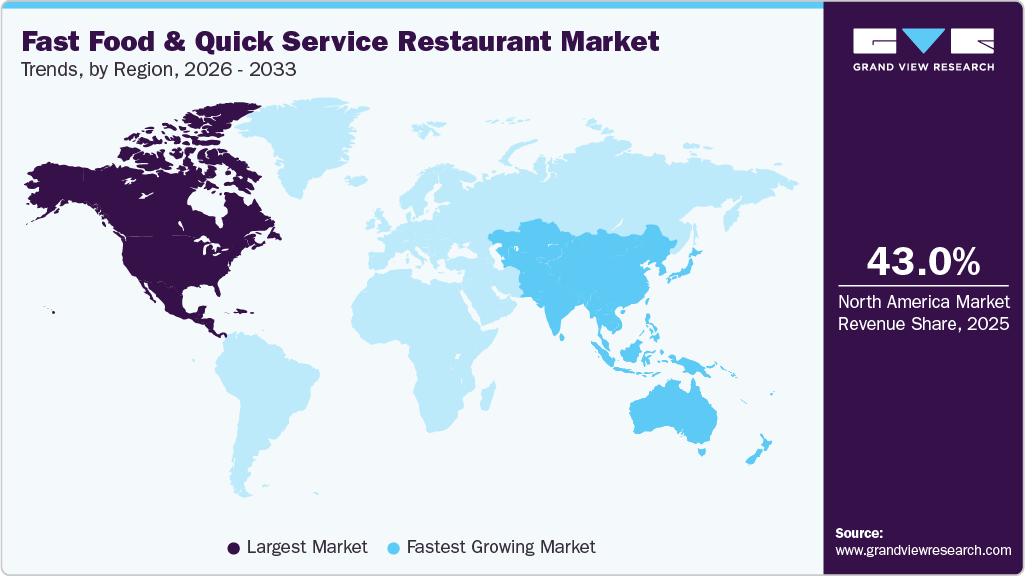
- By region, North America led the market with a share of 43.0% in 2025.
- By type, independent fast food & quick service restaurants led the market and accounted for a share of 63.9% in 2025.
- By cuisine, American led the market and accounted for a share of 26.9% in 2025.
Market Size & Forecast
- 2025 Market Size: USD 296.63 Billion
- 2033 Projected Market Size: USD 885.41 Billion
- CAGR (2026-2033): 14.8%
- North America-Largest market in 2025
- Asia Pacific: Fastest growing market
Convenience, good taste, and economy in terms of both time and money are some of the crucial factors acting in favor of the market for fast food and quick service restaurants. The fast food and quick service restaurant industry has evolved to encompass the changing needs of its customers in its business model. Most of the quick service restaurants, along with offering sit and dine, also offer numerous other services, including take-out, drive-thru, and home delivery, which are well-suited to the modern lifestyle. This has also helped the restaurant business in maximizing benefits. The delivery trend has been further propelled by third-party delivery services, such as DoorDash, Foodler, and Grubhub, which have extended the courtesy of distributing food at odd hours, too. Thus, customers who prefer dining at home contribute a major chunk of revenue for the fast food and quick service restaurant industry.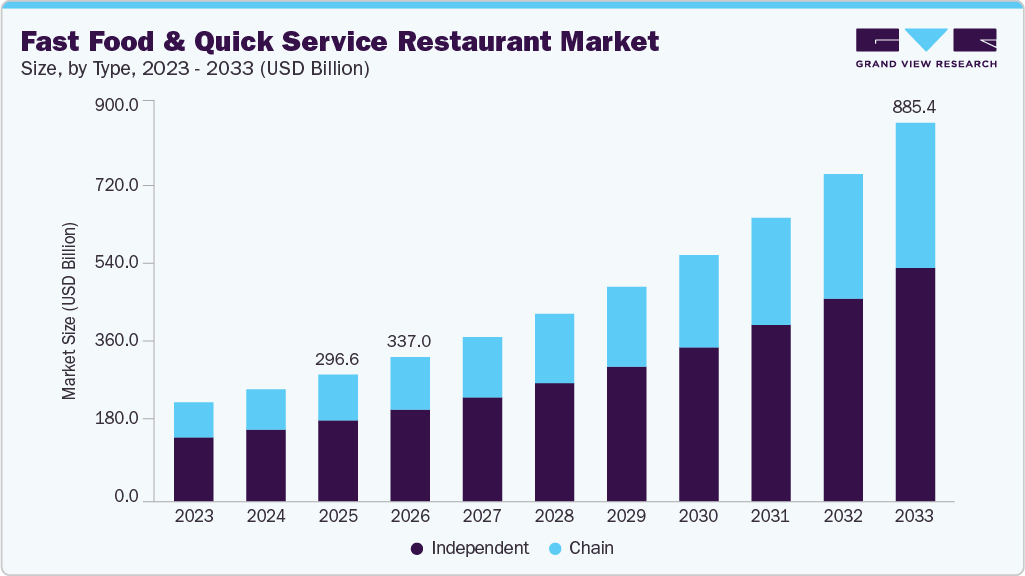
Health-related concerns over increasing fast food consumption have obligated most fast food producers to create healthier fast food products. Most restaurants have been updating their menus and recipes to create healthier fast food options. A large number of fast-food items show dominance of fruits and vegetables over processed meat, which is considered to be unhealthy. Along with healthy eating habits, vegetarianism and veganism are also influencing the changes in the menu. Rising inclusion of plant-based products in the menu is a major trend, which, along with catering to niche customer demands, also helps in creating a sustainability-focused image.
Technology has also played a crucial role in supporting the market growth. Touchscreen point of sales terminals, self-order kiosks, and kitchen-display screens are among many other technologies that are helping in restructuring the industry operations. Deployment of self-order kiosks has been increasing in various restaurants. These help in meeting diners’ expectations through top-notch digital experience and easy-to-use interfaces. Furthermore, these give customers a quick and easy opportunity to be selective about their orders by allowing multiple reviews and customizations. Besides assisting the customers, the kiosks also help in increasing the average check size and order volume and shortening the queue.
Companies are adopting eco-friendly packaging solutions to appeal to environmentally conscious consumers. As sustainability concerns become more pronounced, brands that emphasize recyclable packaging are gaining a competitive edge. This trend is expected to drive market growth by attracting a wider consumer base.
In February 2024, Zomato launched the “Plastic-Free Orders Packathon” in partnership with Startup India to promote innovation in sustainable packaging for food delivery, especially targeting small and mid-tier restaurants facing challenges in finding affordable alternatives to plastic packaging. The initiative, open to DPIIT-recognised startups, offers cash prizes and the chance to showcase solutions to Zomato’s restaurant partners. Zomato aims to deliver 100 million plastic-free orders by 2025, has recycled 20,000 MT of plastic waste in FY23, and cut cutlery waste significantly by making “do not send cutlery” a default option in its app. Similarly, in July 2024, KFC pledged to replace all consumer-facing plastic packaging with recoverable or reusable alternatives by 2025, aiming to reduce plastic waste and improve sustainability across its 22,000 global outlets. This commitment is part of Yum Brands' wider strategy to eliminate plastic packaging from all its restaurants, with eco-friendly changes already implemented in markets like Singapore, India, Romania, and France. These efforts help minimize microplastic pollution, offering biodegradable and compostable solutions for packaging.
Consumer Insights
The fast food and quick service restaurant (QSR) industry continues to expand as consumers increasingly prioritize convenience, affordability, and speed in their dining choices. Urbanization, longer working hours, and the rise of dual-income households have reinforced demand for ready-to-eat meals that minimize effort without compromising taste. Digital transformation has further accelerated this trend: the widespread adoption of delivery apps, contactless ordering, and loyalty programs has made QSRs more accessible, reducing friction in the consumption experience and encouraging repeat purchases. Younger demographics, particularly millennials and Gen Z, have become key growth drivers, valuing immediacy, customization, and the ability to experiment with new food formats at reasonable prices.
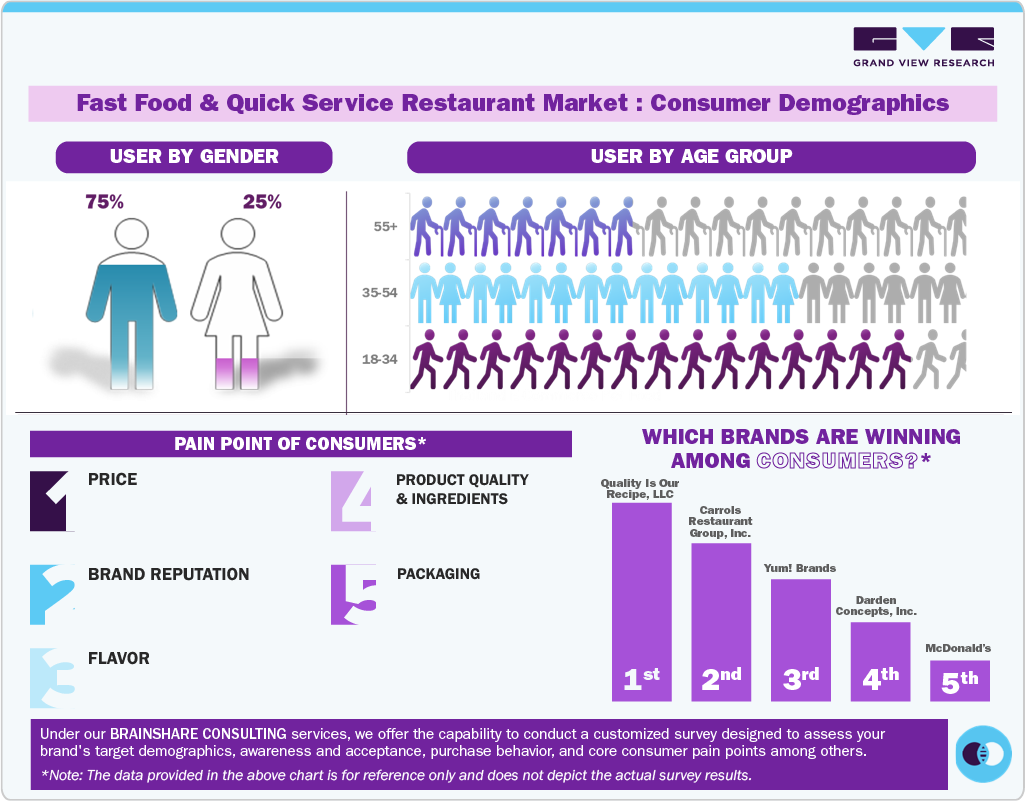
A notable shift in consumer behavior is the growing inclination toward global flavors and fusion cuisines. Exposure to international travel, digital media, and culinary content has increased curiosity for diverse food cultures, prompting QSRs to introduce menu innovations inspired by Korean, Mexican, Mediterranean, Middle Eastern, and Pan-Asian cuisines. The introduction of bold, spicy, and novel flavor profiles such as Korean Gochujang wraps, Mexican burrito bowls, Mediterranean hummus-based meals, or Indo-Asian fusion dishes has successfully captured the interest of younger, flavor-exploring consumers. Limited-time offers, seasonal menus, and premium gourmet adaptations also encourage trial and repeat visits, while social-media-driven food trends amplify the appeal of visually engaging, “Instagrammable” items that spread rapidly among digitally active audiences.
In addition, consumers continue to enjoy comfort foods but also seek “better-for-you” alternatives, including salads, grain bowls, lean protein options, and plant-based meat substitutes. This interplay of indulgence and health consciousness has prompted QSRs to expand their menus with lighter preparations and customizable offerings that cater to vegetarian, vegan, and protein-focused diets. The rise of snack-sized portions, customizable bowls, and modular menus also reflects consumer preference for personalization and flexibility, enabling guests to tailor meals to their nutritional needs or flavor preferences. Delivery-first formats and ghost kitchens have further broadened market access, supporting experimentation with niche regional and global cuisines at scale.
Menu innovation has become a strategic priority as QSRs compete for consumer attention in a saturated and digitally influenced market. Global flavor exploration is at the forefront, with Korean fried chicken sandwiches, Japanese teriyaki bowls, Middle Eastern shawarma wraps, Mexican burritos, and Pan-Asian rice or noodle bowls gaining broad acceptance. Regional fusion remains equally influential, such as spicy Indian-masala burgers, tandoori-flavored wraps, and Indo-Chinese variations, which adapt global formats to local taste profiles. Plant-based innovations represent another emerging trend, driven by a rising preference for sustainable, nutritious food alternatives. QSR chains are increasingly introducing meat-free patties, plant-based nuggets, and high-fiber vegetarian bowls to appeal to health-conscious and environmentally aware consumers. Limited-time menu innovations, seasonal ingredients, and experimental condiments such as chipotle mayo, sriracha-infused sauces, yuzu dressings, and roasted garlic aioli further elevate flavor diversity and encourage consumers to try new combinations.
Type Insights
The independent fast food & quick service restaurants dominated the market with a share of 63.9% in 2025. Younger customers, especially millennials and Gen Z, prefer local, niche, and innovative food brands over large chains, driving growth in independent QSR formats that offer unique menus, fusion cuisines, and fresher, more localized flavours. The rapid adoption of food delivery platforms (Swiggy, Zomato, Uber Eats) has further boosted visibility and accessibility for independent QSRs, allowing them to scale without heavy investment in real estate. In addition, evolving consumer behaviour toward on-the-go dining, convenience, and experimentation with new cuisines has made independent QSRs a preferred choice over traditional sit-down restaurants.
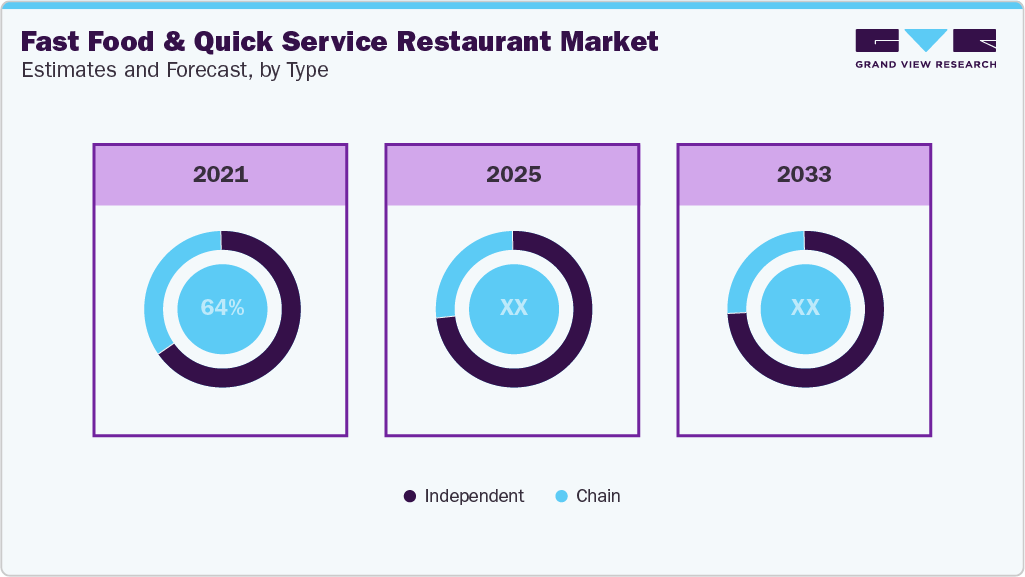
The fast food chains are predicted to have a CAGR of 15.6% from 2026 to 2033. With more dual-income households, longer working hours, and increased mobility, consumers prefer meals that are quick, reliable, and consistent in quality. QSRs also benefit from strong digital adoption. Online ordering, app-based discounts, and rapid delivery through aggregators have expanded their reach across metros and Tier II/III cities. Global brands and domestic chains are innovating with local flavours, healthier menu extensions, and value-driven combos, which attract young consumers and price-sensitive families. The rise of mall culture, drive-thru formats, and food courts further supports chain expansion, making QSRs one of the fastest-growing segments in India’s foodservice industry.
Cuisine Insights
American cuisine accounted for a share of 26.9% in 2025. The demand for American cuisines in Fast Food and Quick Service Restaurants (QSRs) is growing due to shifting consumer lifestyles, increased urbanization, and the rising preference for convenient, indulgent, and globally familiar foods. Burgers, fried chicken, fries, hot dogs, and BBQ-style dishes have become highly popular among younger consumers who associate American flavors with modernity, convenience, and social dining. International chains such as McDonald’s, KFC, Burger King, Wendy’s, and Five Guys have also expanded aggressively, supported by strong marketing, localized menus, and consistent taste across outlets, which boosts consumer trust and repeat purchases.
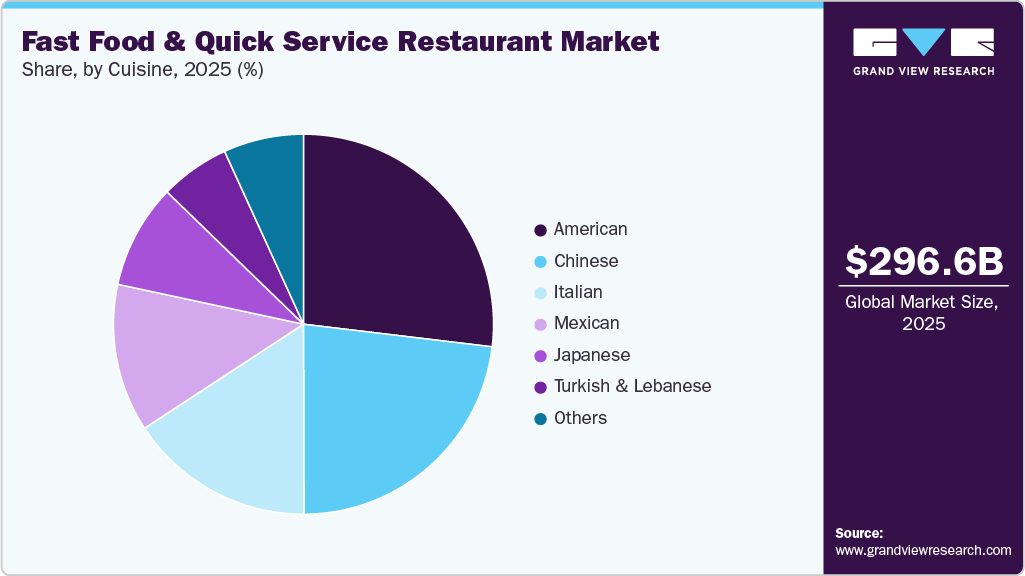
Turkish & Lebanese cuisine in fast food & quick service restaurants is expected to grow at a CAGR of 16.1% over the forecast period. Mediterranean and Middle Eastern dishes such as shawarma, hummus bowls, kebabs, pitas, and falafels align perfectly with the modern preference for protein-rich, fresh, and customizable meals that are perceived as lighter and cleaner compared to traditional fast food. Rising international travel, social media exposure, and the popularity of global street-food culture have further familiarized consumers with Turkish and Lebanese flavours, making these cuisines aspirational yet accessible. In addition, these formats adapt well to QSR operations, are easy to assemble, quick to serve, and suited for both dine-in and delivery, supporting strong expansion across urban, youth-driven markets.
Regional Insights
North America fast food & quick service restaurants market accounted for a share of 43.0% in 2025. Demand for Fast Food and Quick Service Restaurants (QSRs) in North America is growing due to shifting consumer lifestyles, rising preference for convenience, and the expansion of digital ordering channels. Busy urban professionals and younger demographics increasingly rely on quick, affordable meals, while the widespread adoption of mobile apps, delivery platforms, and drive-thru formats has made QSRs more accessible than ever. In addition, major chains have upgraded menus with healthier options, plant-based alternatives, and premium limited-time offerings that appeal to evolving tastes.
U.S. Fast Food & Quick Service Restaurant Market Trends
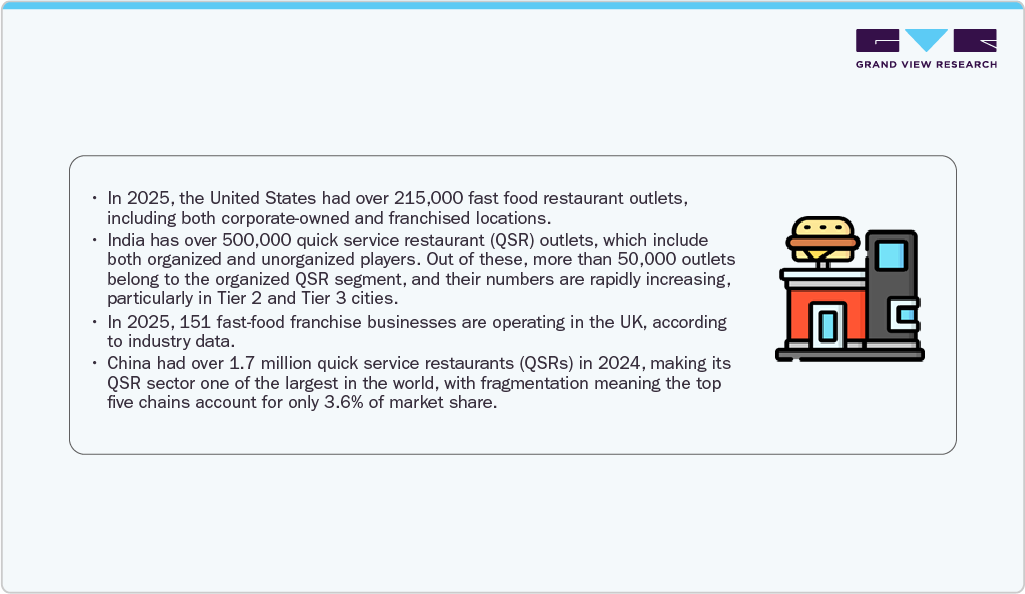
The fast food & quick service restaurants market in the U.S. dominated the North American market in 2025. Americans increasingly prioritize speed and convenience, and QSRs meet this need with quick ordering, drive-thru efficiency, mobile app pickups, and delivery partnerships with DoorDash and Uber Eats. Growth is also supported by menu innovation, healthier options, plant-based items, customization, and value meals, making fast food appealing to a wider customer base. As of recent years, there are over 200,000 fast-food and QSR outlets operating nationwide, covering chains and independent establishments alike. This vast presence means most Americans are within easy reach of a QSR, making convenience almost universal. The large outlet network combines with a strong digital ordering infrastructure (mobile apps, drive-thru, delivery services) to meet the growing demand for fast, affordable meals.
Europe Fast Food & Quick Service Restaurant Market Trends
The fast food & quick service restaurants market in Europe accounted for a share of 14.8% in 2025. Busy urban professionals, dual-income households, and time-constrained families increasingly rely on QSRs for affordable, quick meals rather than cooking at home. Simultaneously, the growth of delivery platforms and online ordering has expanded the reach of QSRs beyond traditional dine-in, making them accessible even in smaller towns and suburbs. On the supply side, many global and local QSR chains have expanded aggressively into Europe, investing in modern outlets, digital ordering, and value-meal segmentation, fueling availability and variety, which in turn drives demand further. European countries contribute several thousand outlets alone, and when combined with national and local fast-food brands, the total number of QSR establishments is widely estimated to range between 40,000 and 60,000 across EU + EFTA countries (as of the early 2020s).
Asia Pacific Fast Food & Quick Service Restaurant Market Trends
The fast food & quick service restaurants market in the Asia Pacific is expected to grow at a CAGR of 15.9% from 2026 to 2033. As more people migrate to cities and work longer hours, quick, convenient, affordable meals become highly attractive, especially for young professionals, dual-income households, and time-constrained consumers. A growing middle class and expanding youth population further drive demand for Western-style fast food and globally franchised QSRs.
The Australia fast food and quick service restaurant market is rising due to changing consumer lifestyles, increasing urbanization, and strong demand for convenient and affordable meal options. Busy work schedules and the growing adoption of online food delivery platforms are encouraging higher consumption of fast food and QSR offerings across urban and suburban areas.
China fast food & quick service restaurants marketdominated the Asia Pacific market in 2025. In China, the QSR sector has expanded significantly over the past decade, and numerous global and domestic chains have opened thousands of outlets nationwide to meet the rising urban appetite for convenience and international flavors.
Key Fast Food & Quick Service Restaurant Company Insights
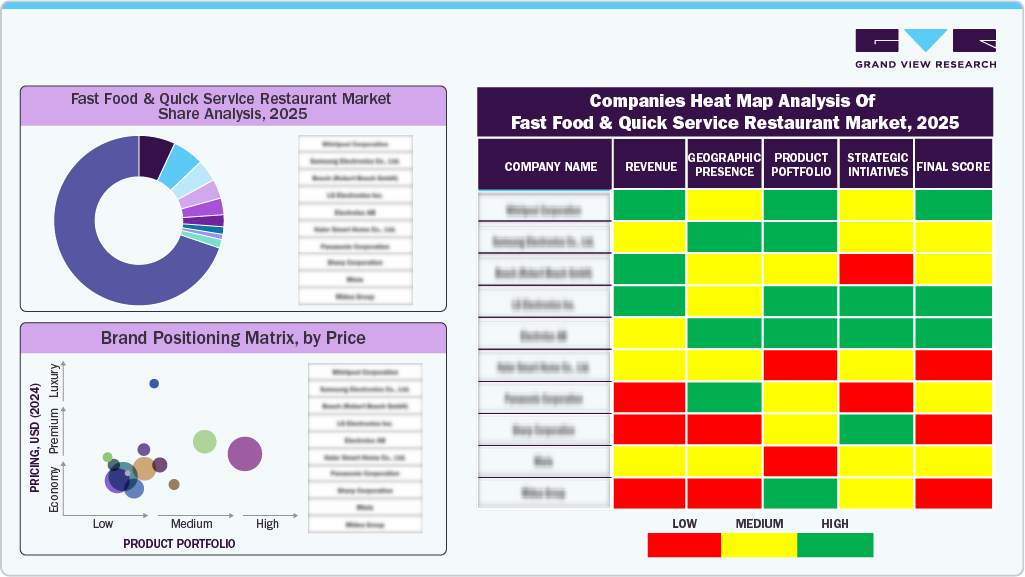
The presence of a few established players and new entrants characterizes the market. Many big players are increasing their focus on the growing market trend. Players in the market are diversifying their service offerings to maintain market share.
Key Fast Food & Quick Service Restaurant Companies:
The following key companies have been profiled for this study on the fast food & quick service restaurant market.
- Quality Is Our Recipe, LLC
- Carrols Restaurant Group, Inc.
- Yum! Brands
- Darden Concepts, Inc.
- McDonald's
- Ark Restaurant Corp.
- DEL TACO RESTAURANT, INC.
- Restaurant Brands International Inc.
- Kotipizza Group Oyj
- Chipotle Mexican Grill
- DD IP Holder LLC
- JACK IN THE BOX INC.
Recent Developments
- In November 2025, Moe’s Casa Mexicana, the international version of the U.S.-based Moe’s Southwest Grill, launched its first outlet in India at Gurugram, with a grand opening set for December 6, 2025. The restaurant will feature Mexican classics like tacos, burritos, and nachos, including customized menu options suited to local Indian preferences and dietary needs, such as vegetarian choices and variable spice levels.
- In November 2025, Burger King plans to triple its outlets in China through a joint venture with Chinese private equity firm CPE, expanding from about 1,250 currently to over 4,000 by 2035. CPE will invest $350 million and hold about 83% of the venture, while Burger King retains a minority stake and long-term development rights in China.
Fast Food & Quick Service Restaurant Market Report Scope
Report Attribute
Details
Market size value in 2026
USD 336.97 billion
Revenue forecast in 2033
USD 885.41 billion
Growth rate
CAGR of 14.8% from 2026 to 2033
Base year for estimation
2025
Historical data
2021 - 2025
Forecast period
2026 - 2033
Quantitative units
Revenue in USD million/billion, and CAGR from 2026 to 2033
Report coverage
Revenue forecast, company ranking, competitive landscape, growth factors, and trends
Segments covered
Type, cuisine, region
Regional scope
North America; Europe; Asia Pacific; CSA; MEA
Country scope
U.S.; Canada; Mexico; UK; Germany; France; Italy; Spain; China; Japan; India; South Korea; Australia & New Zealand; Brazil; South Africa
Key companies profiled
Quality Is Our Recipe, LLC; Carrols Restaurant Group, Inc.; Yum! Brands; Darden Concepts, Inc.; McDonald's; Ark Restaurant Corp.; DEL TACO RESTAURANT, INC.; Restaurant Brands International Inc.; Kotipizza Group Oyj; Chipotle Mexican Grill; DD IP Holder LLC; JACK IN THE BOX INC.
Customization scope
Free report customization (equivalent up to 8 analysts working days) with purchase. Addition or alteration to country, regional & segment scope.
Pricing and purchase options
Avail customized purchase options to meet your exact research needs. Explore purchase options
Global Fast Food & Quick Service Restaurant Market Report Segmentation
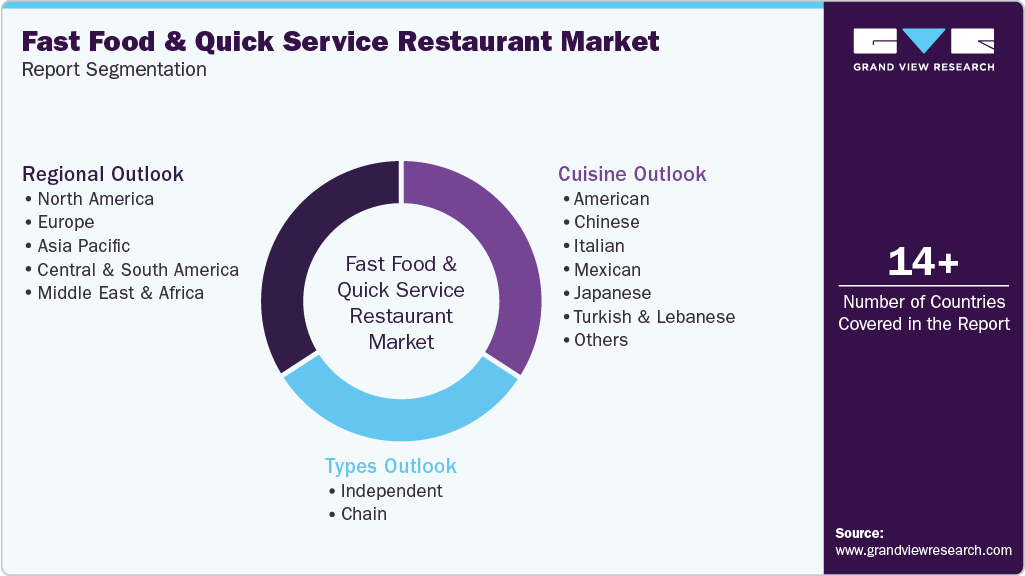
This report forecasts revenue growth at global, regional & country levels and provides an analysis of the latest trends and opportunities in each of the sub-segments from 2021 to 2033. For this study, Grand View Research has segmented the global fast food & quick service restaurants market based on type, cuisine, and region:
-
Types Outlook (Revenue, USD Billion, 2021 - 2033)
-
Independent
-
Chain
-
-
Cuisine Outlook (Revenue, USD Billion, 2021 - 2033)
-
American
-
Chinese
-
Italian
-
Mexican
-
Japanese
-
Turkish & Lebanese
-
Others
-
-
Regional Outlook (Revenue, USD Billion, 2021 - 2033)
-
North America
-
U.S.
-
Canada
-
Mexico
-
-
Europe
-
UK
-
Germany
-
France
-
Italy
-
Spain
-
-
Asia Pacific
-
China
-
India
-
Japan
-
Australia & New Zealand
-
South Korea
-
-
Central & South America
-
Brazil
-
-
Middle East & Africa (MEA)
-
South Africa
-
-
Frequently Asked Questions About This Report
b. Some key players operating in the fast food and quick service restaurant market include AM.D.Q. CORP, CKE Restaurants Holdings, Inc., DD IP Holder LLC, Del Taco Holdings, Inc., Doctor's Associates, Inc., Hunt Brothers Pizza, LLC., Jubilant FoodWorks Ltd., McDonald's, Papa John's International, Inc., Quality Is Our Recipe, LLC, Restaurant Brands International Inc., Sonic Corp., Starbucks Coffee Company and Yum! Brands.
b. Key factors driving the fast food and quick service restaurant market growth include the increasing preference for fast food among generation X, Y & Z across the globe along with the increasing spending by restaurants on new food items in breakfast menu.
b. The global fast food and quick service restaurant market size was estimated at USD 296.63 billion in 2025 and is expected to reach USD 336.97 billion in 2026.
b. The global fast food and quick service restaurant market is expected to grow at a compound annual growth rate of 14.8% from 2026 to 2033 to reach USD 885.41 billion by 2033.
b. The independent fast food & quick service restaurants dominated the fast food & quick service restaurants market with a share of 63.9% in 2025. Younger customers, especially millennials and Gen Z, prefer local, niche, and innovative food brands over large chains, driving growth in independent QSR formats that offer unique menus, fusion cuisines, and fresher, more localized flavours.


Share this report with your colleague or friend.
Need a Tailored Report?
Customize this report to your needs — add regions, segments, or data points, with 20% free customization.


ISO 9001:2015 & 27001:2022 Certified
We are GDPR and CCPA compliant! Your transaction & personal information is safe and secure. For more details, please read our privacy policy.
Trusted market insights - try a free sample
See how our reports are structured and why industry leaders rely on Grand View Research. Get a free sample or ask us to tailor this report to your needs.












