
- Home
- »
- Electronic & Electrical
- »
-
Europe Household Appliances Market, Industry Report, 2030GVR Report cover
![Europe Household Appliances Market Size, Share & Trends Report]()
Europe Household Appliances Market (2025 - 2030 ) Size, Share & Trends Analysis Report By Product (Major Appliances, Small Appliances) By Distribution Channel (Hypermarkets & Supermarkets, Electronic Stores, Exclusive Brand Outlets), By Country, and Segment Forecasts
- Report ID: GVR-4-68040-615-8
- Number of Report Pages: 110
- Format: PDF
- Historical Range: 2018 - 2024
- Forecast Period: 2025 - 2030
- Industry: Consumer Goods
- Report Summary
- Table of Contents
- Segmentation
- Methodology
- Download FREE Sample
-
 Download Sample Report
Europe Household Appliances Market Trends
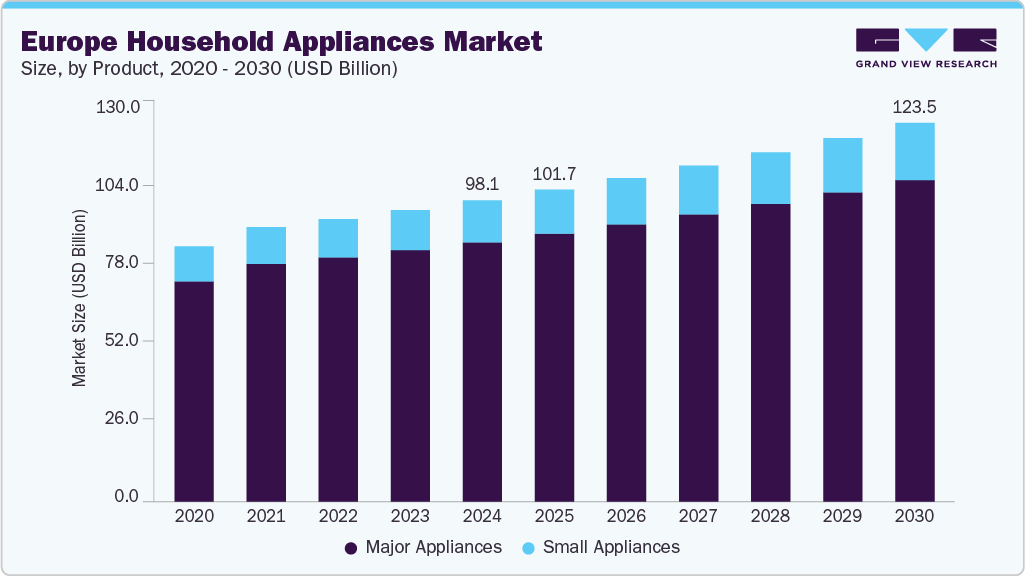
The Europe household appliances market size was estimated at USD 98.15 billion in 2024 and is projected to grow at a CAGR of 4.0% from 2025 to 2030. The growth is attributable to the increasing consumer demand for energy-efficient and environmentally sustainable appliances. European consumers and governments are highly focused on reducing carbon footprints, with stringent regulations such as the EU’s Ecodesign and Energy Labelling Directives pushing manufacturers to innovate in energy-saving technologies. This regulatory environment encourages the production and adoption of appliances that consume less energy and water, aligning with sustainability goals and reducing operating costs for consumers. For instance, Germany’s leadership in green technology adoption has propelled the market for energy-efficient refrigerators and washing machines, reflecting this broader trend.
Another significant contributor to market growth is the rising penetration of smart and connected household appliances. The integration of IoT and AI technologies into household devices enhances convenience, efficiency, and user experience, attracting tech-savvy consumers. Smart refrigerators with AI-powered food management and customizable features, such as those recently introduced by Samsung in Europe, exemplify this trend. These innovations cater to changing lifestyles and the increasing preference for automation and remote control of household appliances, which is especially popular among younger demographics, further boosting market expansion.
Urbanization and rising disposable incomes across Europe also play a pivotal role in market growth. As more people move to urban centers and household incomes increase, there is a growing willingness to invest in premium and multifunctional appliances that offer enhanced performance and aesthetic appeal. The demand for multifunctional kitchen appliances, such as combi-steam ovens and wash-dryers, has surged, driven by consumers seeking to maximize utility and convenience in limited living spaces. This premiumization trend is particularly pronounced in Western Europe, where consumers prioritize quality and innovation.
Moreover, evolving retail channels, especially the growth of online sales platforms, are reshaping the distribution landscape and making appliances more accessible. The convenience of e-commerce allows consumers to explore a wider range of products, compare features, and access competitive pricing, which supports higher sales volumes. Additionally, manufacturers and retailers are utilizing digital marketing and virtual demonstrations to engage customers effectively. According to market analysts, the combination of these factors-regulatory support, technological innovation, income growth, and evolving retail models-creates a robust foundation for sustained growth in Europe’s household appliances market through 2030.
Consumer Insights
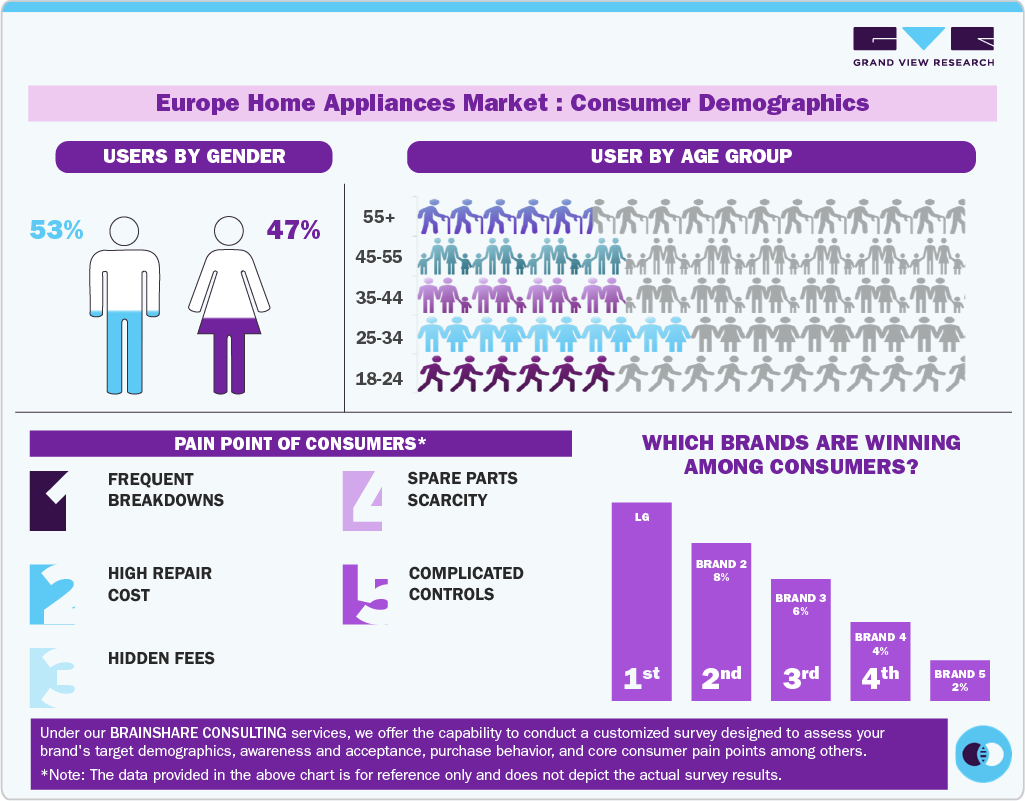
European consumers are increasingly prioritizing energy efficiency and sustainability when purchasing household appliances, driven by heightened environmental awareness and rising electricity costs. Many now actively look for EU energy labels (A+++ ratings) and eco-friendly features like water-saving modes or recyclable materials. There's also a growing preference for smart appliances-especially among younger, urban consumers-who value remote control via smartphones, integration with smart home systems, and features like AI-powered maintenance alerts. Design and aesthetics are becoming more important, particularly in Western Europe, where consumers prefer appliances that blend with modern interiors. In countries like Germany and the Netherlands, durability and brand reputation are key purchase drivers, while Southern European consumers show higher sensitivity to pricing and promotional offers.
Pricing Analysis
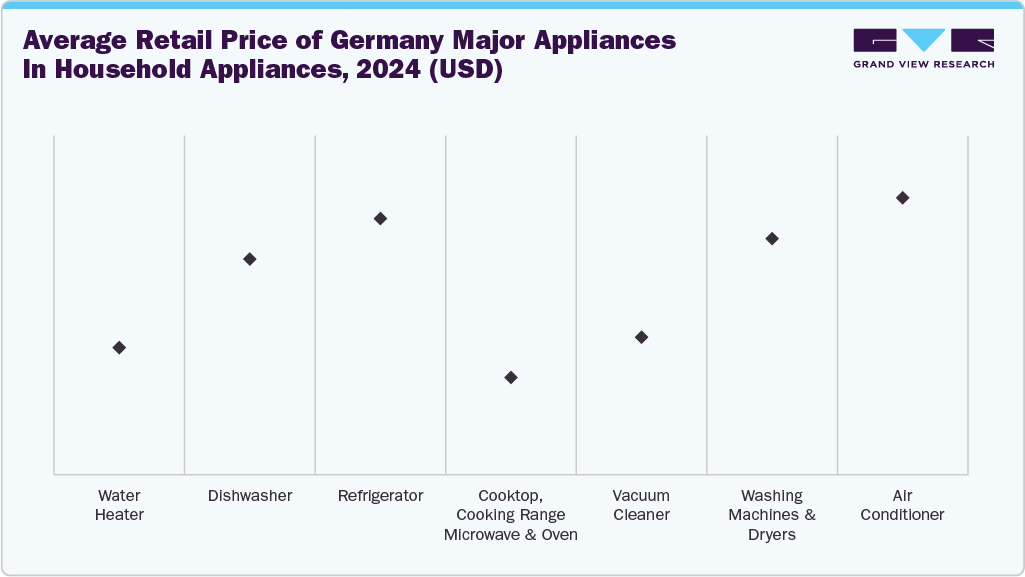
The pricing analysis of major appliances in Germany indicates that costs vary widely based on energy efficiency standards, product features, and brand recognition. Refrigerators and air conditioners, particularly those with inverter technology and smart energy management systems, are typically priced at the higher end. Washing machines and dryers also carry premium pricing, especially models with A-rated efficiency and advanced wash programs. Dishwashers are generally mid-to-high in cost, influenced by load flexibility, water-saving functions, and noise levels. Smaller appliances such as microwaves, ovens, and cooktops are positioned in the lower pricing segment, though built-in or multi-function models may cost more. Vacuum cleaners and water heaters fall into the moderate pricing category, depending on energy class, brand, and added technologies such as HEPA filters or instant heating systems.
Product Insights
The major appliances market accounted for a share of 83.0% of the Europerevenue in 2024, primarily due to the essential and high-value nature of these products, which include refrigerators, washing machines, ovens, and dishwashers. These appliances are fundamental to everyday household functioning, driving consistent demand for replacements and upgrades. A key driver is the increasing consumer focus on energy efficiency and sustainability, spurred by strict EU regulations such as the Ecodesign Directive, pushing manufacturers to innovate with eco-friendly, energy-saving technologies. For instance, the refrigerator segment, commanding the largest share of major appliances, has seen rapid adoption of smart features like AI-powered food management systems that extend freshness and reduce waste. In addition, premiumization trends have led consumers to invest in higher-end, multifunctional appliances that offer advanced connectivity and convenience. The combination of regulatory pressure, technological innovation, and evolving consumer preferences for durable, efficient, and smart appliances underpins the dominant revenue share of major appliances in Europe’s market.
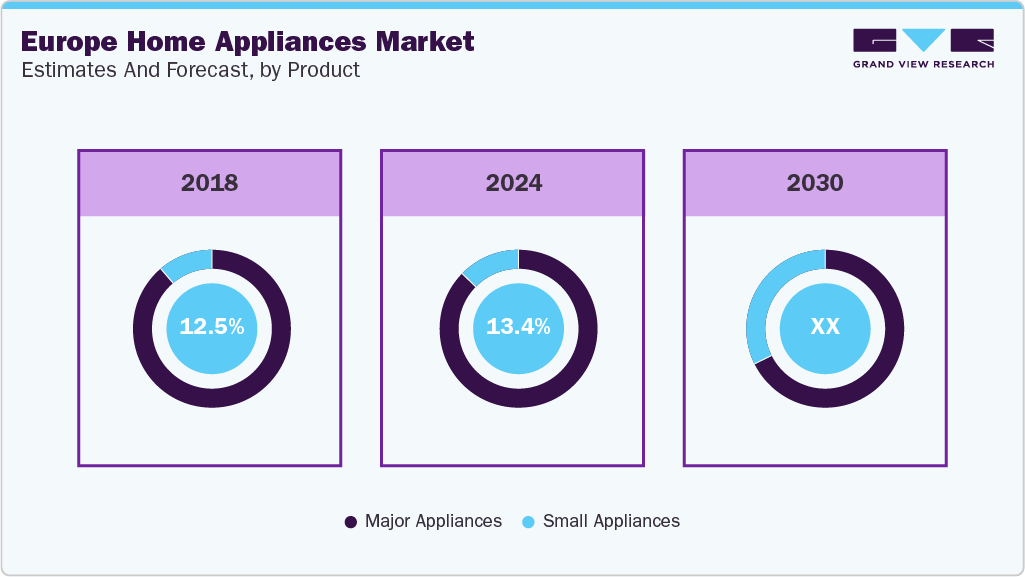
The smaller appliances market is projected to grow at a CAGR of 5.5% from 2025 to 2030, driven by rising consumer demand for convenience, multifunctionality, and energy efficiency. Busy lifestyles and increasing urbanization are encouraging consumers to adopt compact, easy-to-use appliances such as microwave ovens, air fryers, and coffee makers that save time and enhance daily routines. For instance, the popularity of smart coffee machines, which offer customizable brewing and remote control via apps, reflects this trend toward convenience and technology integration. In addition, growing health consciousness is boosting demand for appliances such as juicers and blenders that support nutritious diets. The market is also benefiting from technological advancements, including smart connectivity and AI features, which appeal to Europe’s tech-savvy younger generation. Furthermore, rising disposable incomes and a shift toward premium products encourage consumers to invest in innovative small appliances that combine style with functionality, reinforcing steady market expansion during the forecast period.
Distribution Channel Insights
The sales of household appliances through electronic stores accounted for a share of around 43.3% of the Europe revenue in 2024, primarily as these stores offer consumers the advantage of a wide product assortment from multiple brands under one roof, enabling easy comparison and informed purchasing decisions. Leading retailers like MediaMarkt and Euronics have extensive physical store networks across Europe, providing customers with hands-on experience, expert advice, and immediate product availability, which remain crucial factors for high-value appliance purchases. For instance, MediaMarkt’s omnichannel strategy, combining in-store expertise with online convenience, has strengthened its market position by catering to diverse consumer preferences. In addition, electronic stores have embraced digital tools such as virtual demonstrations and augmented reality, enhancing customer engagement and confidence in their choices.
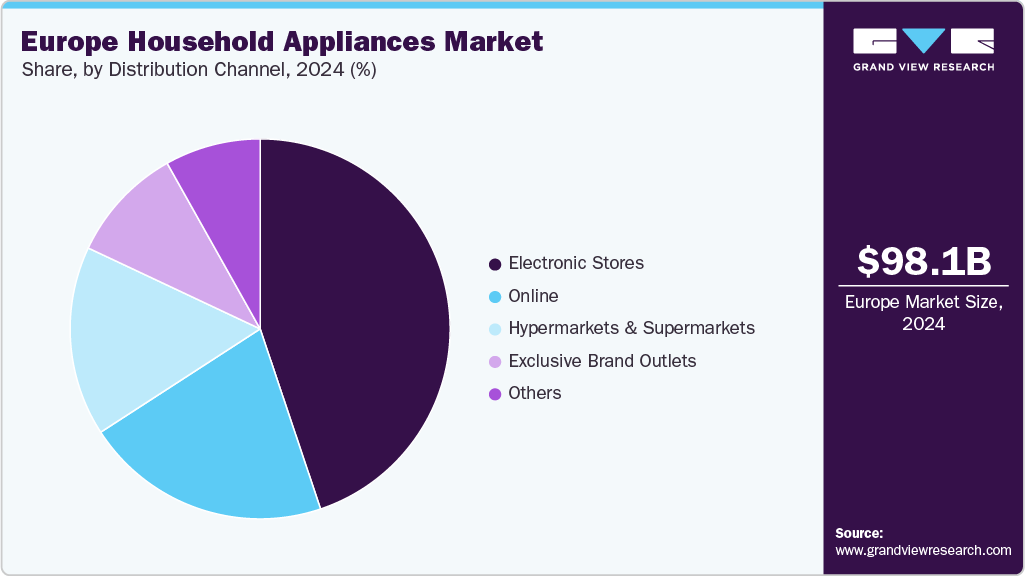
Household appliances sales through online channels are projected to grow at a CAGR of 4.7% from 2025 to 2030, due to increasing consumer preference for convenience, wider product selection, and competitive pricing offered by e-commerce platforms. Online shopping allows consumers to easily compare features, prices, and reviews, enhancing informed decision-making without the need to visit physical stores. The COVID-19 pandemic accelerated this shift, familiarizing more consumers with digital purchasing habits. In addition, online retailers provide value-added services such as virtual product demonstrations and doorstep delivery, which improve the overall buying experience. For instance, platforms like Amazon and specialist electronics sites have expanded their home appliance offerings with detailed product information and flexible delivery options, attracting tech-savvy and time-conscious buyers. Rising internet penetration and mobile commerce adoption across Europe further support this trend. Combined with manufacturers’ growing direct-to-consumer strategies and omnichannel approaches, these factors are driving robust growth in online home appliance sales throughout the forecast period.
Country Insights
The household appliances market in Germany accounted for a share of 23.2% of the Europe revenue in 2024, due to its strong manufacturing base, high consumer demand for energy-efficient and technologically advanced products, and supportive government policies. German consumers prioritize sustainability and energy savings, driven by some of the highest electricity costs in Europe and strict EU energy regulations like the Ecodesign Directive. This has led to widespread adoption of eco-friendly appliances such as washing machines and refrigerators with superior energy ratings. In addition, Germany’s rapid urbanization and rising disposable incomes encourage investment in premium, smart household appliances that offer convenience and connectivity. For instance, nearly half of German households use multiple IoT devices, boosting demand for smart appliances that optimize energy use and enhance lifestyle. The presence of leading brands like Bosch and Miele, known for innovation and durability, further strengthens Germany’s market leadership, making it the largest and most influential home appliance market in Europe.
UK household appliances market is projected to grow at a CAGR of 4.7% from 2025 to 2030. The expanding working population and rising disposable incomes are increasing consumer spending on household products, especially among younger professionals and dual-income families who seek convenience and quality. The shift to remote and hybrid work models has also heightened demand for well-equipped homes, boosting sales of multifunctional and smart appliances. For instance, smart kitchen devices and AI-enabled appliances are gaining popularity as they offer energy efficiency and enhanced user experience. In addition, growing environmental awareness is encouraging consumers to prefer energy-efficient and eco-friendly appliances, aligning with government regulations and sustainability goals. The rise of online retail and omnichannel strategies further facilitates easy access to a wide range of products, supporting market growth.
Key Europe Household Appliances Company Insights
Key companies in the Europe household appliances market adopt diverse strategies to maintain competitiveness, focusing on continuous innovation and expanding smart, energy-efficient product portfolios. They emphasize sustainability by integrating eco-friendly materials and improving product recyclability to meet increasing consumer and regulatory demands for greener solutions. These companies also invest in enhancing connected appliance features, such as AI-driven controls and voice activation, to cater to evolving consumer preferences for convenience and smart home integration. Operational efficiency and strong distribution networks across Europe further support their market presence. For instance, the introduction of multifunctional appliances combining several features into one product addresses consumer demand for space-saving and versatile solutions, strengthening their market position.
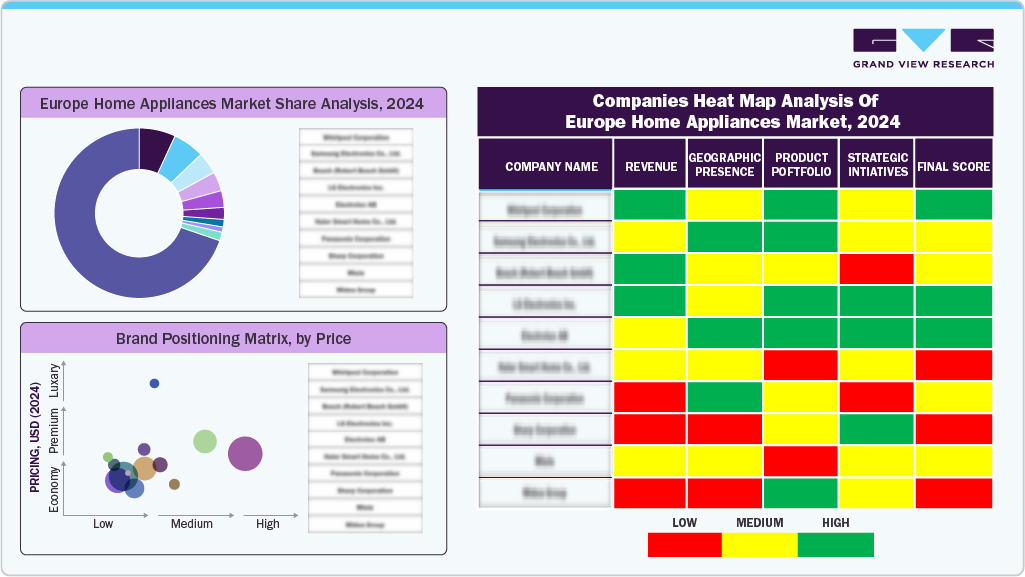
Key Europe Household Appliances Companies:
- Whirlpool Corporation
- Samsung Electronics Co. Ltd.
- Robert Bosch GmbH
- LG Electronics Inc.
- Electrolux AB
- Haier Smart Home Co., Ltd.
- Panasonic Corporation
- Sharp Corporation
- Miele
- Midea Group
- Koninklijke Philips N.V.
- Breville Group Limited
- De'Longhi S.p.A.
- SEB Groupe (Groupe SEB)
- Dyson Limited
Recent Developments
-
In September 2024, Samsung Electronics launched the Bespoke AI Laundry Combo in Europe at IFA 2024 in Berlin. This innovative all-in-one washer and dryer combines both functions into a single, space-efficient appliance, eliminating the need to transfer laundry between machines. Equipped with AI Wash & Dry technology, it uses sensors to optimize washing and drying cycles based on load weight, fabric type, and soil level, ensuring efficient and personalized laundry care. The appliance also features advanced heat pump technology, achieving up to 20% greater energy efficiency than the A-grade energy class threshold and reducing drying time by up to 60%. Additionally, a 7-inch LCD display powered by AI Home serves as a central hub for cycle information, detergent levels, and energy usage, while offering entertainment services and advanced voice control via Bixby.
Europe Household Appliances Market Report Scope
Report Attribute
Details
Market size value in 2025
USD 101.66 billion
Revenue forecast in 2030
USD 123.46 billion
Growth rate
CAGR of 4.0% from 2025 to 2030
Actual data
2018 - 2024
Forecast period
2025 - 2030
Quantitative units
Revenue in USD million/billion, volume in thousand units and CAGR from 2025 to 2030
Report coverage
Revenue forecast, company ranking, competitive landscape, growth factors, and trends
Segments covered
Product, distribution channel, Country
Country scope
Germany; UK; France; Italy; Spain
Key companies profiled
Whirlpool Corporation; Samsung Electronics Co. Ltd.; Robert Bosch GmbH; LG Electronics Inc.; Electrolux AB; Haier Smart Home Co., Ltd.; Panasonic Corporation; Sharp Corporation; Miele; Midea Group; Koninklijke Philips N.V.; Breville Group Limited; De'Longhi S.p.A.; SEB Groupe (Groupe SEB); Dyson Limited
Customization scope
Free report customization (equivalent up to 8 analysts’ working days) with purchase. Addition or alteration to country, regional & segment scope.
Pricing and purchase options
Avail customized purchase options to meet your exact research needs. Explore purchase options.
Europe Household Appliances Market Report Segmentation
This report forecasts revenue growth at the country level and provides an analysis of the latest industry trends in each of the sub-segments from 2018 to 2030. For this study, Grand View Research has segmented the Europe household appliances market report based on product, distribution channel, and country.
-
Product Outlook (Revenue, USD Million; Volume, Thousand Units)
-
Major Appliances
-
Water Heater
-
Dishwasher
-
Refrigerator
-
Cooktop, Cooking Range, Microwave, and Oven
-
Vacuum Cleaner
-
Washing Machine and Dryers
-
Air Conditioner
-
-
Small Appliances
-
Coffee Makers
-
Toasters
-
Juicers, Blenders and Food Processors
-
Hair Dryers
-
Irons
-
Deep Fryers
-
Space Heaters
-
Electric Trimmers and Shavers
-
Air Purifiers
-
Humidifiers & Dehumidifiers
-
Rice Cookers & Steamers
-
Air Fryers
-
-
-
Distribution Channel Outlook (Revenue, USD Million; Volume, Thousand Units)
-
Hypermarkets & Supermarkets
-
Electronic Stores
-
Exclusive Brand Outlets
-
Online
-
Others
-
-
Country Outlook (Revenue, USD Million; Volume, Thousand Units)
-
Germany
-
UK
-
France
-
Italy
-
Spain
-
Frequently Asked Questions About This Report
b. The Europe household appliances market size was estimated at USD 98.15 billion in 2024.
b. The Europe household appliances market is expected to grow at a CAGR of 4.0% from 2025 to 2030
b. The major appliances market accounted for a share of 83.0% of the Europe revenue in 2024, primarily due to the essential and high-value nature of these products, which include refrigerators, washing machines, ovens, and dishwashers
b. Some prominent players in the Europe household appliances market includeWhirlpool Corporation; Samsung Electronics Co. Ltd.; Robert Bosch GmbH; LG Electronics Inc.; Electrolux AB; Haier Smart Home Co., Ltd.; Panasonic Corporation; Sharp Corporation; Miele; Midea Group; Koninklijke Philips N.V.; Breville Group Limited; De'Longhi S.p.A.; SEB Groupe (Groupe SEB) and Dyson Limited
b. The growth is attributable to the increasing consumer demand for energy-efficient and environmentally sustainable appliances. European consumers and governments are highly focused on reducing carbon footprints, with stringent regulations such as the EU’s Ecodesign and Energy Labelling Directives pushing manufacturers to innovate in energy-saving technologies.

Share this report with your colleague or friend.
Need a Tailored Report?
Customize this report to your needs — add regions, segments, or data points, with 20% free customization.


ISO 9001:2015 & 27001:2022 Certified
We are GDPR and CCPA compliant! Your transaction & personal information is safe and secure. For more details, please read our privacy policy.
Trusted market insights - try a free sample
See how our reports are structured and why industry leaders rely on Grand View Research. Get a free sample or ask us to tailor this report to your needs.












