
- Home
- »
- Medical Devices
- »
-
Detachable Embolization Coils Market Size Report, 2033GVR Report cover
![Detachable Embolization Coils Market Size, Share & Trends Report]()
Detachable Embolization Coils Market (2026 - 2033) Size, Share & Trends Analysis Report By Shape (3D/Complex Shapes, 2D/Helical Shapes, Specialized/Anatomical Shapes), By Application, By Material, By End Use, By Region, And Segment Forecasts
- Report ID: GVR-4-68040-872-4
- Number of Report Pages: 200
- Format: PDF
- Historical Range: 2021 - 2024
- Forecast Period: 2026 - 2033
- Industry: Healthcare
- Report Summary
- Table of Contents
- Segmentation
- Methodology
- Download FREE Sample
-
 Download Sample Report
Detachable Embolization Coils Market Summary
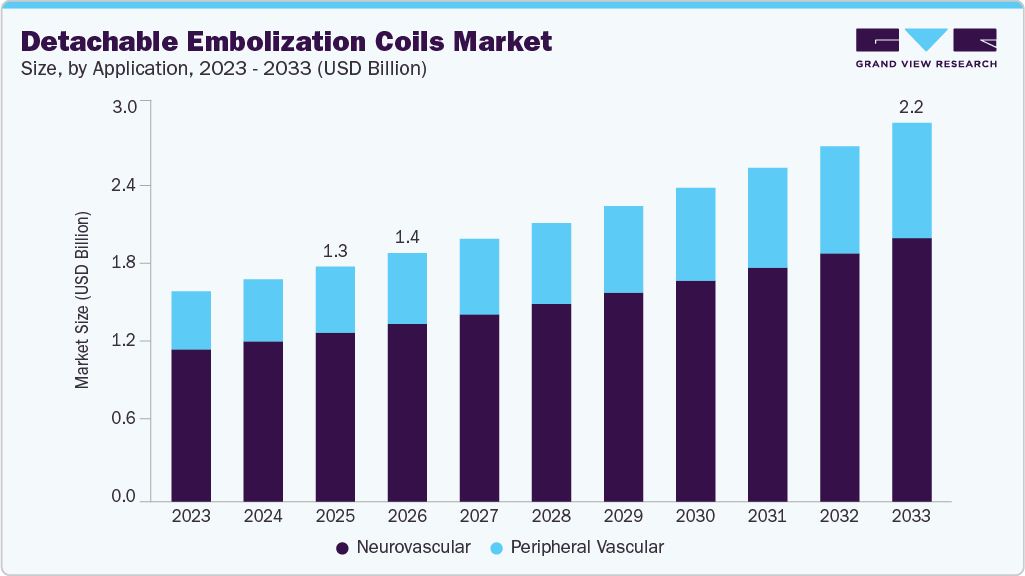
The global detachable embolization coils market size was estimated at USD 1.37 billion in 2025 and is projected to reach USD 2.22 billion by 2033, growing at a CAGR of 6.21% from 2026 to 2033. This growth is driven by increasing adoption of minimally invasive endovascular procedures across neurovascular, peripheral vascular, oncology, and trauma applications, rising prevalence of vascular abnormalities, enhanced incidental detection through advanced imaging technologies, and the expansion of interventional radiology capabilities.
Key Market Trends & Insights
- North America dominated the global detachable embolization coils market with the largest revenue share of 42.56% in 2025.
- The detachable embolization coils industry in the U.S. accounted for the largest market revenue share in 2025.
- By shape, the 3D / complex shapes segment led the market with the largest revenue share of 51.84% in 2025.
- By application, the neurovascular segment accounted for the largest market revenue share in 2025.
- By material, the bare platinum coils segment accounted for the largest market revenue share in 2025.
Market Size & Forecast
- 2025 Market Size: USD 1.37 Billion
- 2033 Projected Market Size: USD 2.22 Billion
- CAGR (2026-2033): 6.21%
- North America: Largest Market in 2025
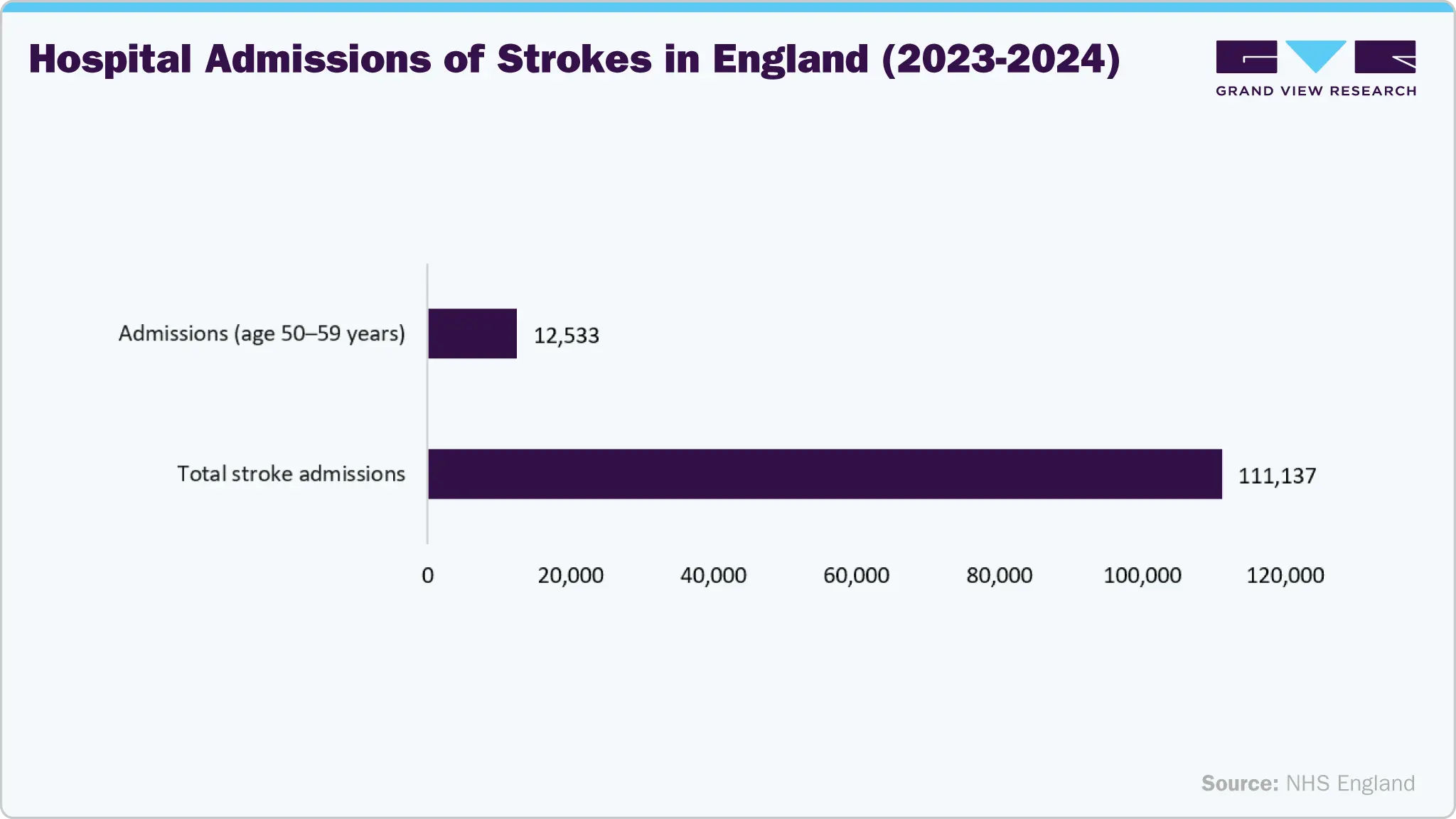
Technological innovations in coil design, such as 3D/complex, hydrogel-coated, fibered, and specialized/anatomical coils, are improving procedural outcomes and encouraging physician adoption. In addition, aging populations, broader access to specialized interventional care, and supportive government initiatives are sustaining long-term demand, positioning detachable coils as a critical tool in modern vascular interventions.The high prevalence of strokes significantly drives the detachable embolization coils industry, particularly within the neurovascular segment. Strokes, caused by aneurysms, arteriovenous malformations, or other cerebrovascular abnormalities, require urgent and precise intervention to prevent fatality or long-term disability. Detachable embolization coils provide a minimally invasive solution for occluding aneurysms and abnormal vessels, reducing the risk of hemorrhagic stroke and recurrence.
The growing incidence of both ischemic and hemorrhagic strokes, exacerbated by aging populations, lifestyle-related risk factors, and better detection through advanced imaging, has increased the number of patients eligible for coil embolization procedures. Hospitals and specialized neurointerventional centers that handle high volumes of stroke-related procedures rely on detachable coils for their proven safety, precision, and long-term efficacy. As a result, the rising stroke burden translates into higher procedural demand, driving the adoption of advanced coil technologies and supporting sustained market growth.
Technological advancements are a key driver of growth in the detachable embolization coils industry. Innovations such as 3D/complex-shaped coils, hydrogel-coated coils, and specialized/anatomical coils have improved procedural precision, packing density, and long-term aneurysm stability, leading to better clinical outcomes and reduced recurrence rates. Enhanced delivery systems and integration with advanced imaging and navigation tools allow physicians to perform minimally invasive procedures more safely and efficiently. These improvements not only expand the range of treatable neurovascular and peripheral vascular conditions but also increase physician confidence and adoption, thereby fueling market demand across hospitals, specialized centers, and ambulatory surgical settings.
Innovation Type
Description
Key Benefits
Market Impact
Hydrogel-Coated Coils
Coils coated with a hydrogel polymer that expands upon contact with blood
Enhanced aneurysm occlusion, reduced recurrence rates
Rapid adoption in complex neurovascular cases drives segment growth
3D / Complex Shape Coils
Three-dimensional coils designed to conform to irregular aneurysm cavities
Superior packing density, stability, and procedural accuracy
Dominates neurovascular applications due to high procedural volumes
Specialized / Anatomical Coils
Coils tailored to patient-specific vascular anatomy or complex aneurysms
Personalized treatment, improved outcomes in challenging cases
Fastest growing coil segment; adoption is increasing in hospitals and specialized centers
Fibered Coils
Coils with synthetic fibers to promote thrombosis
Faster aneurysm occlusion and better long-term stability
Widely used in peripheral vascular and certain neurovascular procedures
Delivery & Deployment Innovations
Improvements in microcatheter compatibility, pushability, and detachment mechanisms
Easier and safer deployment, reduced procedural complications
Enhances adoption across hospitals and ambulatory surgical centers
Integration with Imaging / Planning Tools
Coils used with 3D imaging, navigation, and pre-procedural planning software
Improved accuracy, reduced operative time, and better patient outcomes
Supports expansion into complex neurovascular and peripheral interventions
Source: Company Websites, GVR Analysis
Government initiatives play a crucial role in driving the detachable embolization coils industry by promoting awareness, prevention, and treatment of cerebrovascular and vascular conditions. Programs such as the Stroke Action Plan for Europe (SAP-E) aim to improve stroke prevention, acute care, and rehabilitation across healthcare systems, emphasizing timely and effective interventions. Such initiatives increase screening, early diagnosis, and access to interventional procedures, thereby expanding the pool of patients eligible for neurovascular treatments, including coil embolization.
In addition, government-backed funding for research, training, and infrastructure development in interventional radiology and neurosurgery enhances the adoption of advanced technologies, including 3D/complex, hydrogel-coated, and specialized/anatomical detachable coils. Regulatory support, standardized treatment protocols, and public health campaigns collectively boost procedural volumes, improve clinical outcomes, and sustain long-term market growth by aligning healthcare priorities with minimally invasive, high-efficacy treatment options.
Stroke Achievements of Sweden in 2024
Area
Achievement in 2024
Key Details / Indicators
Most Important Achievements
Achieved
Increased access to reperfusion treatment
Advances in Acute Stroke Care
Advanced
Improved and expanded access to reperfusion treatment across stroke centers
Advances in Secondary Prevention
Advanced
- High use of anticoagulant therapy in patients with atrial fibrillation
- Increasing use of statins for secondary prevention
Advances in Rehabilitation
Partially Advanced
- Early Supported Discharge (ESD) well implemented in some regions
Advance in Life After Stroke
Limited Advancement
- National guidelines approved for regular follow-up of rehabilitation needs
- Implementation remains a key challenge
Source: Stroke Action Plan Europe
Market Concentration & Characteristics
The detachable embolization coils industry is in a significant growth stage, with an accelerating growth trajectory. Market expansion is driven by the increasing adoption of minimally invasive endovascular procedures across neurovascular, peripheral vascular, oncology, and trauma applications.
The degree of innovation in the detachable embolization coils industry is a key driver of growth and differentiation. Manufacturers are continuously developing advanced coil designs, such as hydrogel-coated coils, 3D/complex shapes, and specialized/anatomical coils, to improve procedural outcomes, reduce recurrence rates, and enable treatment of more complex aneurysms and vascular malformations. Innovations also focus on enhancing the deliverability, flexibility, and stability of coils, as well as integrating them with advanced imaging and planning technologies. A high degree of innovation allows companies to address unmet clinical needs, expand applications into peripheral vascular and oncology interventions, and strengthen their competitive position, thereby accelerating adoption in hospitals, specialized centers, and ambulatory surgical settings.
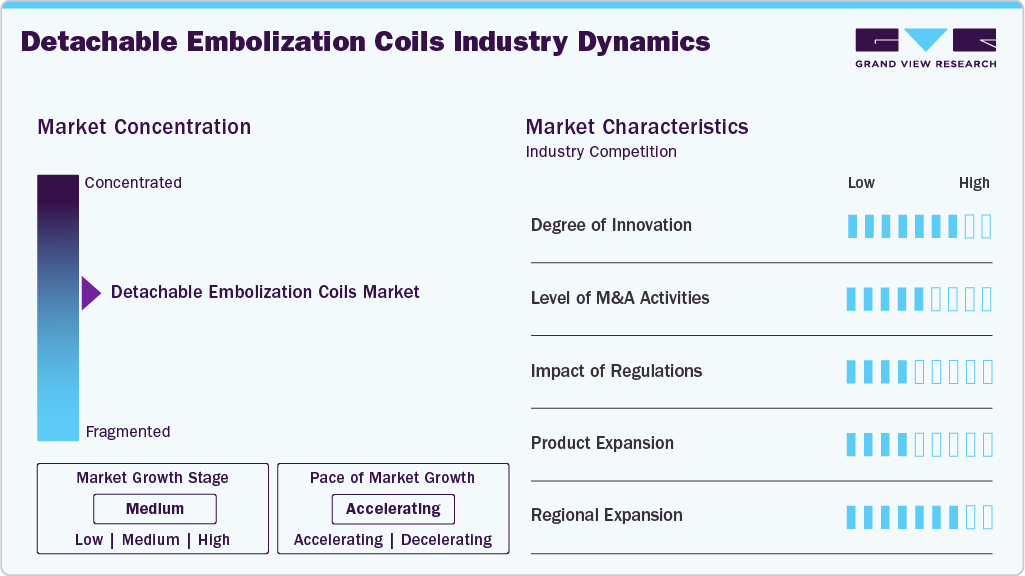
The impact of regulations on the detachable embolization coils industry is significant, as these devices are classified as Class IIb or Class III medical devices in most regions, requiring strict compliance with safety, efficacy, and quality standards. Regulatory bodies such as the U.S. FDA, European Medicines Agency (EMA), and MHRA in the UK mandate rigorous clinical testing, post-market surveillance, and adherence to Good Manufacturing Practices (GMP) before approval. While these regulations ensure patient safety and device reliability, they also lengthen the product development cycle and increase manufacturers' costs.
The level of M&A (mergers and acquisitions) activity in the detachable embolization coils industry has been relatively high, reflecting ongoing consolidation among medical device manufacturers and strategic acquisitions aimed at expanding product portfolios and geographic reach. Leading players are actively acquiring smaller, innovative companies that offer advanced coil technologies, such as hydrogel-coated or specialized/anatomical coils, to strengthen their market position and gain access to niche applications.
-
In January 2025, Kaneka Corporation, a Tokyo-based healthcare company, announced the acquisition of a 96.8% stake in EndoStream Medical Ltd., an Israeli medical device startup headquartered in Or Akiva. Kaneka's broader strategy is to expand its healthcare business and strengthen its position in the neurovascular treatment market.
The regional expansion of the detachable embolization coils industry is driven by growing demand for minimally invasive neurovascular and peripheral vascular procedures across emerging and developed markets. For instance, in August 2025, MicroPort NeuroScientific introduced its NUMEN Coil Embolization System in Egypt. In collaboration with local distributor PentaMed, this launch illustrates the company’s strategic expansion into developing clinical markets. The introduction highlights rising regional demand for advanced endovascular technologies and the broader trend of increased access to specialized neurovascular treatment solutions in emerging healthcare economies.
Shape Insights
The 3D/complex shapes segment led the market with the largest revenue share of 51.84% in 2025, due to its superior clinical performance in treating challenging aneurysms and vascular malformations. These coils are designed to conform precisely to irregular aneurysm cavities, creating a stable three-dimensional framework that allows for dense packing and reduces the risk of coil migration or recurrence. Their structural versatility makes them especially suitable for wide-necked or complex-shaped aneurysms, which constitute the majority of coil interventions in neurovascular procedures. Moreover, the widespread clinical adoption of 3D coils is supported by substantial evidence of improved procedural outcomes, long-term aneurysm stability, and reduced retreatment rates. Hospitals and specialized interventional centers that handle high volumes of complex neurovascular cases are the primary users, further supporting the dominance of 3D/complex coils in the market.
The specialized/anatomical shapes segment is anticipated to grow at the fastest CAGR during the forecast period, driven by increasing demand for personalized, procedure-specific treatments. These coils are designed to match unique vascular anatomies or complex aneurysm geometries, making them particularly useful in cases where standard 2D or 3D coils are less effective. Growth in this segment is fueled by advances in imaging and planning technologies, which enable physicians to select coils tailored to each patient’s vascular anatomy, improving procedural accuracy and outcomes. In addition, the rising prevalence of challenging neurovascular and peripheral vascular conditions, along with the push for minimally invasive interventions with reduced recurrence rates, is accelerating the adoption of specialized/anatomical coils in hospitals and specialized centers worldwide.
Application Insights
The neurovascular segment accounted for the largest market revenue share in 2025, driven by the high prevalence and clinical urgency of cerebral aneurysms, arteriovenous malformations, and other neurovascular disorders. These conditions require precise, minimally invasive interventions, which detachable coils are specifically designed to provide. Hospitals and specialized neurointerventional centers perform a large number of these procedures annually, contributing to substantial procedural volumes. In addition, the complexity and critical nature of neurovascular cases drive the adoption of advanced coil technologies, including bare platinum and hydrogel-coated coils, which offer improved safety, stability, and long-term occlusion rates.
The peripheral vascular segment is expected to register at the fastest CAGR over the forecast period. This growth is driven by the increasing adoption of coil embolization in treating peripheral aneurysms, arteriovenous malformations, and tumor embolization procedures. Advances in coil design, including hydrogel-coated and fibered coils, have improved procedural outcomes and expanded their use in peripheral vascular interventions. In addition, rising awareness of minimally invasive therapies, shorter recovery times, and growing demand from outpatient and specialized vascular centers are contributing to the rapid expansion of the peripheral vascular segment.
Material Insights
The bare platinum coils segment accounted for the largest market revenue share in 2025. This dominance is attributed to their proven safety, biocompatibility, and widespread clinical adoption in both neurovascular and peripheral vascular interventions. Bare platinum coils are preferred by physicians for treating aneurysms and vascular malformations due to their flexibility, precise deployment, and long-term stability. Established clinical outcomes and cost-effectiveness compared to newer coated or fibered coils have reinforced their leading position, making bare platinum coils the most commonly used choice in hospitals and interventional centers globally.
The hydrogel-coated coils segment is expected to grow at the fastest CAGR over the forecast period, driven by their enhanced therapeutic efficacy and faster aneurysm occlusion. These coils offer improved volumetric filling and lower recurrence rates than conventional bare platinum coils, making them preferred for complex aneurysm treatments. Growing clinical evidence supporting their long-term benefits, along with rising adoption in advanced neurovascular and peripheral vascular procedures, is further fueling demand. As hospitals and specialized interventional centers continue to seek more effective and durable embolization solutions, the hydrogel-coated coils segment is poised for strong growth.
End Use Insights
The hospital segment led the market with the largest revenue share of 74.55% in 2025, driven primarily by the high volume of complex interventional procedures performed in these settings. Hospitals have well-established interventional radiology and cardiology departments equipped with advanced imaging and catheterization facilities, making them the preferred choice for procedures requiring detachable coils. In addition, hospitals benefit from higher patient inflow, including emergency and elective cases, further boosting demand for embolization devices. The presence of skilled specialists and the capability to handle a wide range of vascular conditions ensure that hospitals remain the leading end users of detachable embolization coils, accounting for the largest share of market revenue in 2025.
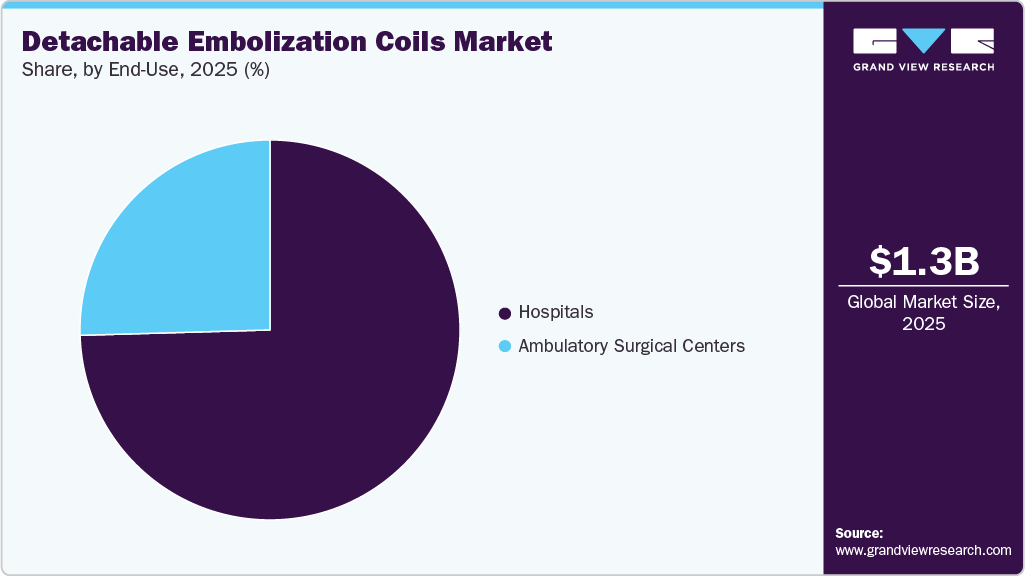
The ambulatory surgical centers (ASCs) segment is expected to register at the fastest CAGR during the forecast period. This rapid growth is driven by the increasing shift toward minimally invasive procedures in outpatient settings, cost-effectiveness, and shorter patient recovery times offered by ASCs. Improvements in imaging technology, enhanced catheter-based techniques, and the growing preference of patients and physicians for outpatient care are contributing to higher adoption of detachable coils in these centers. As a result, ASCs are emerging as a key growth segment, capturing a rising share of the market despite hospitals maintaining the most significant revenue.
Regional Insights
North America dominated the global detachable embolization coils market with the largest revenue share of 42.56% in 2025, driven by high procedural volumes, advanced healthcare infrastructure, and strong adoption of minimally invasive technologies. The region benefits from well-established interventional radiology and cardiology practices, a large patient pool for vascular and neurovascular conditions, and high per capita healthcare spending.
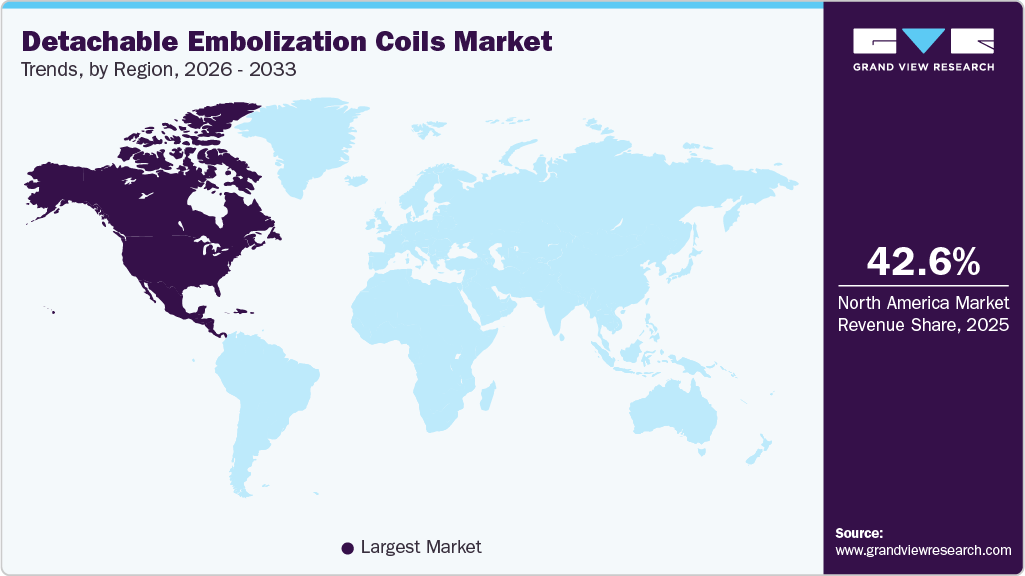
In addition, increasing awareness of minimally invasive treatment options, favorable reimbursement policies, and the presence of leading medical device manufacturers further support market expansion. Technological advancements, such as enhanced coil materials and improved delivery systems, are also contributing to higher adoption rates, making North America one of the largest regional markets for detachable embolization coils.
U.S. Detachable Embolization Coils Market Trends
The detachable embolization coils market in the U.S. accounted for the largest market revenue share in North America in 2025, due to its well-established healthcare infrastructure, high prevalence of vascular and neurovascular diseases, and advanced adoption of minimally invasive interventional procedures. The country accounts for the majority of procedural volumes in the region, supported by a large pool of skilled interventional radiologists and cardiologists. Favorable reimbursement policies, substantial investments in healthcare technology, and the presence of major medical device manufacturers further support the U.S. as the leading contributor to North America’s market revenue. As a result, the U.S. remains the primary driver of regional growth in detachable embolization coils, capturing the largest market share in 2025.
As per data published by NIH in December 2025, ischemic stroke, comprising nearly 85% of all strokes, remains a leading cause of death and disability worldwide. Annually, about 795,000 individuals in the U.S. experience a new or recurrent stroke.
“Disorders of the nervous system are highly prevalent and cause disability for millions of Americans. Healthy brain, spinal cord and nerve function allows for greater participation in employment, relationships and improved quality of life. Increasing access to neurological and disability care could have substantial benefits for people across the U.S..” said John P. Ney, MD, MPH, FAAN, of Yale University in New Haven, Connecticut.
Europe Detachable Embolization Coils Market Trends
The detachable embolization coils market in Europe accounted for a substantial share of revenue in 2025, driven by the region’s advanced healthcare infrastructure, high awareness of minimally invasive procedures, and the presence of major medical device manufacturers. Countries such as Germany, France, and the UK account for a significant share of procedural volumes in interventional radiology and cardiology, driving strong demand for detachable coils. In addition, well-established reimbursement frameworks, increasing prevalence of vascular and neurovascular diseases, and the adoption of technologically advanced coil systems contribute to Europe’s robust market position. As a result, the region remains a key contributor to global revenue while continuing to witness growth in the detachable embolization coils industry.
The Germany detachable embolization coils market is witnessing growth, driven by the country’s advanced healthcare infrastructure, high procedural volumes, and strong presence of trained interventional radiologists and neurosurgeons. The aging population and rising prevalence of neurovascular conditions, such as aneurysms and strokes, are increasing the demand for minimally invasive coil embolization procedures. Supportive public reimbursement policies and well-equipped hospitals further encourage the adoption of advanced coil technologies. In addition, expanding applications in oncology, ongoing research collaborations, and continuous technological innovations are strengthening Germany’s position as one of the leading markets for detachable embolization coils in Europe.
Year
Women (Not Standardized, %)
Men (Not Standardized, %)
Total (Not Standardized, %)
Women (Age-Standardized, %)
Men (Age-Standardized, %)
Total (Age-Standardized, %)
2021
1.34
1.56
1.45
1.03
1.5
1.24
2022
1.32
1.56
1.44
1.02
1.49
1.24
Source: Robert Koch Institute, 2025
The detachable embolization coils market in UK is supported by a well-established healthcare system, high adoption of minimally invasive interventional procedures, and increasing prevalence of neurovascular and peripheral vascular conditions. Substantial procedural volumes in hospitals and specialized interventional centers, combined with favorable reimbursement policies under the National Health Service (NHS), encourage widespread use of detachable coils. In addition, ongoing technological advancements in coil design, rising awareness among physicians and patients of less-invasive treatment options, and the presence of leading medical device manufacturers in the region further strengthen market growth. These factors position the UK as a key contributor to Europe’s detachable embolization coil market.
The ROAR-DNA Project is a UK-based, multicenter research initiative conducted by the University Hospital Southampton NHS Foundation Trust (UHS) and the University of Southampton. Brain aneurysms are balloon-like dilations of cerebral blood vessels that affect approximately 3% of the UK population, representing over 2 million people. While most aneurysms remain stable and asymptomatic, roughly 1% rupture, without warning, resulting in a subarachnoid hemorrhage, a type of stroke that can be fatal or cause severe disability. In the UK, an estimated 3,000 to 5,000 individuals experience aneurysm rupture each year, with approximately 50% of these cases resulting in death.
Asia Pacific Detachable Embolization Coils Market Trends
The detachable embolization coils market in the Asia Pacific is anticipated to grow at the fastest CAGR during the forecast period, driven by the increasing prevalence of neurovascular and peripheral vascular diseases, the rising geriatric population, and the expanding adoption of minimally invasive endovascular procedures. Investments in advanced healthcare infrastructure, particularly in countries such as China, India, Japan, and South Korea, are improving hospital capabilities and expanding access to specialized interventional radiology services.
The China detachable embolization coils market held a significant share in Asia Pacific in 2025. Rising awareness among physicians and patients about the benefits of detachable coils, coupled with supportive government healthcare initiatives such as China’s Healthy China 2030 and India’s National Health Mission, is further boosting market demand. In addition, strategic collaborations, regulatory approvals, and local manufacturing by leading global companies are enhancing availability and affordability, accelerating the adoption of detachable embolization coils across the region.
-
In December 2025, Symbiosis International University, through its Symbiosis Centre for Health Skills (SCHS), partnered with global healthcare technology leader Medtronic to launch the Symbiosis Medtronic Experience Centre - The TechKnow Verse in Pune. The facility is designed to advance healthcare education, clinical training, and practical skills in India. The centre aims to equip neurosurgeons, orthopedic surgeons, spine surgeons, and ENT surgeons with real-world clinical experience to improve patient care and foster innovation in healthcare education.
The detachable embolization coils market in India is growing, driven by the increasing incidence of vascular and neurovascular conditions such as aneurysms and stroke, which are elevating demand for minimally invasive endovascular treatments. The rising prevalence of risk factors like hypertension, diabetes, and sedentary lifestyles is expanding the patient pool for coil embolization procedures, supported by wider access to advanced diagnostic imaging and growing interventional radiology capacity in tertiary hospitals. Expansion of healthcare infrastructure, rising awareness of the benefits of embolization over open surgery, and increasing adoption of advanced coil technologies are further driving market growth.
“Environmental and lifestyle factors are now major contributors to the rising stroke burden, particularly among younger adults. Chronic exposure to fine particulate matter (PM2.5), for instance, is known to trigger inflammation and vascular damage, significantly heightening the risk of ischemic stroke. In cities like Delhi, where PM2.5 levels are often 10-15 times higher than WHO-recommended limits, individuals with hypertension, diabetes, or pre-existing heart disease face an even greater risk. This makes preventive screening and early diagnosis more critical than ever. Equally important is timely treatment, reaching a stroke-ready center within the ‘golden hour’ can dramatically improve recovery and functional outcomes.”- Dr. M.V. Padma Srivastava, Chairperson of Neurology at Paras Health, Gurugram, and former Professor & Head of Neurology at AIIMS, New Delhi
Middle East & Africa Detachable Embolization Coils Market Trends
The detachable embolization coils market in the Middle East & Africa is growing steadily, supported by rising healthcare investments, increasing prevalence of neurovascular disorders, and expanding access to minimally invasive endovascular procedures. Governments across the region are actively strengthening healthcare infrastructure under long-term national transformation programs such as UAE Vision 2031, Saudi Vision 2030, and Qatar National Vision 2030, which prioritize advanced medical technologies and specialized care services. These initiatives are driving investments in tertiary hospitals, catheterization laboratories, and interventional radiology capabilities, thereby increasing the adoption of detachable embolization coils for aneurysm treatment, hemorrhage control, and peripheral vascular interventions.
Key Detachable Embolization Coils Company Insights
The detachable embolization coils industry is characterized by intense competition among established global medical device companies and specialized neurovascular players. Leading companies such as Boston Scientific, Medtronic, Terumo Corporation, Stryker, and Penumbra, Inc. focus on expanding their neurovascular and peripheral embolization portfolios through product innovation, regulatory approvals, and strategic acquisitions. Companies are investing in advanced coil technologies such as hydrogel-coated, bioactive, and fibered coils to improve occlusion rates and procedural efficiency.
Key Detachable Embolization Coils Companies:
The following key companies have been profiled for this study on the detachable embolization coils market.
- Terumo Corporation
- Boston Scientific Corporation
- Medtronic plc
- Penumbra, Inc. (Boston Scientific Corporation)
- BALT Group
- Cook Medical LLC
- Stryker
- Johnson & Johnson Services, Inc.
- Kaneka Corporation
- Shape Memory Medical Inc.
Recent Developments
-
In January 2026, Boston Scientific announced a definitive agreement to acquire Penumbra, Inc. The acquisition enables Boston Scientific to expand into fast-growing vascular segments, strengthening its presence in mechanical thrombectomy, peripheral embolization, and neurovascular interventions.
-
In January 2026, Boston Scientific announced that it received CE mark approval for its Embold detachable coil system in Europe. The Embold system is designed to obstruct or reduce blood flow in the peripheral vasculature. It is used in a range of embolization procedures, including hemorrhage control, aneurysm prevention, tumor size reduction, and treatment of venous abnormalities. The platform includes three coil types: Fibered, Packing, and Soft, enabling physicians to treat diverse cases without switching product lines.
-
In June 2025, Penumbra introduced the Ruby XL System, the longest, largest, and softest embolization coil available for vascular embolization, enhancing peripheral vessel occlusion options. Designed to improve packing density and flow control in larger vessels, Ruby XL expands the capabilities of the existing Ruby Coil platform. The system supports more efficient embolization in challenging anatomy and aims to offer clinicians greater versatility and control during peripheral interventional procedures.
-
In May 2025, Cook Medical released a new embolization coil, expanding its portfolio of vascular occlusion devices. The latest coil aims to improve deployment control, enhance vessel packing, and support efficient embolization in a range of peripheral and potentially neurovascular procedures.
Detachable Embolization Coils Market Report Scope
Report Attribute
Details
Market size value in 2026
USD 1.45 billion
Revenue forecast in 2033
USD 2.22 billion
Growth rate
CAGR of 6.21% from 2026 to 2033
Base year for estimation
2025
Historical data
2021 - 2024
Forecast period
2026 - 2033
Quantitative units
Revenue in USD million/billion, and CAGR from 2026 to 2033
Report coverage
Revenue forecast, company ranking, competitive landscape, growth factors, and trends
Segments covered
Shape, application, material, end use, region
Regional scope
North America; Europe; Asia Pacific; Latin America; Middle East & Africa
Country scope
U.S.; Canada; Mexico; UK; Germany; France; Italy; Spain; Japan; China; India; Australia; South Korea; Brazil; Argentina; South Africa; Saudi Arabia; UAE
Key companies profiled
Terumo Corporation; Boston Scientific Corporation; Medtronic plc; Penumbra; Inc. (Boston Scientific Corporation); BALT Group; Cook Medical LLC; Johnson & Johnson Services, Inc.; Kaneka Corporation; Shape Memory Medical Inc.; Stryker
Customization scope
Free report customization (equivalent up to 8 analysts working days) with purchase. Addition or alteration to country, regional & segment scope.
Pricing and purchase options
Avail customized purchase options to meet your exact research needs. Explore purchase options
Global Detachable Embolization Coils Market Report Segmentation
This report forecasts revenue growth at global, regional, and country levels and provides an analysis of the latest industry trends in each of the sub-segments from 2021 to 2033. For this study, Grand View Research has segmented the global detachable embolization coils market report based on shape, application, material, end use, and region:
-
Shape Outlook (Revenue, USD Million, 2021 - 2033)
-
3D / Complex Shapes
-
2D / Helical Shapes
-
Specialized / Anatomical Shapes
-
-
Application Outlook (Revenue, USD Million, 2021 - 2033)
-
Neurovascular
-
Intracranial Aneurysms
-
Arteriovenous Malformations (AVMs)
-
-
Peripheral Vascular
-
-
Material Outlook (Revenue, USD Million, 2021 - 2033)
-
Bare Platinum Coils
-
Hydrogel-Coated Coils
-
Fibered Detachable Coils
-
-
End Use Outlook (Revenue, USD Million, 2021 - 2033)
-
Hospitals
-
Ambulatory Surgical Centers
-
-
Regional Outlook (Revenue, USD Million, 2021 - 2033)
-
North America
-
U.S.
-
Canada
-
Mexico
-
-
Europe
-
UK
-
Germany
-
France
-
Italy
-
Spain
-
Denmark
-
Sweden
-
Norway
-
-
Asia Pacific
-
Japan
-
China
-
India
-
Australia
-
South Korea
-
Thailand
-
-
Latin America
-
Brazil
-
Argentina
-
-
Middle East & Africa
-
South Africa
-
Saudi Arabia
-
UAE
-
Kuwait
-
-
Frequently Asked Questions About This Report
b. The global detachable embolization coils market size was estimated at USD 1.37 billion in 2025 and is expected to reach USD 1.45 billion in 2026.
b. By shape, the 3D / complex shapes segment led the market with the largest revenue share in 2025.
b. Key companies operating in the detachable embolization coils market include Terumo Corporation, Boston Scientific Corporation, Medtronic plc, Penumbra, Inc., BALT Group, Cook Medical LLC, Stryker, Johnson & Johnson Services, Inc., Kaneka Corporation, and Shape Memory Medical Inc. These companies focus on technological advancements in embolization coils, product innovation, and strategic partnerships to strengthen their market presence and expand their global footprint.
b. The detachable embolization coils market is primarily driven by the increasing prevalence of vascular diseases such as cerebral aneurysms and arteriovenous malformations, which require embolization procedures for effective treatment.
b. The global detachable embolization coils market is expected to grow at a compound annual growth rate of 6.21% from 2026 to 2033 to reach USD 2.22 billion by 2033.


Share this report with your colleague or friend.
Need a Tailored Report?
Customize this report to your needs — add regions, segments, or data points, with 20% free customization.


ISO 9001:2015 & 27001:2022 Certified
We are GDPR and CCPA compliant! Your transaction & personal information is safe and secure. For more details, please read our privacy policy.
Trusted market insights - try a free sample
See how our reports are structured and why industry leaders rely on Grand View Research. Get a free sample or ask us to tailor this report to your needs.












