China Dairy Alternatives Market Summary
The China dairy alternatives market size was estimated at USD 6.00 billion in 2024 and is projected to reach USD 19.16 billion by 2033, growing at a CAGR of 13.8% from 2025 to 2033. The market growth is attributed to the shifting consumer preferences toward plant-based nutrition and wellness.
Key Market Trends & Insights
- The market growth is attributed to the shifting consumer preferences toward plant-based nutrition and wellness.
- Based on product, the milk segment held the highest market share of 70.3% in 2024.
- Based on distribution channel, the supermarkets & hypermarkets segment accounted for a share of around 37.6% in 2024.
Market Size & Forecast
- 2024 Market Size: USD 6.00 Billion
- 2033 Projected Market Size: USD 19.16 Billion
- CAGR (2025-2033): 13.8%
Increasing awareness of lactose intolerance, prevalent among a significant portion of the Asian population, has led to rising demand for dairy-free products such as soy, almond, oat, and rice milk.
Rapid urbanization in China is expected to drive market growth. In 2024, the National Bureau of Statistics reported that China's urbanization ratio-the percentage of the population living in urban areas-reached 67%. This represents an over one percentage point increase per year, sustained for the past 45 years.
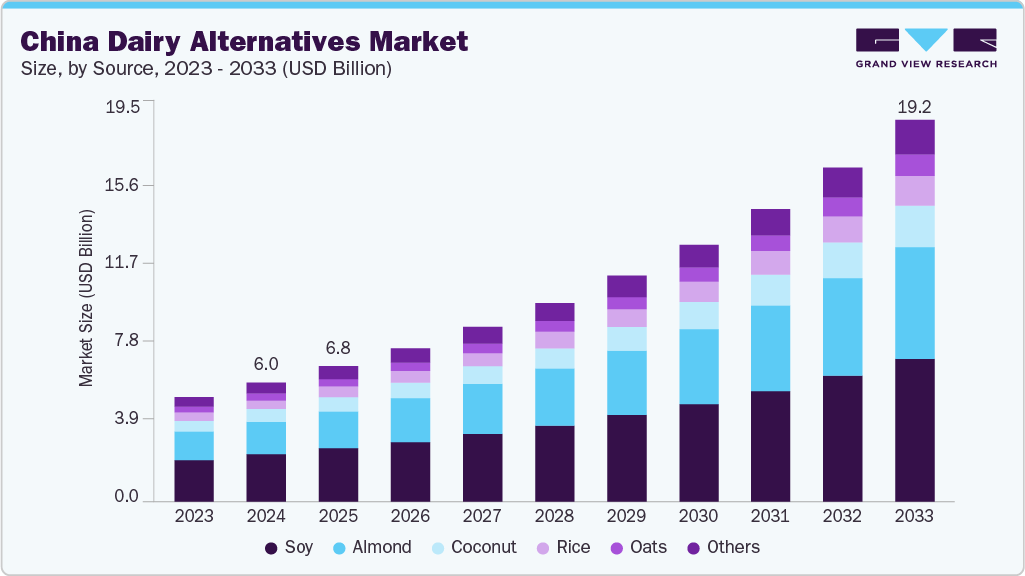
Additionally, consumers are becoming more informed about their choices as disposable income rises. They are increasingly willing to spend on premium dairy alternatives that offer perceived health benefits, sustainability, and ethical sourcing. The growing influence of Western dietary habits, social media advocacy for plant-based living, and the entry of international brands into the Chinese retail market further bolsters this trend.
Consumer Insights
In China, the primary consumers of dairy alternatives are predominantly younger age groups, specifically those between 18 and 34 years old. This demographic is open to experimenting with plant-based milks such as soy, almond, and oat milk, driven by increased health awareness, environmental concerns, and lifestyle trends favoring sustainable and plant-forward diets. The 18-24 age group, often influenced by social media and wellness culture, leads in adoption rates, followed closely by the 25-34 group, which balances health consciousness with family dietary choices.
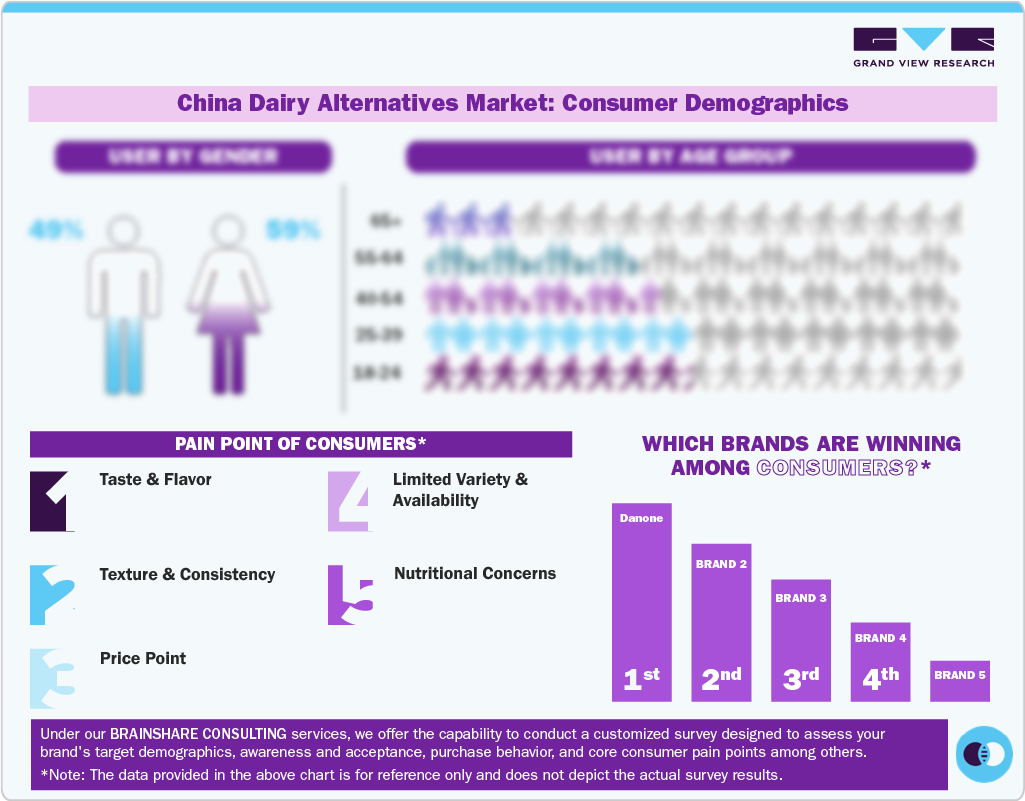
Conversely, older age groups (45+) show lower engagement with dairy alternatives due to entrenched dietary habits and less exposure to plant-based product benefits. The growing interest among younger consumers is a key driver for market expansion, fueled by their desire for functional benefits like digestive health, lactose intolerance management, and weight control.
Source Insights
Soy sources for dairy alternatives accounted for 39.7% in 2024. This dominance is largely attributed to soy’s wide availability, cost-effectiveness, and nutritional profile, which includes high-quality plant protein, essential amino acids, and low saturated fat content. Soymilk, in particular, has deep cultural and culinary integration in Asian diets, making it a familiar and trusted substitute for conventional dairy. Moreover, technological advancements in processing and flavor enhancement have mitigated concerns around soy’s aftertaste and allergen profile, enabling broader consumer acceptance across diverse age groups. Domestic producers have played a key role in popularizing fortified soy beverages and expanding product lines to include yogurts, creamers, and cooking ingredients, all supporting soy’s versatility in plant-based diets.
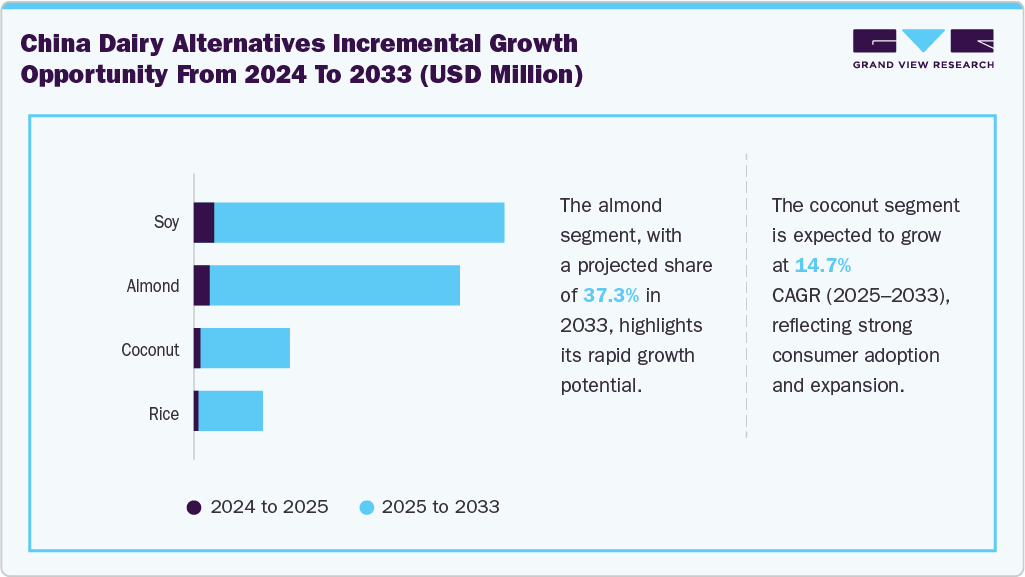
The almond for dairy alternatives market is projected to grow at a CAGR of 14.7% from 2025 to 2033. Almonds are widely recognized for their high vitamin E and B content and essential minerals such as calcium, magnesium, and phosphorus, which contribute to improved metabolism, cardiovascular health, and bone strength. These nutritional benefits increasingly appeal to health-conscious consumers seeking dairy-free options that offer functional value. Additionally, almond milk and related products are gaining popularity due to their mild flavor profile, versatility in culinary applications, and compatibility with vegan and lactose-free diets.
In November 2022, Jooma, a Chinese subsidiary of NOIX AG, launched “Call Me Almond Milk,” the first almond milk concentrate in China. Made from 100% almonds with no additives, it offers a sustainable, cost-effective alternative to packaged almond milk.
Product Insights
Milk dominated the China dairy alternatives market, accounting for a share of 70.3% in 2024. This reflects the centrality of plant-based milks-such as soy, almond, oat, rice, and coconut milk-in consumer dietary habits, especially among those seeking lactose-free, vegan, or health-oriented options. The ubiquity of plant-based milk in households is tied to its versatility in daily use, whether consumed directly, added to tea or coffee, or used in cooking and baking.
The ice-cream segment is projected to grow fastest from 2025 to 2033. This growth is largely driven by increasing awareness of lactose intolerance, dairy allergies, and the environmental impact of traditional dairy production. As a result, more consumers are actively seeking alternatives that align with health, ethical, and sustainability values. Innovations in flavor, texture, and formulation have significantly improved the appeal of non-dairy ice creams, making them comparable to their dairy counterparts in taste and mouthfeel. Manufacturers leverage coconut, almond, oat, and cashew milk to create creamy, nutrient-rich options catering to diverse dietary needs. The rise of veganism, flexitarian diets, and clean-label trends is further fueling demand, especially among younger, health-conscious demographics.
In July 2024, Oatly collaborated with Haidilao and KFC in China to launch vegan popsicles tailored for local tastes, including guava, grape, and citrus variants. These introductions support Oatly’s strategic reset, aligning with rising consumer demand for plant-based, zero-sugar desserts and health-conscious offerings.
Distribution Channel Insights
The supermarkets & hypermarkets segment accounted for 37.6% in 2024. Supermarkets and hypermarkets are widely favored due to their broad geographic reach, expansive shelf space, and ability to stock various plant-based dairy options-from soy and almond milks to non-dairy ice creams and yogurts. These outlets also benefit from strong brand visibility, in-store promotions, and impulse purchasing behavior, especially in urban centers where health-conscious consumers increasingly seek plant-based alternatives during routine grocery trips.
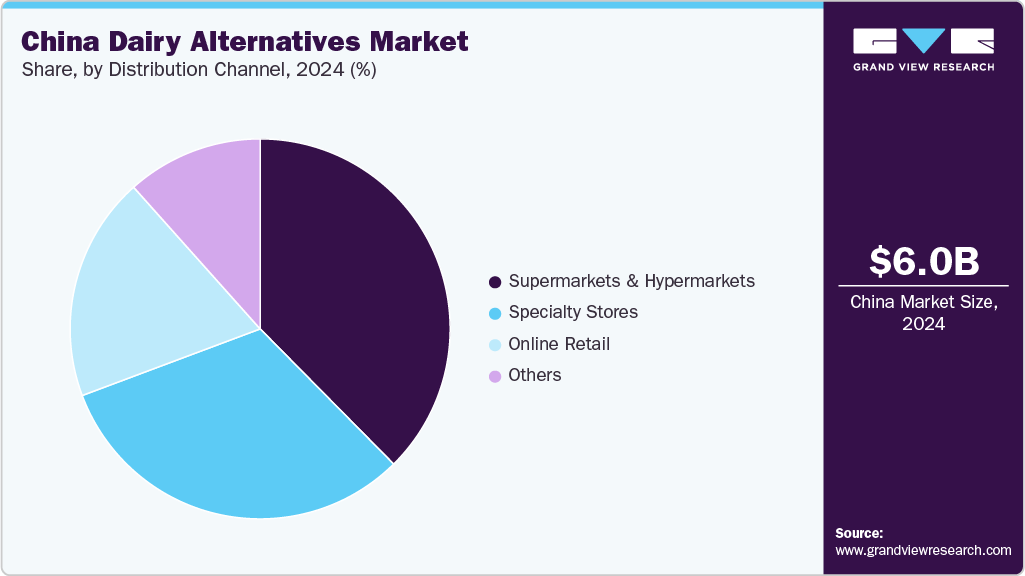
The online segment is projected to grow fastest from 2025 to 2033.This surge is primarily driven by the rapid expansion of e-commerce platforms, increased smartphone penetration, and the growing popularity of direct-to-consumer models. Consumers are increasingly turning to online channels for convenience, broader product selection, and access to niche or premium dairy-alternative brands that may not be available in traditional retail outlets.
Key China Dairy Alternatives Company Insights
Some of the key players in the China dairy alternatives market include Danone, Nestlé, Blue Diamond Growers, Oatly, Ltd., and others.
-
Oatly is a pioneer in oat-based dairy alternatives, offering milk, yogurt, ice cream, and creamers. Known for its bold marketing and environmental advocacy, Oatly promotes oat milk as a sustainable and nutritious alternative to traditional dairy, with strong traction in both retail and foodservice channels.
Key China Dairy Alternatives Companies:
- Danone
- Nestlé
- Blue Diamond Growers
- Oatly
Recent Developments
-
In July 2023, Sweden’s Veg of Lund signed a letter of intent with China’s Haofood to launch DUG potato milk in early 2024. The collaboration aimed to distribute the product across China and select regional markets, leveraging Haofood’s strong plant-based retail presence.
China Dairy Alternatives Market Report Scope
|
Report Attribute
|
Details
|
|
Market size value in 2025
|
USD 6.80 billion
|
|
Revenue forecast in 2033
|
USD 19.16 billion
|
|
Growth rate
|
CAGR of 13.8% from 2025 to 2033
|
|
Actuals
|
2021 - 2024
|
|
Forecast period
|
2025 - 2033
|
|
Quantitative units
|
Revenue in USD million/billion and CAGR from 2025 to 2033
|
|
Report coverage
|
Revenue forecast, company ranking, competitive landscape, growth factors, trends
|
|
Segments covered
|
Source, product, distribution channel
|
|
Key companies profiled
|
Danone, Nestlé, Blue Diamond Growers, Oatly
|
|
Customization scope
|
Free report customization (equivalent up to 8 analysts working days) with purchase. Addition or alteration to country, regional & segment scope.
|
|
Pricing and purchase options
|
Avail customized purchase options to meet your exact research needs. Explore purchase options
|
China Dairy Alternatives Market Report Segmentation
This report forecasts revenue growth at the country level and provides an analysis of the latest industry trends in each of the sub-segments from 2021 to 2033. For this study, Grand View Research has segmented the China dairy alternatives market report based on source, product and distribution channel:
-
Source Outlook (Revenue, USD Million, 2021 - 2033)
-
Soy
-
Almond
-
Coconut
-
Rice
-
Oats
-
Others
-
Product Outlook (Revenue, USD Million, 2021 - 2033)
-
Milk
-
Yogurt
-
Cheese
-
Ice Cream
-
Creamer
-
Others
-
Distribution Channel Outlook (Revenue, USD Million, 2021 - 2033)

 Download Sample Report














