
- Home
- »
- Homecare & Decor
- »
-
Brazil Pest Control Products Market, Industry Report, 2033GVR Report cover
![Brazil Pest Control Products Market Size, Share & Trends Report]()
Brazil Pest Control Products Market (2025 - 2033) Size, Share & Trends Analysis Report By Product (Sprays/Aerosols, Baits/Gels, Repellents, Mechanical Traps), By Pest Type (Flying Insects, Rodents), By Control Mechanism, By End-use, And Segment Forecasts
- Report ID: GVR-4-68040-735-4
- Number of Report Pages: 90
- Format: PDF
- Historical Range: 2021 - 2024
- Forecast Period: 2025 - 2033
- Industry: Consumer Goods
- Report Summary
- Table of Contents
- Segmentation
- Methodology
- Download FREE Sample
-
 Download Sample Report
Brazil Pest Control Products Market Trends
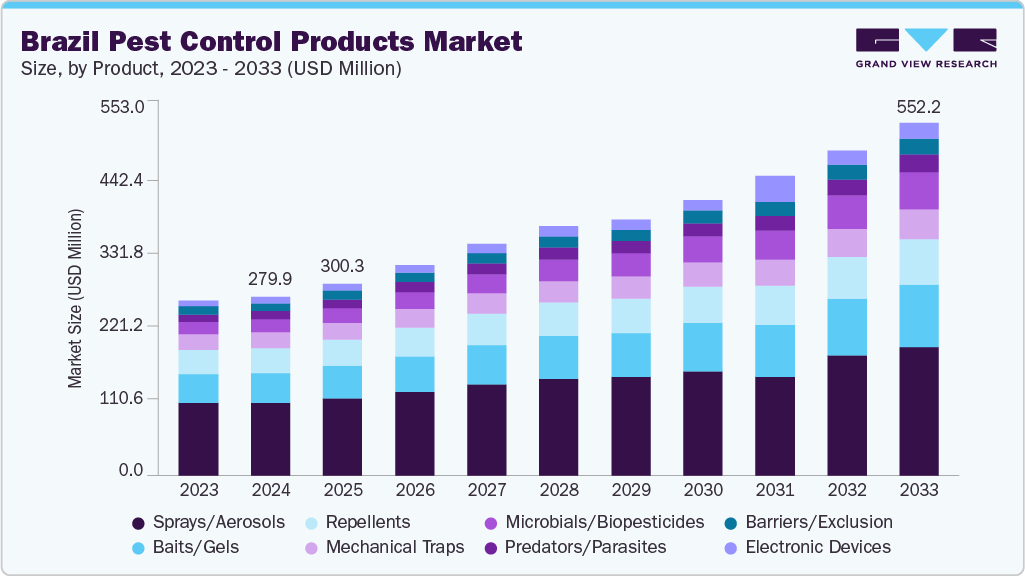
The Brazil pest control products market size was estimated at USD 279.9 million in 2024 and is projected to reach USD 552.2 million by 2033, growing at a CAGR of 7.9% from 2025 to 2033. Brazil’s vast expansion of cultivated land, especially for key export crops such as soybeans, corn, and sugarcane, drives surging demand for pest control products. In the 2022 - 23 cycle, Brazil’s total crop area soared to around 90 million hectares, with soybeans alone exceeding 42 million hectares. This expansion triggered an uptick in agrochemical consumption, especially herbicides, fungicides, and insecticides, as farmers sought to protect yields against pervasive threats like Asian soybean rust and invasive weeds, further driving the growth of the Brazil pest control products industry.
Historically, Brazil has depended heavily on imported agrochemical products. However, strategic investments have enabled local manufacturers to reclaim market share in the Brazil pest control products industry. In 2023, domestic production accounted for nearly 40% of total pesticide demand, up from under 30% a decade earlier. BASF, Syngenta, and Bayer have scaled up local manufacturing, which has been incentivized by tax breaks and logistical proximity to major agricultural zones.
The surge in regulatory approvals, combined with streamlined licensing and government backing for local production, is helping to make pest control products more accessible and tailored to Brazilian agriculture. Such regulatory and industrial shifts are key drivers of the Brazil pest control products industry.
Amid mounting environmental and health concerns, Brazil is witnessing a pivot toward more sustainable pest control technologies. The market for bio inputs, biological alternatives derived from microorganisms, enzymes, or plant extracts, has witnessed substantial growth. Meanwhile, regulatory and societal pressures are boosting demand for biopesticides, integrated pest management (IPM), and environmentally friendlier chemical solutions.
Major companies are investing in bio-based alternatives and precision application technologies, aiming to address resistance management, reduce environmental impact, and satisfy evolving regulatory standards. This shift toward green solutions are reshaping product portfolios and fueling demand for modern, effective, and sustainable pest control products in the Brazil pest control products market.
Consumer Insights
Brazilian consumers of pest control products are increasingly valuing health, hygiene, and sustainability in their purchase decisions. As the country’s urban and rural populations become more aware of environmental and health concerns, demand is rising for eco-friendly and low-toxicity insecticides, particularly among younger demographics and middle- to upper-income households.
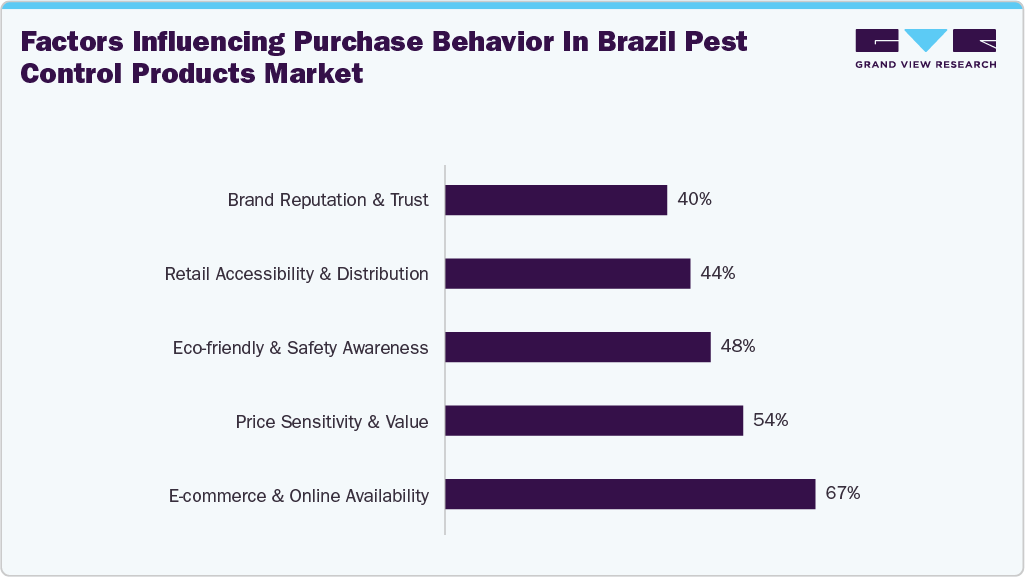
This shift has led many buyers to prioritize products labeled as “natural” or “organic,” especially in densely populated urban areas or homes shared with children and pets. Furthermore, Brazil’s rich biodiversity and cultural affinity for traditional, locally sourced ingredients have fostered interest in pest control products infused with native plant extracts or essential oils. This trend has surged the demand for pest control products in the South American nation.
Beyond ecological considerations, practicality and convenience also shape preferences; consumers increasingly favor sprays and ready-to-use formulations that promise quick and targeted action. Overall, Brazilian consumers are actively seeking pest control products that combine effectiveness with safety and sustainability, creating a competitive advantage for brands that transparently deliver on these fronts.
Product Insights
Pest control sprays/aerosols accounted for a revenue share of 40.67% of the Brazil market in 2024, largely attributed to their instant efficacy and convenience of use in household and urban environments. Rapid urbanization in cities such as São Paulo, Rio de Janeiro, and Brasília has heightened consumer demand for easy-to-apply solutions that provide visible results against mosquitoes, cockroaches, and ants, which are prevalent in dense living areas.
Unlike powders or traps, sprays offer immediate knockdown effects and are portable, making them attractive for consumers seeking quick remedies during seasonal pest outbreaks, particularly in summer when vector-borne diseases like dengue and Zika see a surge. The high penetration of sprays in supermarkets and retail outlets further reinforced their accessibility and visibility, ensuring they became the first choice for urban households, therefore, driving the growth of pest control products in Brazil.
The microbials/biopesticides segment is expected to grow at a CAGR of 12.3% from 2025 to 2033 in Brazil, driven by growing regulatory support and farmer adoption of sustainable practices. Brazil’s Ministry of Agriculture (MAPA) has streamlined registration processes for bio inputs, resulting in a significant increase in approved biopesticides in recent years. This policy shift aligns with the government’s broader agenda to reduce chemical dependency while promoting safer alternatives that minimize environmental impact.
Farmers, particularly in high-value crop segments such as fruits, vegetables, and export-oriented coffee, are increasingly adopting microbial solutions to combat resistance issues and meet global residue-free certification standards demanded by export markets. These developments position biopesticides as a high-growth category, supported both by policy incentives and shifting consumer preferences toward sustainable agriculture. Such factors are expected to drive the growth of the Brazil pest control products industry during the forecast period.
Pest Type Insights
The flying insects segment contributed a revenue share of 38.66% towards the Brazil market in 2024, fueled by the high prevalence of mosquito-borne diseases across Brazil. Outbreaks of dengue, chikungunya, and Zika virus remain recurring public health challenges, particularly during the rainy season when mosquito breeding intensifies. According to Brazil’s Ministry of Health, the country reported millions of dengue cases in 2023-2024, which reinforced widespread consumer demand for insecticides and repellents specifically targeting mosquitoes.
Urban households, as well as public health programs, prioritized aerosol sprays, coils, and electric vaporizers to reduce transmission risk, ensuring flying insects remained the most commercially significant pest control category. The public health urgency associated with flying pests amplified both household and institutional purchases, sustaining their leadership in the Brazil pest control products industry.
The crawling insect is expected to grow at a CAGR of 8.6% from 2025 to 2033 in the Brazil pest control products industry due to changing urban lifestyles and food storage practices. The rise of apartment living, the expansion of modern retail, and increased dependence on packaged foods have created favorable environments for cockroaches and ants to thrive in households and commercial kitchens. This shift has heightened consumer awareness of hygiene risks linked to food contamination and allergen exposure, leading to greater reliance on gels, baits, and residual sprays specifically formulated for crawling pests.
In addition, the growth of Brazil’s foodservice industry, including restaurants and delivery-focused kitchens, has accelerated the adoption of crawling insect control products as part of preventive sanitation measures. These structural changes in living and consumption patterns are expected to fuel consistent demand, positioning crawling insects as the fastest-expanding pest type segment in the pest control products market in Brazil.
Control Mechanism Insights
Chemical pest control captured a revenue share of 71.30% in the Brazil pest control products industry in 2024 due to its cost-effectiveness and wide-spectrum efficacy. Chemical formulations, such as synthetic insecticides and aerosols, have long been established in the Brazil market, offering affordable solutions that target multiple pest types with quick results. Their mass production and established distribution networks across supermarkets, convenience stores, and agricultural cooperatives have made them accessible to both households and farmers.
Moreover, recurring pest outbreaks, such as locust infestations in agriculture and mosquito proliferation in urban regions, have reinforced dependence on chemical solutions for immediate mitigation. This balance of affordability, proven effectiveness, and market penetration has ensured chemical pest control’s continued dominance in Brazil.
Biological pest control is expected to grow at a CAGR of 11.1% from 2025 to 2033, augmented by export-driven agricultural compliance with international residue standards. As Brazil is one of the world’s leading exporters of soybeans, coffee, and fruits, producers face increasing pressure to meet residue-free requirements imposed by key importers in Europe and North America. Biological solutions, including microbial pesticides and natural predators, provide residue-free control options that align with these regulatory expectations while also reducing risks of pest resistance.
Export-focused agribusinesses are therefore investing heavily in biological alternatives, both to safeguard crop yields and to maintain access to premium international markets. This alignment of trade competitiveness with sustainable pest management practices positions biological control mechanisms as the fastest-growing segment in the market for pest control products in Brazil.
End-use Insights
The B2B segment logged a revenue share of 76.08% in the Brazil market in 2024, spurred by the compliance requirements of commercial and industrial sectors. Food processing plants, hotels, restaurants, and logistics warehouses are legally mandated to uphold strict hygiene standards to prevent infestations that could compromise food safety or consumer health. These sectors rely heavily on pest control products such as aerosols, fumigants, and gel baits to maintain continuous protection and meet inspection protocols enforced by Brazil’s National Health Surveillance Agency (ANVISA).
Moreover, large-scale agricultural operations, particularly soybean and sugarcane farms, represented another significant portion of B2B demand as they required pest control inputs to ensure crop protection against yield losses. The intersection of regulatory obligations and large-volume usage consolidated B2B users in the Brazil pest control products industry (in 2024).
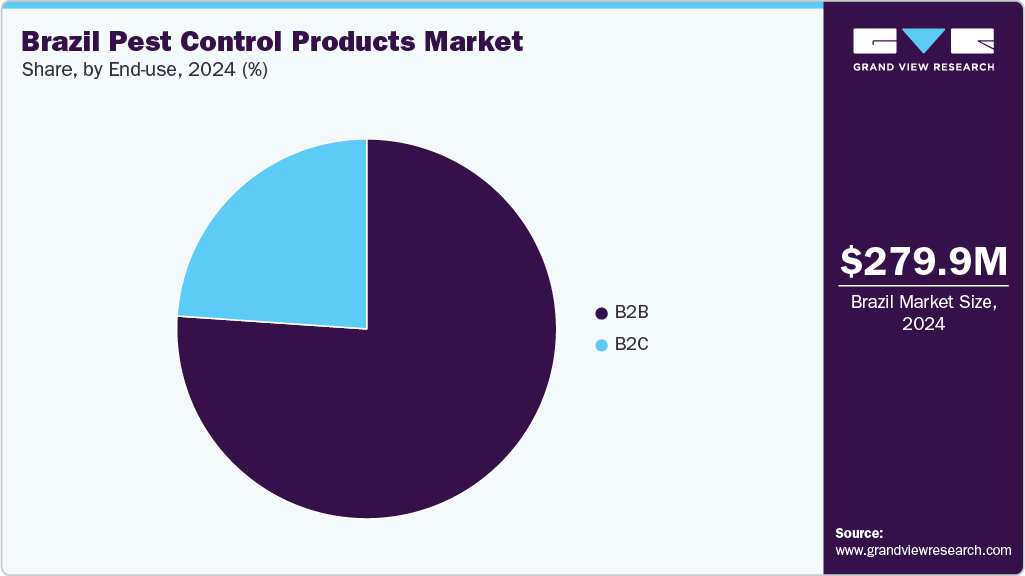
The B2C segment is expected to grow at a CAGR of 10.2% from 2025 to 2033 in the Brazil market, due to rising household awareness of pest-related health risks and convenience-driven consumption. Increasing urban density, frequent dengue and Zika outbreaks, and a stronger focus on home hygiene have encouraged households to invest more in pest control products for personal use. Consumers are drawn to ready-to-use sprays, plug-in repellents, and natural solutions that fit into daily cleaning routines without professional intervention.
Moreover, the expansion of e-commerce platforms has made pest control products more accessible to individuals across both metropolitan and semi-urban regions, enabling direct purchases with greater product variety and price transparency. This heightened consumer engagement, coupled with lifestyle shifts favoring self-applied solutions, is expected to accelerate growth in the B2C the Brazil pest control products industry during the forecast period.
Key Brazil Pest Control Products Company Insights
The market is characterized by strong incumbent multinational presence, meaningful domestic manufacturers, fast-growing bio input segments, and active distribution and partnership strategies that shorten time-to-market for new technologies. Brazil’s regulatory environment and domestic production landscape significantly influence the availability and affordability of pest control products. Over the past decade, multinationals such as BASF, Syngenta, and Bayer have ramped up local manufacturing, particularly formulation and packaging, boosted by tax incentives and policies favoring domestic industrialization.
Consequently, Brazil now produces nearly 40% of its crop protection needs domestically, up from under 30% ten years ago. Meanwhile, homegrown firms such as Ourofino Agrociência and Nortox are tailoring formulations specifically for local climatic and pest conditions. This shift is motivated by rising costs and logistical challenges in importing active ingredients, especially from Asia, encouraging vertical integration in Brazil’s agrochemical industry. Although most local players currently specialize in formulating and packaging, the long-term vision includes developing active ingredient production capacity to strengthen the domestic supply chain and reduce vulnerability to global market swings.
Key Brazil Pest Control Products Companies:
- BASF SE
- Syngenta Group
- Bayer AG
- Ourofino Agrociência
- Nortox
- Corteva Agriscience
- ADAMA Agricultural Solutions
- FMC Corporation
- Reckitt & S.C. Johnson
- UPL Limited
Recent Developments
-
In June 2025, BASF initiated the regulatory approval process in Brazil (and Paraguay) for Adapzo Active (Flufenoxadiazam), a fungicide with a novel mechanism, an HDAC inhibitor, designed specifically to combat Asian Soybean Rust.
-
In October 2024, Syngenta invested USD 11 million to inaugurate the largest product formulation technology center in Latin America, located in Paulínia (São Paulo).
Brazil Pest Control Products Market Report Scope
Report Attribute
Details
Market size value in 2025
USD 300.3 million
Revenue forecast in 2033
USD 552.2 million
Growth Rate (Revenue)
CAGR of 7.9% from 2025 to 2033
Actual data
2021 - 2024
Forecast period
2025 - 2033
Quantitative units
Revenue in USD million and CAGR from 2025 to 2033
Report coverage
Revenue forecast, company ranking, competitive landscape, growth factors, and trends
Segments covered
Product, pest type, control mechanism, end-use
Country scope
Brazil
Key companies profiled
BASF SE; Syngenta Group; Bayer AG; Ourofino Agrociência; Nortox; Corteva Agriscience; ADAMA Agricultural Solutions; FMC Corporation; Reckitt & S.C. Johnson; UPL Limited
Customization
Free report customization (equivalent up to 8 analysts working days) with purchase. Addition or alteration to country, regional & segment scope
Pricing and purchase options
Avail customized purchase options to meet your exact research needs. Explore purchase options
Brazil Pest Control Products Market Report Segmentation
This report forecasts revenue growth at the country level and provides an analysis of the latest industry trends and opportunities in each of the sub-segments from 2021 to 2033. For this study, Grand View Research has segmented the Brazil pest control products market report by product, pest type, control mechanism, and end-use:
-
Product Outlook (Revenue, USD Million, 2021 - 2033)
-
Sprays/Aerosols
-
Baits/Gels
-
Repellents
-
Predators/Parasites
-
Microbials/Biopesticides
-
Barriers/Exclusion
-
Mechanical Traps
-
Electronic Devices
-
-
Pest Type Outlook (Revenue, USD Million, 2021 - 2033)
-
Flying Insects
-
Crawling Insects
-
Rodents
-
Others (Birds)
-
-
Control Mechanism Outlook (Revenue, USD Million, 2021 - 2033)
-
Chemical
-
Physical/Mechanical
-
Biological
-
-
End-use Outlook (Revenue, USD Million, 2021 - 2033)
-
B2C
-
Supermarkets and Hypermarkets
-
Pharmacies & Drugstores
-
Home Improvement & Hardware Stores
-
E-commerce/Online
-
Others (Grocery Stores, Department Stores)
-
-
B2B
-
Direct Sales
-
Distributors & Wholesalers
-
Agricultural Supply Stores & Co-operatives
-
Commercial & Institutional E-procurement Platforms
-
Others (Government Procurement Programs)
-
-
Frequently Asked Questions About This Report
b. The Brazil pest control products market was estimated at USD 279.9 million in 2024 and is expected to reach USD 300.3 million in 2025.
b. The Brazil pest control products market is expected to grow at a compound annual growth rate of 7.9% from 2025 to 2033 to reach USD 552.2 million by 2033.
b. The sprays and aerosols hold the largest market share in the Brazil pest control products market due to their instant efficacy and convenience of use in household and urban environments.
b. Key players in the Brazil pest control products market are BASF SE, Syngenta Group, Bayer AG, Ourofino Agrociência, Nortox, Corteva Agriscience, ADAMA Agricultural Solutions, FMC Corporation, Reckitt & S.C. Johnson, UPL Limited, among others.
b. Key factors that are driving the Brazil pest control products market growth include rising urban infestations of insects and pest linked to poor waste management and high-rise housing.


Share this report with your colleague or friend.
Need a Tailored Report?
Customize this report to your needs — add regions, segments, or data points, with 20% free customization.


ISO 9001:2015 & 27001:2022 Certified
We are GDPR and CCPA compliant! Your transaction & personal information is safe and secure. For more details, please read our privacy policy.
Trusted market insights - try a free sample
See how our reports are structured and why industry leaders rely on Grand View Research. Get a free sample or ask us to tailor this report to your needs.












