
- Home
- »
- Pharmaceuticals
- »
-
Brachytherapy Market Size And Share, Industry Report, 2033GVR Report cover
![Brachytherapy Market Size, Share & Trends Report]()
Brachytherapy Market (2026 - 2033) Size, Share & Trends Analysis By Dosage Type (HDR, LDR), By Application (Prostate, Gynecological, Breast), By Product Seeds, Applicators & Afterloaders, Electronic Brachytherapy, By Region, And Segment Forecasts
- Report ID: GVR-1-68038-618-9
- Number of Report Pages: 150
- Format: PDF
- Historical Range: 2021 - 2024
- Forecast Period: 2026 - 2033
- Industry: Healthcare
- Report Summary
- Table of Contents
- Interactive Charts
- Methodology
- Download FREE Sample
-
 Download Sample Report
Brachytherapy Market Summary
The global brachytherapy market size was estimated at USD 1,112.97 million in 2025 and is projected to reach USD 1,967.19 million by 2033, growing at a CAGR of 7.4% from 2026 to 2033. The increasing prevalence of cancer, technological advancements, and a significant rise in the adoption of brachytherapy are expected to drive market growth during the forecast period.
Key Market Trends & Insights
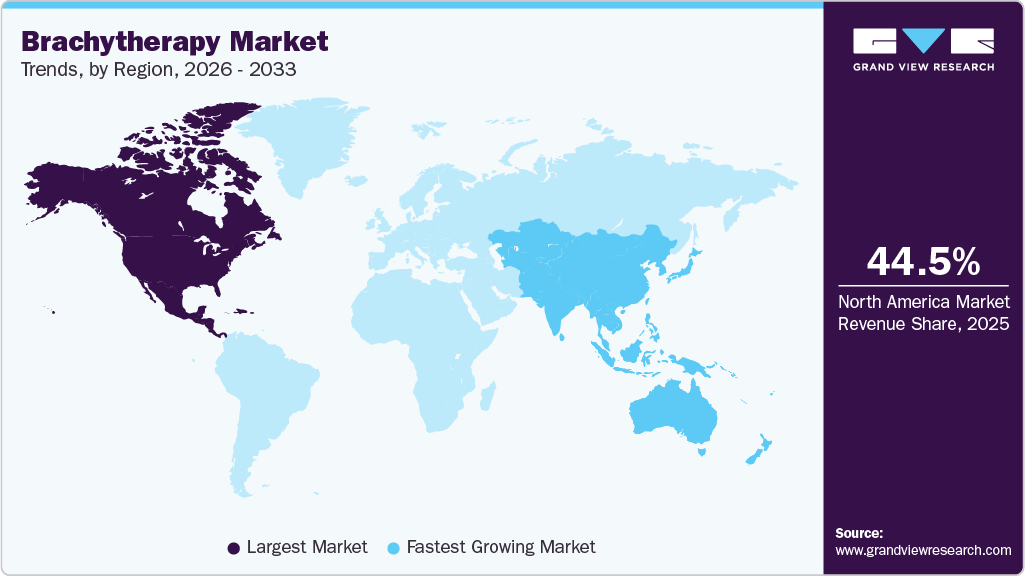
- North America dominated the market with the largest revenue share of 44.52% in 2025.
- Asia Pacific is expected to grow at the fastest CAGR of 8.0% over the forecast period.
- By dosage type, the high dose rate (HDR) segment accounted for the largest revenue share of 71.79% in 2025.
- By product, the applicators & afterloaders segment accounted for the largest revenue share of 44.20% in 2025.
- By application, the prostate segment accounted for the largest revenue share of around 33.02% in 2025.
Market Size & Forecast
- 2025 Market Size: USD 1,112.97 Million
- 2033 Projected Market Size: USD 1,967.19 Million
- CAGR (2026-2033): 7.4%
- North America: Largest market in 2025
- Asia Pacific: Fastest-growing market
According to the American Cancer Society, in the U.S., there were 618,000 cancer deaths and an estimated more than 2 million new cancer cases in 2025, and this rising global cancer burden continues to drive demand for effective localized treatment options such as brachytherapy. Radiation therapy, including brachytherapy, is used for prophylactic, palliative, or curative treatment and can be administered as monotherapy or as an adjunct to surgery, immunotherapy, and chemotherapy, increasing its clinical adoption among physicians. In 2024, advancements in imaging and treatment planning systems further enhanced the precision of brachytherapy dose delivery, reducing collateral damage to healthy tissues and improving clinical outcomes, which reinforced its role in comprehensive oncological care.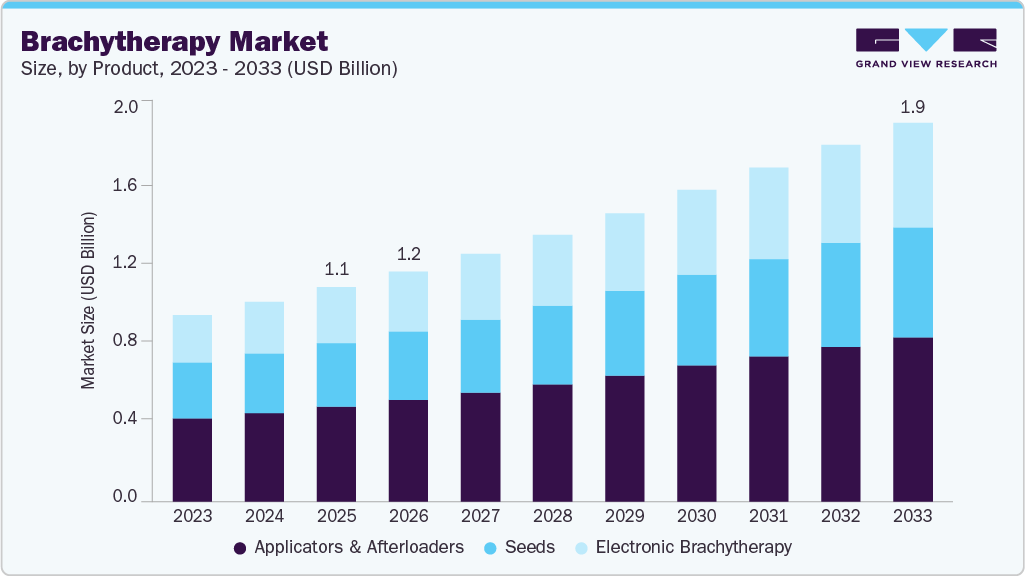
Ongoing research in 2025 is integrating artificial intelligence and automated treatment planning into high-dose-rate (HDR) brachytherapy protocols to improve consistency and efficiency of clinical workflows, addressing variability in manual planning practices. Despite technological progress, access challenges persist, particularly in low- and middle-income countries, where limited infrastructure and workforce shortages continue to restrict uptake; global radiotherapy resource assessments, such as the IAEA’s Directory of Radiotherapy Centres, highlight the uneven distribution of brachytherapy units, which contributes to significant treatment gaps in these regions. For instance, in 2025, the American Radium Research Organization and ASTRO conducted a dedicated Brachytherapy Workshop during the ASTRO Annual Meeting, offering structured didactic sessions alongside hands-on training to strengthen practical brachytherapy competencies among residents and early-career physicians, thereby addressing gaps in procedural expertise.
More broadly, initiatives undertaken in 2025 emphasized workforce training and capacity building through targeted educational programs and professional development events aimed at improving access to high-quality brachytherapy services, particularly in underserved regions. Collectively, these clinical training advancements and capacity-building efforts are key factors shaping the evolving market landscape and supporting wider adoption of this targeted radiation therapy modality.
Market Concentration & Characteristics
The brachytherapy industry demonstrates moderate to high innovation intensity, driven primarily by advances in imaging integration, treatment planning software, and source delivery precision. Innovation is focused less on disruptive hardware changes and more on incremental improvements such as image-guided brachytherapy, AI-assisted dose optimization, and adaptive treatment planning. Vendors are prioritizing workflow efficiency, treatment accuracy, and safety enhancements to improve clinical outcomes and reduce procedural variability. Innovation is also evident in the development of applicators tailored to specific cancer types, supporting broader clinical adoption while maintaining alignment with existing radiotherapy infrastructure.
Barriers to entry into the brachytherapy industry are high due to stringent regulatory requirements, capital-intensive manufacturing, and the need for strong clinical validation. New entrants must navigate complex approval pathways for radioactive sources, delivery systems, and software, while also meeting radiation safety and quality assurance standards. In addition, established players benefit from long-standing relationships with Prostate and oncology centers, creating customer lock-in through service contracts and training dependencies. The requirement for clinical evidence, physicist support, and post-installation servicing further elevates entry barriers, limiting competition from smaller or non-specialized manufacturers.
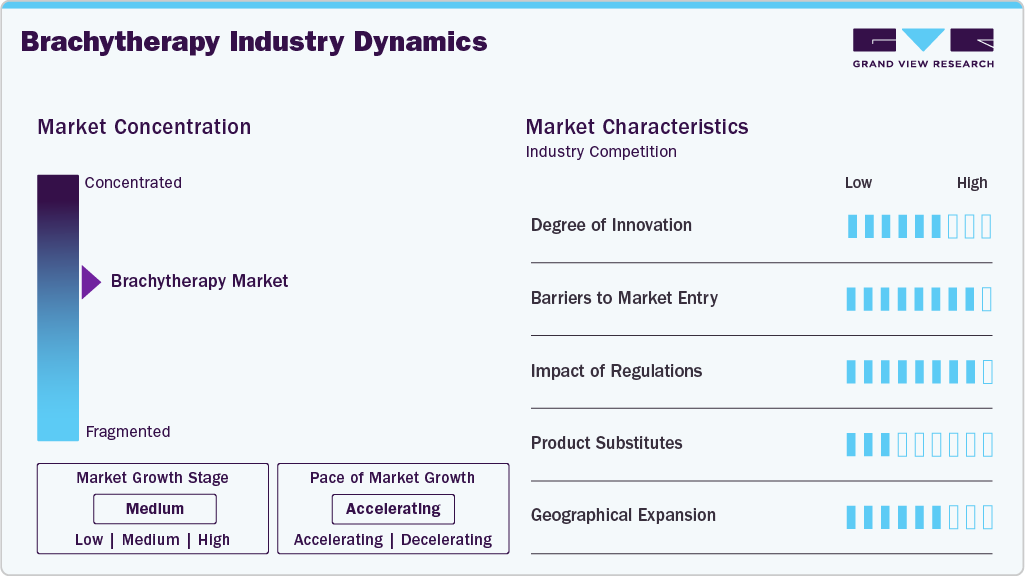
Regulation plays a critical role in shaping the brachytherapy industry, influencing product design, commercialization timelines, and geographic availability. Strict oversight of radioactive materials, radiation safety protocols, and device approvals increases compliance costs but also reinforces high-quality and safety standards. Regulatory frameworks often vary by region, leading to uneven adoption rates and delayed market entry in certain countries. While regulations can slow innovation cycles, they also create a controlled competitive environment that favors established, compliant manufacturers. Changes in reimbursement policies and treatment guidelines further affect utilization patterns and long-term demand across healthcare systems.
Brachytherapy faces competition from external beam radiation therapies, including intensity-modulated radiation therapy and stereotactic body radiation therapy, which continue to gain traction due to non-invasive delivery and broader availability. Advances in proton therapy and systemic oncology treatments, such as immunotherapy, also act as indirect substitutes in certain dosage types. However, brachytherapy retains a strong position in cancers requiring high localized dose delivery with minimal exposure to surrounding tissues. Its role as a complementary or combined modality rather than a direct replacement limits substitution risk, particularly in gynecological, prostate, and select head and neck cancers.
Geographical expansion in the brachytherapy industry is uneven, with mature penetration in North America and Europe and underdeveloped adoption in emerging regions. Expansion opportunities are strongest in the Asia Pacific, Latin America, and parts of the Middle East, where rising cancer incidence and improving healthcare infrastructure are driving interest in localized radiotherapy solutions. However, growth in these regions is constrained by workforce shortages, limited access to advanced equipment, and reimbursement challenges. Vendors pursuing expansion are increasingly focusing on training partnerships, turnkey solutions, and public-private collaborations to improve adoption and long-term sustainability in underserved markets.
Product Insights
The applicators & afterloaders segment dominated the market with the largest revenue share of 44.20% in 2025. Afterloaders are mandatory capital systems for high-dose rate and pulsed-dose rate brachytherapy, making them essential purchases for hospitals and cancer centers offering these procedures. Applicators, in turn, drive recurring demand due to procedure-specific usage, customization across cancer dosage types, and regular replacement cycles. Their direct role in determining dose accuracy, treatment reproducibility, and patient safety positions them as high-priority investments for providers. For instance, in 2025, manufacturers and clinical forums increasingly emphasized image-guided and MRI-compatible applicators alongside upgraded afterloader platforms with enhanced safety features and improved integration with treatment planning systems, reinforcing replacement and upgrade demand from existing installations. In addition, bundled service contracts, training support, and software upgrades associated with afterloaders increase lifetime value and switching costs, further strengthening segment dominance. Together, these clinical, operational, and economic factors ensure sustained leadership of applicators and afterloaders within the market.
The electronic brachytherapy segment is projected to grow at the highest CAGR of 8.5% over the forecast period due to its ability to deliver localized radiation without the use of radioactive isotopes, significantly reducing regulatory burden, shielding requirements, and handling complexities for healthcare facilities. This makes electronic brachytherapy particularly attractive for outpatient settings, dermatology clinics, and smaller cancer centers seeking to expand cancer treatment offerings with lower infrastructure investment. Technology also supports shorter treatment times and improved patient convenience, aligning with the shift toward ambulatory cancer care. For instance, in 2024, electronic brachytherapy systems continued to gain traction in the treatment of non-melanoma skin cancer and breast cancer, supported by expanding clinical evidence and favorable safety profiles. In addition, in 2025, ongoing upgrades focused on portability, digital dose control, and workflow simplification further enhanced adoption across nontraditional radiotherapy settings, reinforcing the segment’s accelerated growth trajectory.
Dosage Type Insights
The high-dose rate (HDR) segment dominated the market with the largest revenue share of 71.79% in 2025 as well, and is the fastest growing segment over the forecast period, because it delivers a high dose of radiation directly to tumor sites in short, outpatient-friendly sessions, increasing clinical efficiency and patient throughput. HDR’s ability to tailor fractionation schedules and integrate with advanced imaging and treatment planning systems enhances both precision and safety for a broad range of cancer dosage types, from prostate to gynecological tumors. For instance, in 2025, research efforts such as automated and AI-assisted treatment planning for HDR prostate and cervical cancer brachytherapy demonstrated strong clinical interest in improving plan quality and consistency, further solidifying HDR’s clinical preference and adoption among treatment centers. These technological and workflow enhancements support continued market leadership, with HDR viewed as a flexible, high-efficacy option compared to low-dose and pulsed dose alternatives.
Application Insights
The prostate segment dominated the market with the largest revenue share of 33.02% in 2025, because prostate cancer remains one of the most commonly treated malignancies with internal radiation therapy, supported by strong clinical evidence for efficacy and long-term disease control. Prostate brachytherapy offers advantages such as targeted dose delivery, reduced overall treatment time, and favorable toxicity profiles compared with external beam radiation in select patient populations. These clinical benefits drive higher procedure volumes and device utilization, making prostate the leading dosage type segment. For instance, in 2025, clinical practice guidelines and registry data continued to recognize brachytherapy as a standard of care for low- and intermediate-risk prostate cancer, sustaining demand for both high-dose-rate and permanent seed implants and reinforcing the segment’s revenue dominance within the broader market. The concentration of specialized urology and radiation oncology centers in key regions also supports procedural adoption and revenue capture.
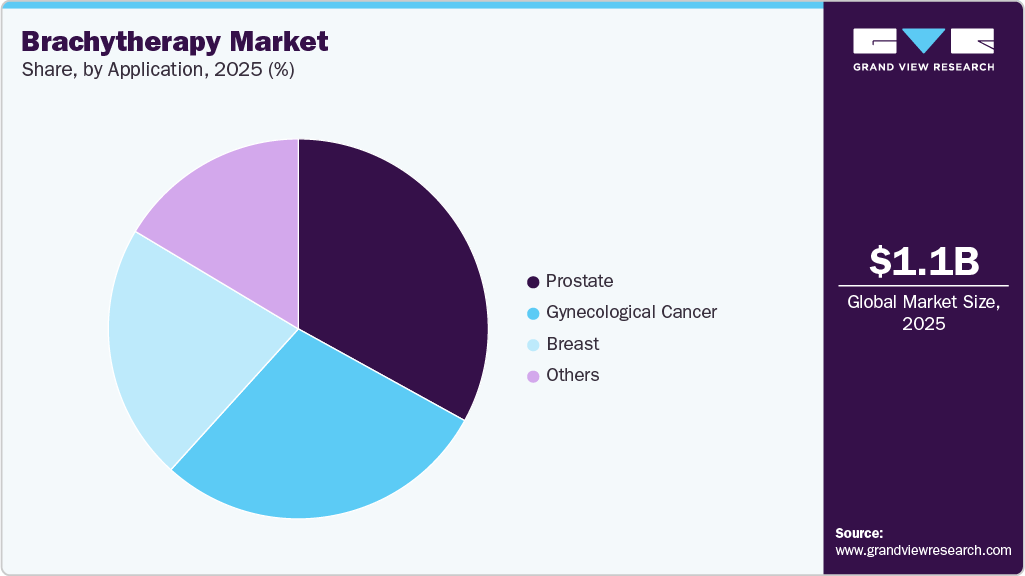
The breast segment is projected to grow at a CAGR of 8.0% over the forecast period, driven by increasing adoption of targeted and patient-convenient radiation approaches. Brachytherapy is gaining traction in early-stage breast cancer due to its ability to deliver localized radiation with minimal exposure to surrounding healthy tissue, supporting favorable cosmetic outcomes and reduced treatment-related toxicity. The growing use of accelerated partial breast irradiation has significantly shortened treatment duration compared with conventional whole-breast radiotherapy, improving patient compliance and throughput for healthcare providers. In addition, rising breast cancer screening rates and early diagnosis are expanding the eligible patient population for localized radiation therapies. Technological advancements in catheter design and image-guided treatment planning are further improving procedural accuracy and clinical confidence among physicians. Together, these clinical, operational, and patient-centric advantages are expected to support the sustained growth of the breast segment within the market over the forecast period.
Regional Insights
North America held the largest share of the brachytherapy market in 2025, accounting for 44.52% of global revenue, supported by advanced healthcare infrastructure, high cancer diagnosis rates, and strong reimbursement frameworks. The region benefits from widespread availability of HDR systems and experienced radiation oncology professionals, enabling consistent procedural volumes across prostate, gynecological, and breast cancers. For instance, in 2024, several U.S. and Canadian cancer centers expanded image-guided brachytherapy programs aligned with updated clinical pathways emphasizing precision radiation delivery. Continued investments in workflow automation and training programs in 2025 are reinforcing procedural efficiency and sustaining demand across hospital and outpatient oncology settings.
U.S. Brachytherapy Market Trends
The brachytherapy market in the U.S. dominates the regional market due to high prostate and breast cancer incidence, guideline-backed utilization, and favorable reimbursement structures. Brachytherapy benefits from outpatient suitability and strong physician familiarity. For instance, in 2025, several academic and community oncology centers expanded HDR prostate and accelerated partial breast irradiation programs to reduce treatment duration and improve patient throughput. Ongoing investments in training and system upgrades continue to support steady utilization and capital equipment replacement cycles.
Europe Brachytherapy Market Trends
The brachytherapy market in Europe benefits from structured radiotherapy networks and strong adherence to evidence-based oncology protocols. Centralized healthcare systems support standardized training and referral pathways, sustaining utilization in gynecological and prostate cancers. Public healthcare investment remains focused on equipment modernization and workforce capacity, supporting stable procedural volumes and replacement demand across major Western European markets.
The UK brachytherapy market is shaped by centralized NHS procurement and clinical prioritization. Adoption is focused on high-impact dosage types such as gynecological and prostate cancers, where shorter treatment courses improve capacity management. Ongoing workforce training initiatives and gradual equipment upgrades support steady utilization within constrained healthcare budgets.
The brachytherapy market in Germany is one of Europe’s most advanced markets, supported by strong hospital infrastructure, favorable reimbursement, and high technology penetration. HDR brachytherapy is widely used in prostate and gynecological cancers. Replacement of legacy afterloaders and integration of advanced treatment planning systems continue to sustain capital equipment demand.
France brachytherapy market is supported by national cancer control programs and public funding for radiotherapy services. Adoption remains strongest in guideline-supported dosage types such as gynecological and breast cancers. Ongoing investments in radiotherapy modernization and professional training support the gradual expansion of services across regional cancer centers.
Asia Pacific Brachytherapy Market Trends
The brachytherapy market in the Asia Pacific is expected to register a significant CAGR of 8.0% over the forecast period, due to rising cancer incidence and expanding healthcare infrastructure. Adoption remains uneven across countries, with advanced markets showing higher penetration and emerging economies facing access and workforce constraints. Increasing public and private investment in oncology infrastructure supports long-term growth potential.
Japan brachytherapy market is a technologically advanced but conservative market, driven by an aging population and high cancer prevalence. Utilization is concentrated in specialized centers, with growth primarily supported by replacement demand and gradual protocol refinement rather than rapid expansion.
The brachytherapy market in China represents a high-potential emerging market supported by a rising cancer burden and ongoing healthcare modernization. Adoption is concentrated in tier-1 cities, while regional disparities in infrastructure and workforce availability constrain broader penetration. Continued expansion of oncology capacity supports long-term market development.
Latin America Brachytherapy Market Trends
The brachytherapy market in Latin America represents a developing market characterized by uneven access to radiotherapy infrastructure and significant variation across countries. Adoption is largely concentrated in major urban tertiary hospitals, where prostate and gynecological cancers drive procedural demand. Public healthcare systems dominate cancer treatment delivery, often constrained by limited capital budgets and workforce shortages, which restrict broader penetration of advanced brachytherapy technologies. While national cancer control programs emphasize improving radiotherapy coverage, implementation remains gradual. Private sector participation and public-private partnerships are increasingly important in expanding access, particularly in high-burden oncology centers, supporting steady but incremental market growth across the region.
Brazil brachytherapy marketis the largest and most structurally developed market in Latin America, supported by a large cancer patient base and an expanding public oncology network. Utilization is strongest in prostate and gynecological cancers, driven by established clinical protocols and centralized cancer centers. Despite progress, access remains uneven across regions due to disparities in healthcare infrastructure and the availability of trained professionals. Capital equipment procurement is largely driven by public funding cycles, while private Prostate contributes to incremental technology adoption. Replacement demand and gradual expansion of radiotherapy services continue to underpin market growth.
Middle East & Africa Brachytherapy Market Trends
The brachytherapy market in the Middle East & Africa remains underpenetrated in brachytherapy adoption, reflecting broader challenges in oncology infrastructure development. Utilization is concentrated in high-income countries and select private Prostate, while large parts of the region face limited access to radiotherapy services. Key constraints include shortages of trained radiation oncologists and medical physicists, high capital costs, and inconsistent reimbursement frameworks. Nonetheless, rising cancer incidence and increasing policy focus on non-communicable diseases are gradually improving awareness and investment in cancer treatment capacity, supporting long-term market potential.
Saudi Arabia brachytherapy market represents the most advanced market within the Middle East, supported by strong government-led healthcare investment and centralized oncology service delivery. The country benefits from modern hospital infrastructure, increasing adoption of advanced radiotherapy technologies, and growing emphasis on localized cancer treatment modalities. Brachytherapy utilization is supported by expanding cancer centers and structured referral networks. Continued focus on healthcare transformation, workforce development, and technology modernization positions Saudi Arabia as a regional anchor market, with higher adoption levels compared to neighboring countries.
Key Brachytherapy Company Insights
The market is moderately concentrated, led by established radiation oncology players with comprehensive product portfolios and global service networks. Companies such as Elekta AB and Varian Medical Systems dominate through integrated offerings that combine HDR afterloaders, applicators, and advanced treatment planning software. Specialized players, including Eckert & Ziegler BEBIG and IsoRay, strengthen the market with radioactive sources and niche isotope technologies. Competitive positioning is driven by installed base strength, regulatory compliance, service contracts, and training support. Ongoing innovation in image guidance, workflow optimization, and system upgrades continues to reinforce market leadership and customer retention.
Key Brachytherapy Companies:
The following key companies have been profiled for this study on the brachytherapy market.
- Elekta AB
- Varian Medical Systems
- Eckert & Ziegler BEBIG
- IsoRay
- Theragenics Corporation
- Best Medical International
- CIVCO Medical Solutions
- Argon Medical Devices
- Panacea Medical Technologies
- Becton, Dickinson and Company
Recent Developments
-
In October 2024, Elekta presented new adaptive radiotherapy findings at ASTRO 2024, demonstrating improved precision radiation strategies and integration of imaging to minimize healthy tissue exposure.
-
In October 2023, Elekta acquired the Xoft Axxent Electronic Brachytherapy System from iCAD, expanding into e-brachytherapy and broadening clinical applications across breast, skin, and gynecological cancers.
Brachytherapy Market Report Scope
Report Attribute
Details
Market size in 2026
USD 1,195.37 million
Revenue forecast in 2033
USD 1,967.19 million
Growth rate
CAGR 7.4% from 2026 to 2033
Base year for estimation
2025
Historical data
2021 - 2024
Forecast period
2026 - 2033
Quantitative units
Revenue in USD million/billion and CAGR from 2026 to 2033
Report coverage
Revenue forecast, company ranking, competitive landscape, growth factors, trends
Segments covered
Product, dosage type, application, region
Regional scope
North America; Europe; Asia Pacific; Latin America; MEA
Country scope
U.S.; Canada; Mexico; UK; Germany; France; Italy; Spain; Denmark; Sweden; Norway; China; Japan; India; Australia; South Korea; Thailand; Brazil; Argentina; Saudi Arabia; South Africa; UAE; Kuwait
Key company profiled
Elekta AB; Varian Medical Systems Eckert & Ziegler BEBIG; IsoRay; Theragenics Corporation; Best Medical International; CIVCO Medical Solutions; Argon Medical Devices; Panacea Medical Technologies; Becton; Dickinson and Company
Customization scope
Free report customization (equivalent up to 8 analysts working days) with purchase. Addition or alteration to country, regional & segment scope.
Pricing and purchase options
Avail customized purchase options to meet your exact research needs. Explore purchase options
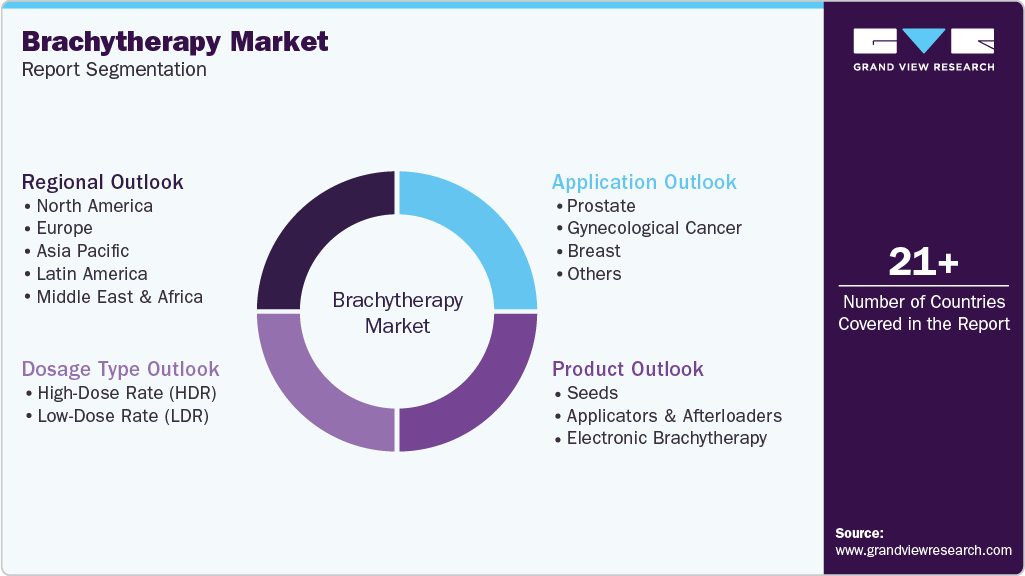
Global Brachytherapy Market Report Segmentation
This report forecasts revenue growth at global, regional, and country levels and provides an analysis of the latest industry trends in each of the sub-segments from 2021 to 2033. For this study, Grand View Research has segmented the global brachytherapy market report based on product, dosage type, application, and region:
-
Product Outlook (Revenue, USD Million, 2021 - 2033)
-
Seeds
-
Applicators & Afterloaders
-
Electronic Brachytherapy
-
-
Dosage type Outlook (Revenue, USD Million, 2021 - 2033)
-
High-Dose Rate (HDR)
-
Low-Dose Rate (LDR)
-
-
Application Outlook (Revenue, USD Million, 2021 - 2033)
-
Prostate
-
Gynecological Cancer
-
Breast
-
Others
-
-
Regional Outlook (Revenue, USD Million, 2021 - 2033)
-
North America
-
U.S.
-
Canada
-
Mexico
-
-
Europe
-
UK
-
Germany
-
France
-
Italy
-
Spain
-
Denmark
-
Sweden
-
Norway
-
-
Asia Pacific
-
Japan
-
China
-
India
-
Australia
-
South Korea
-
Thailand
-
-
Latin America
-
Brazil
-
Argentina
-
-
Middle East & Africa
-
South Africa
-
Saudi Arabia
-
UAE
-
Kuwait
-
-
Frequently Asked Questions About This Report
b. The global brachytherapy market size was estimated at USD 1,112.97 million in 2025 and is expected to reach USD 1,195.37 million in 2026.
b. The global brachytherapy market is expected to witness a compound annual growth rate of 7.4% from 2026 to 2033 to reach USD 1,967.19 million in 2033.
b. The Applicators & After loaders segment dominated the global brachytherapy market and accounted for the largest revenue share of 44.20% in 2025.
b. The prostate cancer segment dominated the global brachytherapy market and accounted for the largest revenue share of 33.02% in 2025.
b. North America dominated the global brachytherapy market and held the largest revenue share of 44.52% in 2025.
b. Some key players operating in the brachytherapy market include Varian Medical Systems; Elekta AB; Becton, Dickinson and Company; IsoRay, Inc.; Eckert & Ziegler BEBIG; and iCAD amongst others.


Share this report with your colleague or friend.
Need a Tailored Report?
Customize this report to your needs — add regions, segments, or data points, with 20% free customization.


ISO 9001:2015 & 27001:2022 Certified
We are GDPR and CCPA compliant! Your transaction & personal information is safe and secure. For more details, please read our privacy policy.
Trusted market insights - try a free sample
See how our reports are structured and why industry leaders rely on Grand View Research. Get a free sample or ask us to tailor this report to your needs.












