Australia Household Kitchen Appliances Market Summary
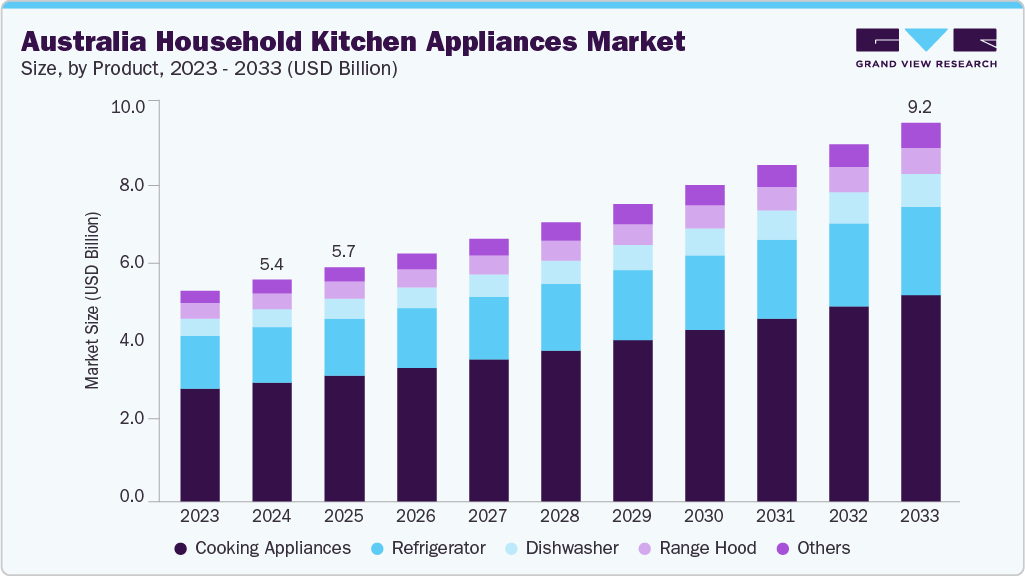
The Australian household kitchen appliances market size was estimated at USD 5.40 billion in 2024 and is projected to reach USD 9.23 billion by 2033, growing at a CAGR of 6.2% from 2025 to 2033. The growth of this market is driven by the integration of smart and AI-enabled technology, product innovation, noise-cancellation features, and advanced functionalities.
Key Market Trends & Insights
- By product, the cooking appliances segment held the largest market share of 53.7% in 2024.
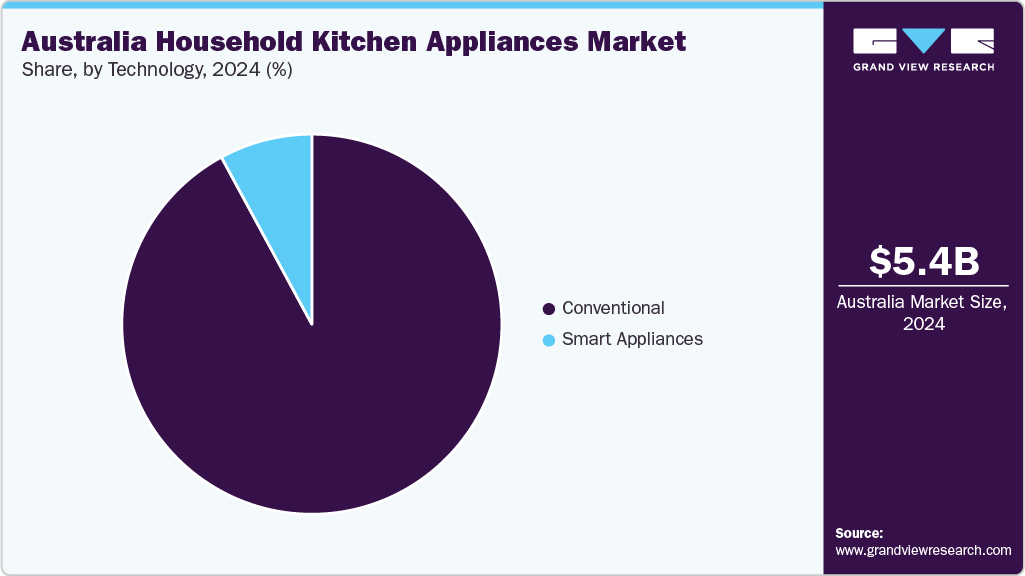
- By technology, the conventional segment held the largest market share in 2024.
Market Size & Forecast
- 2024 Market Size: USD 5.40 Billion
- 2033 Projected Market Size: USD 9.23 Billion
- CAGR (2025-2033): 6.2%
Increasing disposable income is further fueling the market, as consumers seek appliances that save time and offer ease and convenience.
Changing lifestyles and a growing preference for home-cooked meals are prompting Australian consumers to seek household kitchen appliances that reduce tasks and support their busy schedules. Driven by hybrid work models and rising food delivery costs, consumers are increasingly opting for multi-functional, time-saving appliances such as air fryers, combination ovens, and induction cooktops. In addition, there is a rising interest in affordable luxuries, with 19.7% of Australians prioritizing items that offer long-term value. According to a recent Good Food & Wine Show survey, 71.7% of respondents reported dining out less frequently due to cost-of-living pressures, causing consumers to cook at home, further accelerating demand for innovative kitchen solutions.
There is a growing demand for smart and connected appliances that is increasing consumer preference for AI-integrated, Wi-Fi-enabled, and app-connected appliances that automate cooking processes, monitor energy usage, and offer real-time control through smartphones. These appliances not only offer convenience and efficiency in the kitchen but also integrate into broader smart home ecosystems, allowing users to personalize settings, receive maintenance alerts, and remotely manage tasks.
Consumer Insights
While purchasing new appliances, nearly half of the Australians (47%) consider AI-enabled features a priority, with Gen Z demanding smart home devices. In addition, consumers prefer appliances that complete tasks quickly and with greater efficiency.
Consumer Demographics
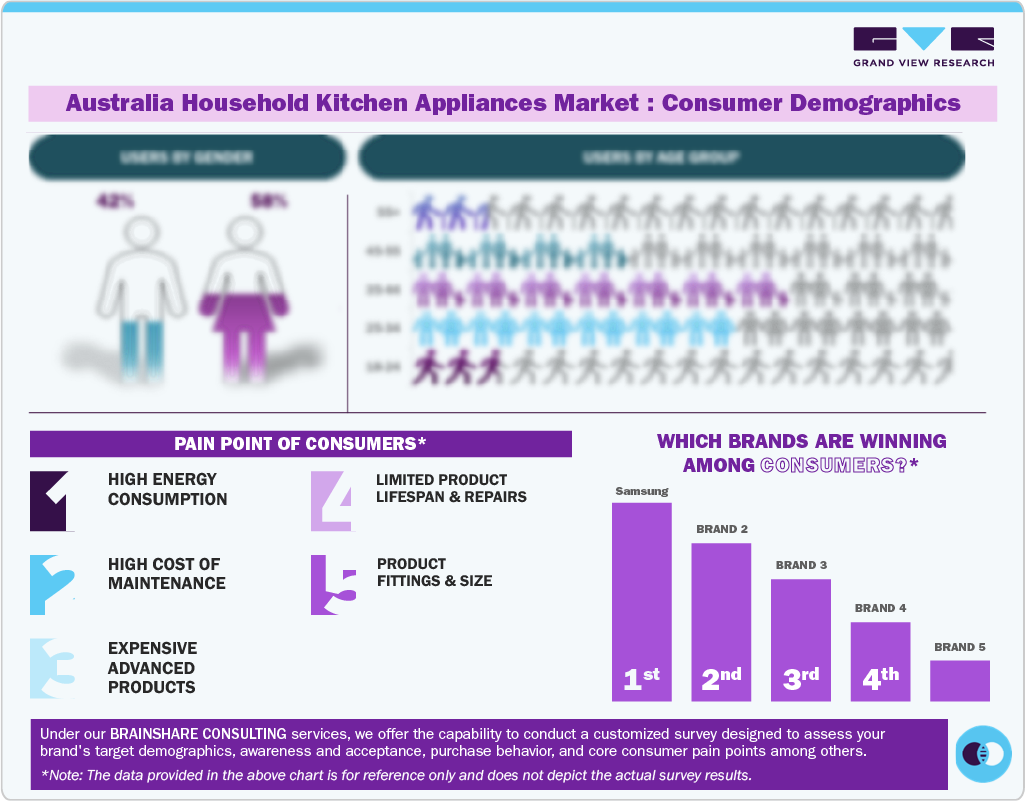
A large portion of Australia’s population lives in urban and major cities, which further contributes to the demand for smart household kitchen appliances. Approximately 73% of the population resides in major cities, where modern lifestyles and space constraints increase the need for compact, efficient, and connected kitchen solutions. Urban consumers are also more likely to adopt smart technologies due to better internet infrastructure, higher income levels, and exposure to evolving appliance trends.
Pricing Analysis
Household kitchen appliance prices vary by brand, technology, components, and smart features. While premium models offer advanced features and materials, many brands also provide cost-effective options to cater to a wide range of consumers in the small kitchen appliances market.
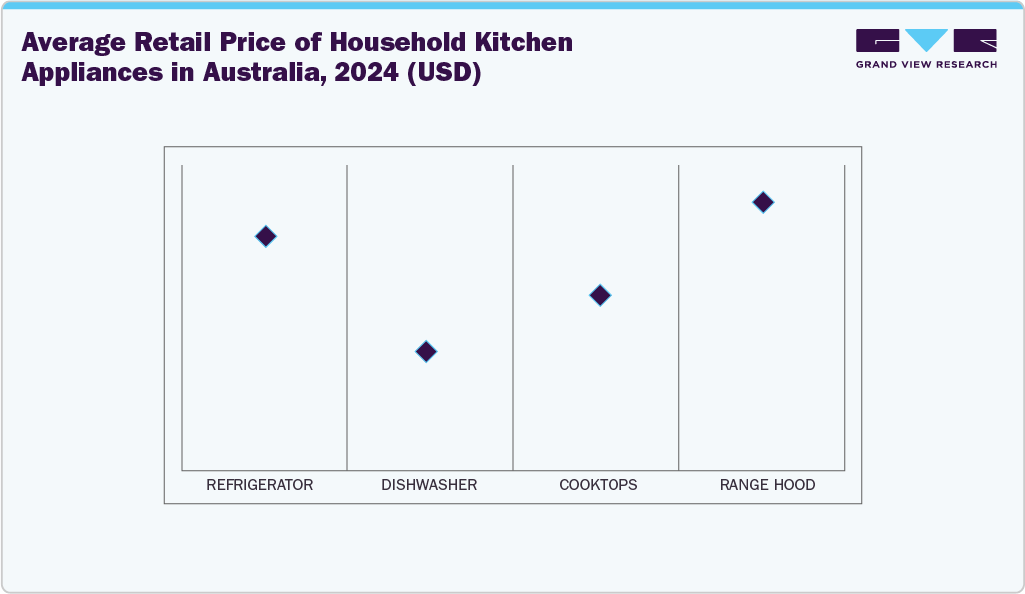
Kitchen appliance prices vary widely based on brand reputation, technological sophistication, build materials, and smart capabilities. Large-capacity units with advanced features command premium prices, while simple freestanding models are more budget-friendly. Even within the small kitchen appliance segment, brands often offer both high-end and economical options to appeal to a broad range of consumers.
Product Insights
Based on product, the cooking appliances segment accounted for a revenue share of 53.7% in 2024. This segment includes cooktops, ranges, ovens, and other related appliances. In June 2025, the Victorian government reversed its policy requiring homeowners to replace broken gas cooktops with electric alternatives. The City of Sydney introduced a mandate requiring electric appliances in all new residential developments beginning January 2026.
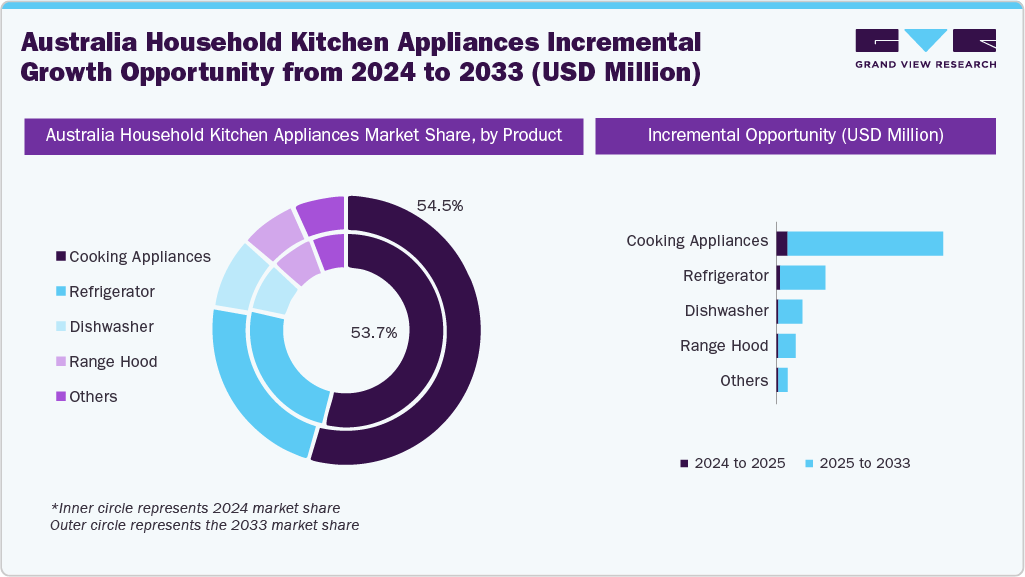
The dishwasher segment is projected to grow rapidly from 2025 to 2033. The increasing benefits of dishwashers are driving demand among consumers, with features such as efficient drying, low energy consumption, and quiet operation at just 42dB. Various brands are competing by launching high-tech appliances with powerful features. For instance, LG released one of the quietest dishwashers in Australia, priced at USD 1,239.9, offering advanced performance and minimal noise.
Technology Insights
The conventional household kitchen appliances market accounted for the largest revenue share of the Australian household kitchen appliances market in 2024. The older generation still prefers simple, mechanical interfaces over digital controls due to usability and familiarity. In addition, the rural or remote areas have limited internet access and lower digital adoption, which continues demand for non-connected, conventional kitchen appliances.
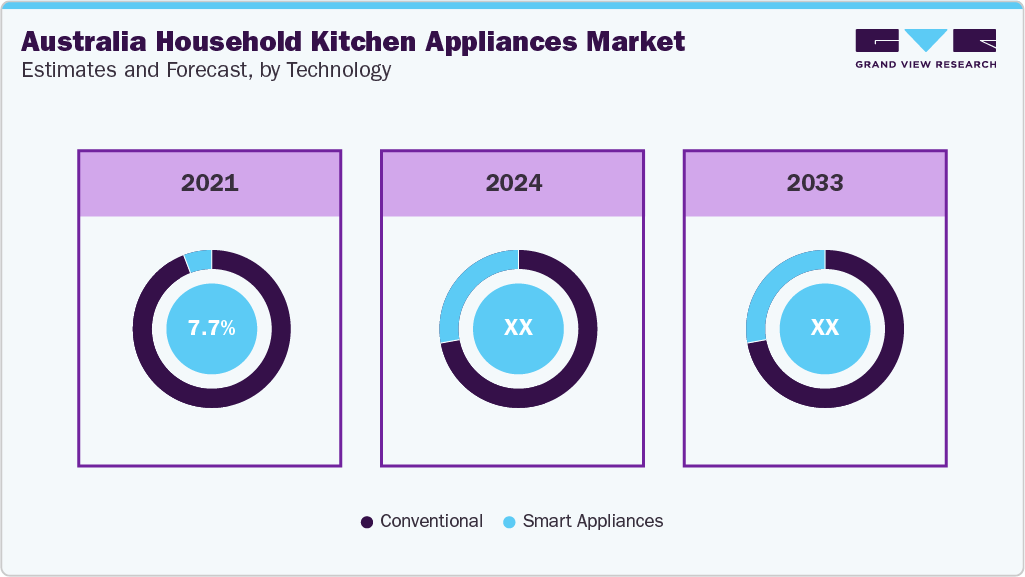
The smart kitchen appliances market is anticipated to experience the fastest CAGR of 7.0% from 2025 to 2033, owing to a shift towards a smart and more connected lifestyle among buyers. According to a 2023 survey, more than two-thirds of Australian households own at least one smart home device, reflecting growing interest in connected living.
Popular television shows like MasterChef Australia further influence consumer preferences, as viewers are exposed to advanced kitchen technologies showcased on-screen. In May 2025, LG Electronics Australia announced a partnership with MasterChef Australia for the current season, aiming to highlight its premium appliances, such as the InstaView Full Steam Oven and smart refrigerators.
Key Australian Household Kitchen Appliances Company Insights
Some of the key players in Australia household kitchen appliances market include Breville Pty Limited, Newell Australia Pty Ltd, Samsung, Electrolux, and others.
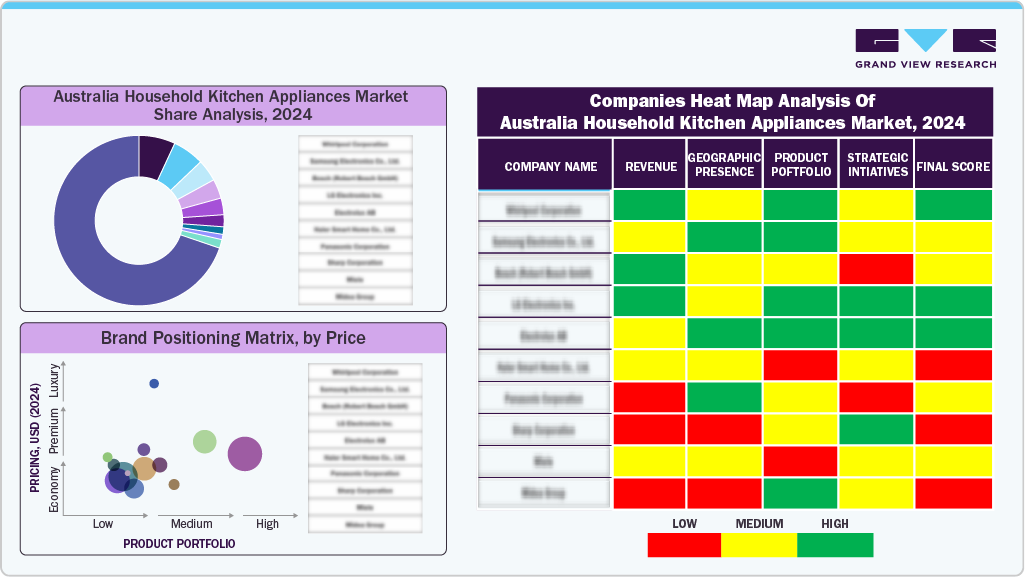
- Samsung has a strong presence in the Australian household appliance market. The company offers products in kitchen appliances including cooktops, refrigerators, cooking hoods, microwaves, ranges, dishwashers, and more often featuring smart technology and energy-efficient solutions.
Key Australian Household Kitchen Appliances Companies:
- Breville Pty Limited
- Newell Australia Pty Ltd
- Samsung
- Electrolux
- LG Electronics
- Robert Bosch (Australia) Pty Ltd
- Haier Inc
Recent Developments
-
In May 2025, Electrolux announced a new premium AEG appliance range in Australia, featuring AI-driven cooking technology, award-winning designs, and energy-efficient components, with innovations such as CookSmart displays, integrated Airfry, and AuroraTech intelligent range hoods.
-
In November 2024, Midea Australia announced the launch of its next-generation kitchen, refrigeration, laundry, and dishwasher appliances, featuring energy-efficient designs, customizable built-in configurations, Wi-Fi connectivity, and advanced user interfaces tailored to modern Australian consumer preferences.
-
In October 2023, Samsung Electronics Australia launched its new built-in cooking range, featuring ovens, cooktops, dishwashers, and range hoods integrated with SmartThings, offering AI-driven, connected solutions to enhance cooking efficiency and support evolving consumer culinary habits.
Australia Household Kitchen Appliances Market Report Scope
|
Report Attribute
|
Details
|
|
Market size value in 2025
|
USD 5.70 billion
|
|
Revenue forecast in 2033
|
USD 9.23 billion
|
|
Growth rate
|
CAGR of 6.2% from 2025 to 2033
|
|
Actuals
|
2021 - 2024
|
|
Forecast period
|
2025 - 2033
|
|
Quantitative units
|
Revenue in USD million, Volume in thousand units, and CAGR from 2025 to 2033
|
|
Report coverage
|
Revenue forecast, company ranking, competitive landscape, growth factors, and trends
|
|
Segments covered
|
Product, and technology
|
|
Key companies profiled
|
Breville Pty Limited, Newell Australia Pty Ltd, Samsung, Electrolux, LG Electronics, Robert Bosch (Australia) Pty Ltd, Haier Inc.
|
|
Customization scope
|
Free report customization (equivalent up to 8 analysts working days) with purchase. Addition or alteration to country, regional & segment scope.
|
|
Pricing and purchase options
|
Avail customized purchase options to meet your exact research needs. Explore purchase options
|
Australia Household Kitchen Appliances Market Report Segmentation
This report forecasts revenue growth at the region and country level and provides an analysis of the latest industry trends in each of the sub-segments from 2021 to 2033. For this study, Grand View Research has segmented the Australia household kitchen appliances market report based on product, and technology:
-
Product Outlook (Revenue, USD Million, Volume, Thousand Units, 2021 - 2033)
-
Refrigerator
-
Cooking Appliances
-
Cooktops & cooking range
-
Ovens
-
Others
-
Dishwasher
-
Range Hood
-
Others
-
Technology Outlook (Revenue, USD Million, Volume, Thousand Units, 2021 - 2033)
-
Conventional
-
Smart Appliances

 Download Sample Report














